Department of Sports Science and Clinical Biomechanics, University of Southern Denmark, Odense, Denmark.
J Gen Physiol. 2022 Sep 5;154(9). doi: 10.1085/jgp.202113071. Epub 2022 Jul 7.
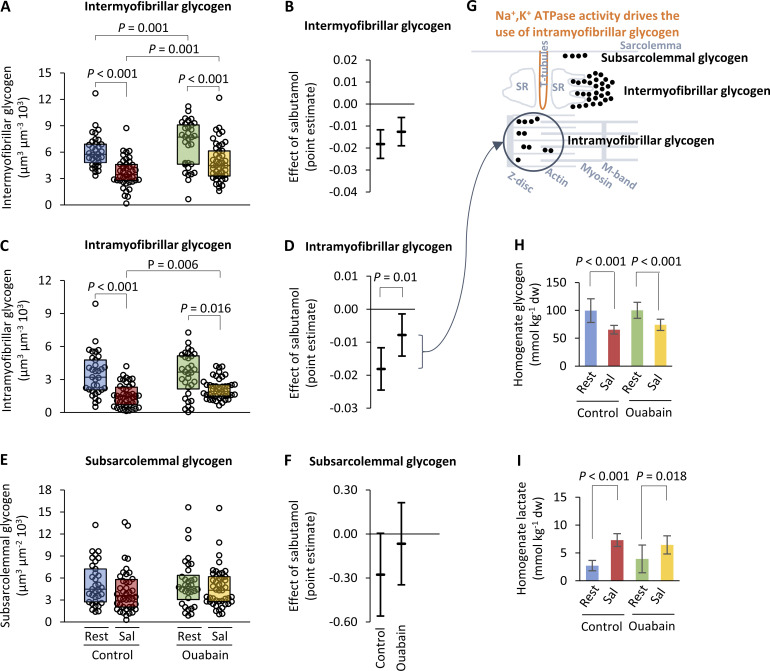
Glycogen is a key energy substrate in excitable tissue, including in skeletal muscle fibers where it also contributes to local energy production. Transmission electron microscopy imaging has revealed the existence of a heterogenic subcellular distribution of three distinct glycogen pools in skeletal muscle, which are thought to reflect the requirements for local energy stores at the subcellular level. Here, we show that the three main energy-consuming ATPases in skeletal muscles (Ca2+, Na+,K+, and myosin ATPases) utilize different local pools of glycogen. These results clearly demonstrate compartmentalized glycogen metabolism and emphasize that spatially distinct pools of glycogen particles act as energy substrate for separated energy requiring processes, suggesting a new model for understanding glycogen metabolism in working muscles, muscle fatigue, and metabolic disorders. These observations suggest that the distinct glycogen pools can regulate the functional state of mammalian muscle cells and have important implications for the understanding of how the balance between ATP utilization and ATP production is regulated at the cellular level in general and in skeletal muscle fibers in particular.
糖原是易兴奋组织(包括骨骼肌纤维)中的一种关键能量底物,它也有助于局部能量产生。透射电子显微镜成像揭示了骨骼肌中存在三种不同糖原池的异质亚细胞分布,这被认为反映了亚细胞水平局部能量储存的要求。在这里,我们表明骨骼肌中三种主要的能量消耗型 ATP 酶(Ca2+、Na+、K+和肌球蛋白 ATP 酶)利用不同的局部糖原池。这些结果清楚地表明糖原代谢具有隔室化,强调了空间上不同的糖原颗粒池作为分离的能量需求过程的能量底物,这为理解工作肌肉中的糖原代谢、肌肉疲劳和代谢紊乱提供了一个新的模型。这些观察结果表明,不同的糖原池可以调节哺乳动物肌肉细胞的功能状态,对于理解在一般细胞水平和特别是在骨骼肌纤维中,ATP 利用和 ATP 产生之间的平衡如何受到调节具有重要意义。