Tang Hongyi, Zhou Qing, Zheng Fu, Wu Tong, Tang Yi-Da, Jiang Jiuhui
Department of Orthodontics, Peking University School and Hospital of Stomatology, Beijing, China.
Department of Cardiology, State Key Laboratory of Cardiovascular Disease, National Center for Cardiovascular Diseases, Fuwai Hospital, Chinese Academy of Medical Sciences and Peking Union Medical College, Beijing, China.
Front Nutr. 2022 Jun 21;9:910690. doi: 10.3389/fnut.2022.910690. eCollection 2022.
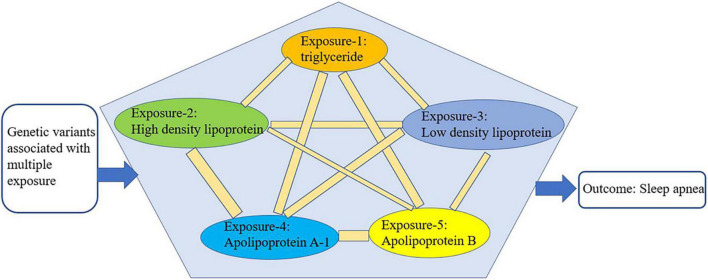
Observational studies have suggested that lipid profiles were associated with risk of sleep apnea (SA). However, the specific lipid types and whether this relationship has a causal effect are uncertain. This study conducted two-sample Mendelian randomization (MR) and multivariable Mendelian randomization (MVMR) to investigate the potential causal relationship between lipid profiles and risk of SA.
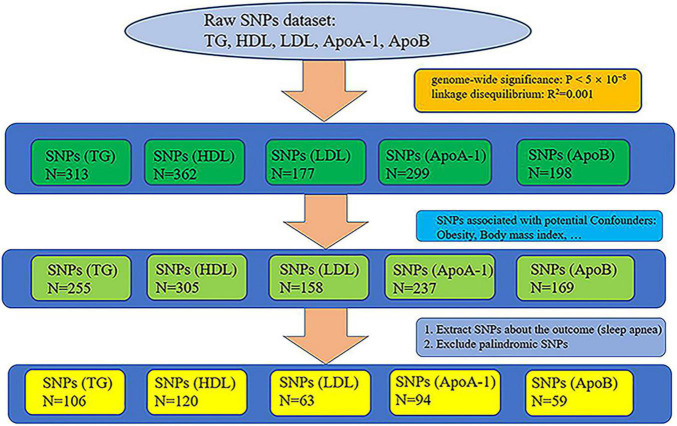
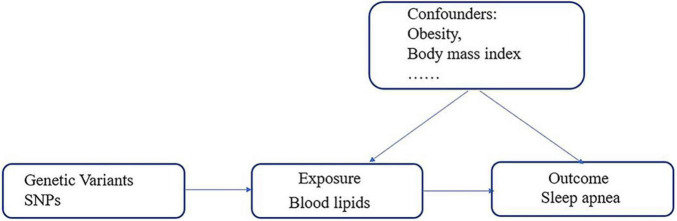
We used the largest genome-wide association study (GWAS) on European participants on the UK Biobank. After a rigorous single nucleotide polymorphism screening process to remove confounding effects, we performed MR and MVMR to explore the causal relationship between lipid profiles and SA risk.
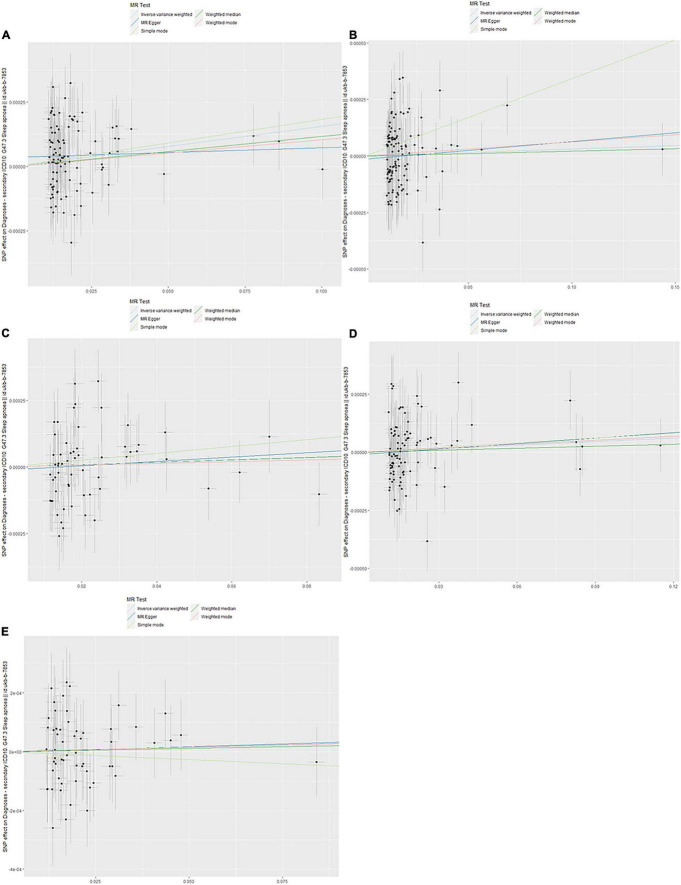
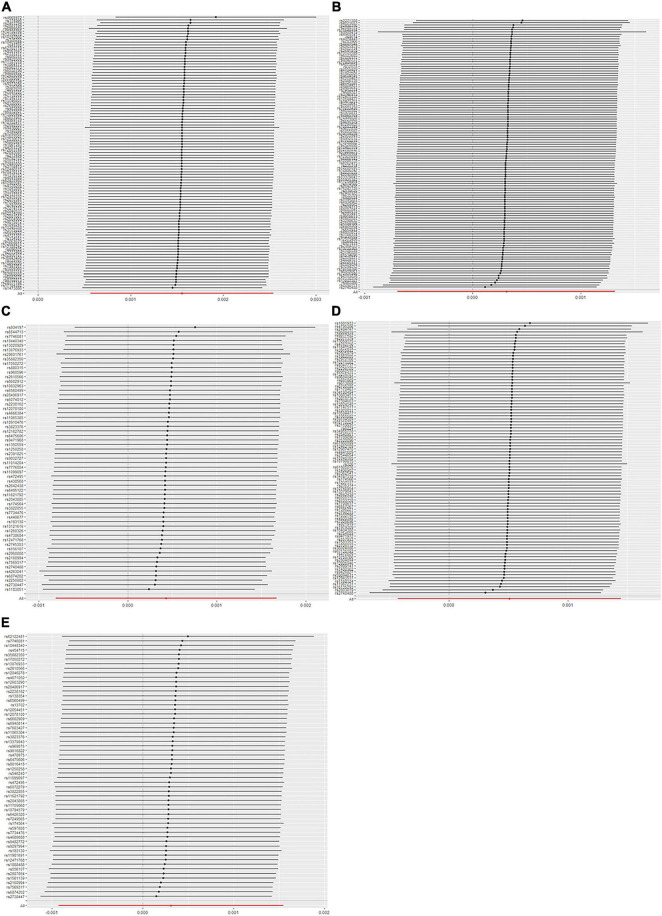
Both MR and MVMR showed causal effects of increased triglyceride on SA risk [MR: per 10 units, odds ratio (OR): 1.0156; 95% CI: 1.0057-1.0257; value = 0.002; MVMR: per 10 units, OR: 1.0229; 95% CI: 1.0051-1.0411; value = 0.011]. The sensitivity analysis including Cochran's Q test, MR-Egger intercept, and MR pleiotropy residual sum and outlier (MR-PRESSO) test indicated that our findings were robust. The causal effects of triglyceride on SA did not change after adjusting for potential confounders (obesity, age, sex, and airway obstruction).
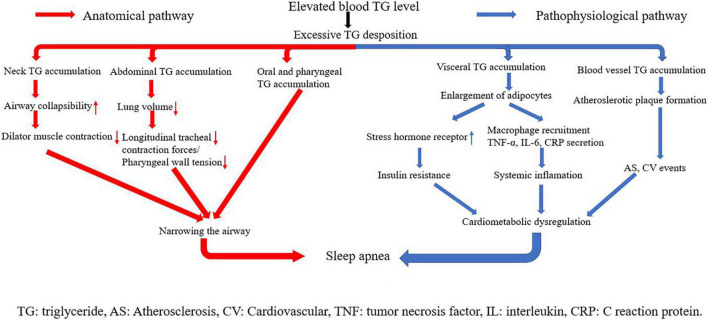
Genetically increased triglyceride levels have independent causal effects on risk of sleep apnea without the confounding effects of obesity, suggesting that lowering triglyceride concentrations may help to reduce the risk of sleep apnea.
观察性研究表明,血脂谱与睡眠呼吸暂停(SA)风险相关。然而,具体的血脂类型以及这种关系是否具有因果效应尚不确定。本研究进行了两样本孟德尔随机化(MR)和多变量孟德尔随机化(MVMR),以探讨血脂谱与SA风险之间的潜在因果关系。
我们使用了英国生物银行中针对欧洲参与者的最大规模全基因组关联研究(GWAS)。在经过严格的单核苷酸多态性筛选过程以消除混杂效应后,我们进行了MR和MVMR,以探索血脂谱与SA风险之间的因果关系。
MR和MVMR均显示甘油三酯升高对SA风险有因果效应[MR:每10个单位,优势比(OR):1.0156;95%置信区间(CI):1.0057 - 1.0257;P值 = 0.002;MVMR:每10个单位,OR:1.0229;95% CI:1.0051 - 1.0411;P值 = 0.011]。包括 Cochr an's Q检验、MR-Egger截距以及MR多效性残差总和与离群值(MR-PRESSO)检验在内的敏感性分析表明,我们的研究结果具有稳健性。在调整潜在混杂因素(肥胖、年龄、性别和气道阻塞)后,甘油三酯对SA的因果效应并未改变。
基因决定的甘油三酯水平升高对睡眠呼吸暂停风险具有独立的因果效应,且不受肥胖的混杂影响,这表明降低甘油三酯浓度可能有助于降低睡眠呼吸暂停风险。