Hussein Deema, Alhowity Alazouf, Algehani Rinad, Salwati Abdulla Ahmed A, Dallol Ashraf, Schulten Hans-Juergen, Baeesa Saleh, Bangash Mohammed, Alghamdi Fahad, Saka Mohamad, Chaudhary Adeel, Abuzenadah Adel
King Fahd Medical Research Center (KFMRC), Department of Medical Laboratory Technology, Faculty of Applied Medical Sciences, King Abdulaziz University, Jeddah, Saudi Arabia.
Center of Excellence in Genomic Medicine Research, Department of Medical Laboratory Technology, Faculty of Applied Medical Sciences, King Abdulaziz University, Jeddah, Saudi Arabia.
Transl Pediatr. 2022 Jun;11(6):1040-1049. doi: 10.21037/tp-22-19.
Dysembryoplastic neuroepithelial tumours (DNETs) are rare, with only a few reported lethal cases. Currently, there are focused efforts by neuro-oncology professionals to reveal the molecular characterisations of individual central nervous system tumours (CNSTs). Here, we report the status of cancer stem cell (CSC) genes associated with resilience and drug resistance in a paediatric DNET, since the deregulations and variations of CSC genes may prove critical to these tumours' molecular characterisations.
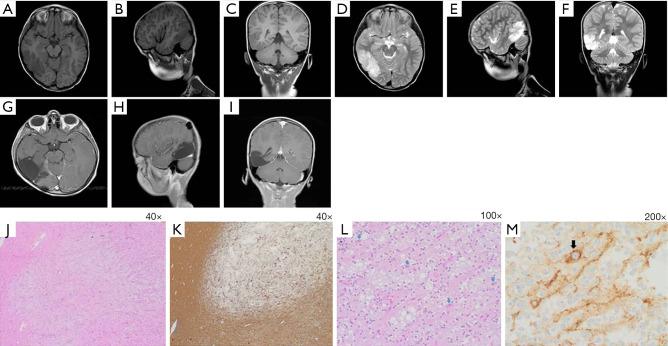
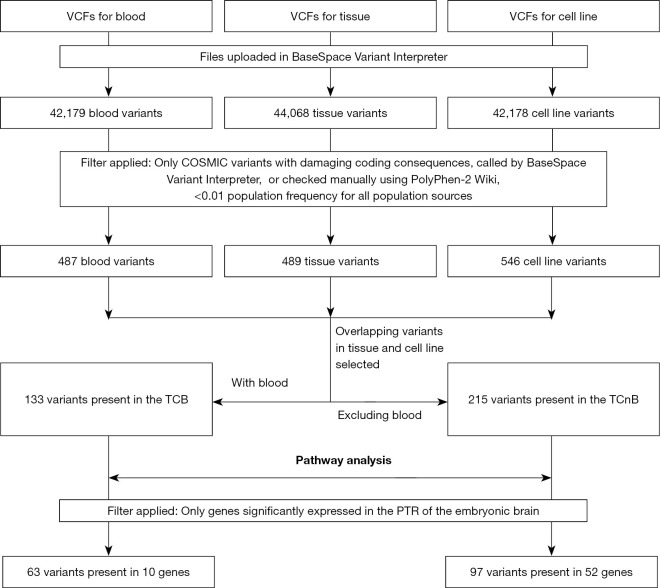
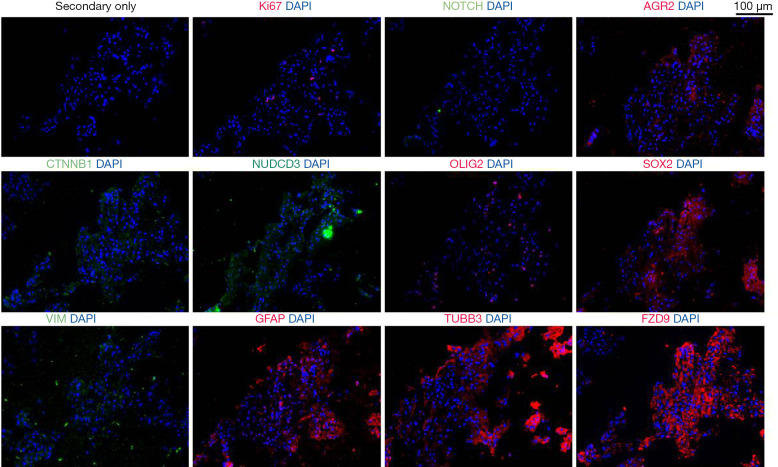
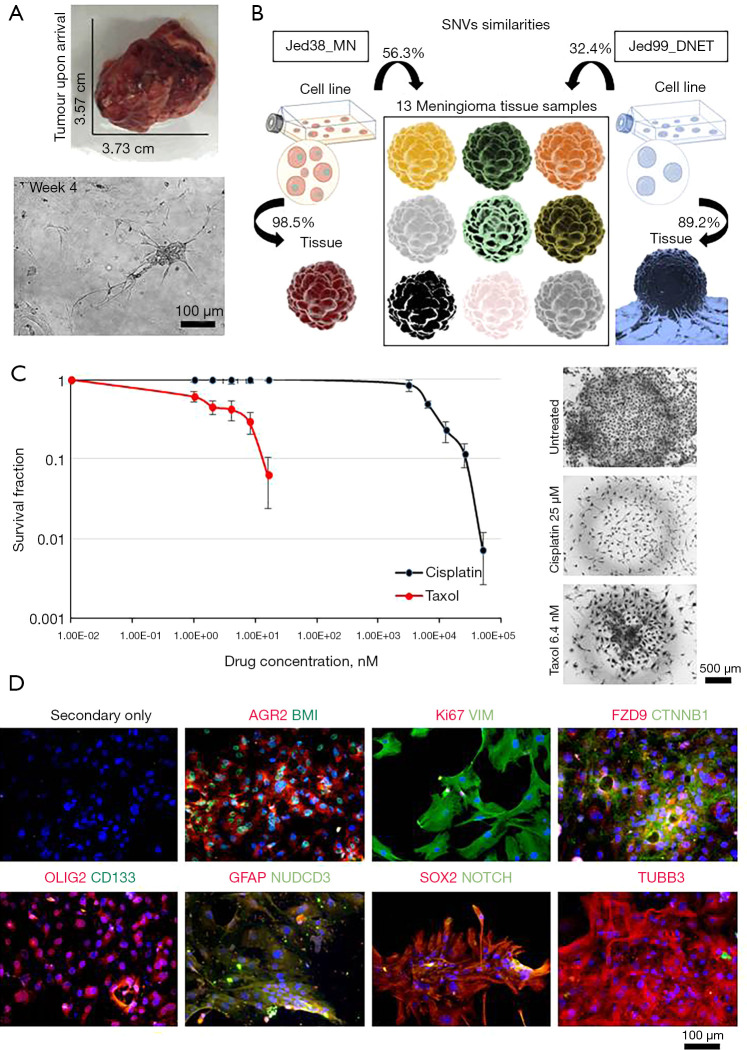
Immunofluorescence, clonogenic assay and whole exome sequencing (WES) were applied to the patient's tissue and its corresponding cell line. The case is for of a 6-year-old boy with intractable epilepsy and unremarkable physical and neurological examinations. Following magnetic resonance imaging (MRI) and histopathological tests, the patient was diagnosed with DNET. The child underwent a right posterior temporoparietooccipital neuronavigation-assisted craniotomy. Several CSC markers were upregulated , including the metastasis-related protein, anterior gradient 2 (AGR2; 67%), and the Wnt-signalling-related protein, frizzled class receptor 9 (FZD9; 79%). The cell line possessed a similar DNA profile as the original tissue, stained positive for the tumorigenic marker [BMI1 proto-oncogene (BMI)] and CSC markers, and displayed drug resistance. Variants identified in the tissue DNA, which are listed in the catalogue of somatic mutations in cancer (COSMIC) database for genes previously known to be necessary for the development of the embryonic brain, included variants in the cell division cycle 27 () gene.
we report the and presence of CSCs in a paediatric DNET.
胚胎发育不良性神经上皮肿瘤(DNETs)较为罕见,仅有少数致死病例的报道。目前,神经肿瘤学专业人士正集中精力揭示个体中枢神经系统肿瘤(CNSTs)的分子特征。在此,我们报告了小儿DNET中与抗逆性和耐药性相关的癌症干细胞(CSC)基因的状况,因为CSC基因的失调和变异可能对这些肿瘤的分子特征至关重要。
对患者的组织及其相应的细胞系进行了免疫荧光、克隆形成试验和全外显子测序(WES)。该病例为一名6岁男孩,患有顽固性癫痫,体格检查和神经系统检查均无异常。经磁共振成像(MRI)和组织病理学检查后,该患者被诊断为DNET。患儿接受了右后颞顶枕神经导航辅助开颅手术。几种CSC标志物上调,包括转移相关蛋白前梯度2(AGR2;67%)和Wnt信号相关蛋白卷曲蛋白家族受体9(FZD9;79%)。该细胞系具有与原始组织相似的DNA谱,致癌标志物[BMI1原癌基因(BMI)]和CSC标志物染色呈阳性,并表现出耐药性。在组织DNA中鉴定出的变异,列于癌症体细胞突变目录(COSMIC)数据库中,这些基因是胚胎脑发育先前已知必需的基因,其中包括细胞分裂周期27()基因的变异。
我们报告了小儿DNET中CSCs的存在情况。