Melcher Viktoria, Kerl Kornelius
Department of Pediatric Hematology and Oncology, University Children's Hospital Münster, 48149 Münster, Germany.
Cancers (Basel). 2021 Nov 9;13(22):5601. doi: 10.3390/cancers13225601.
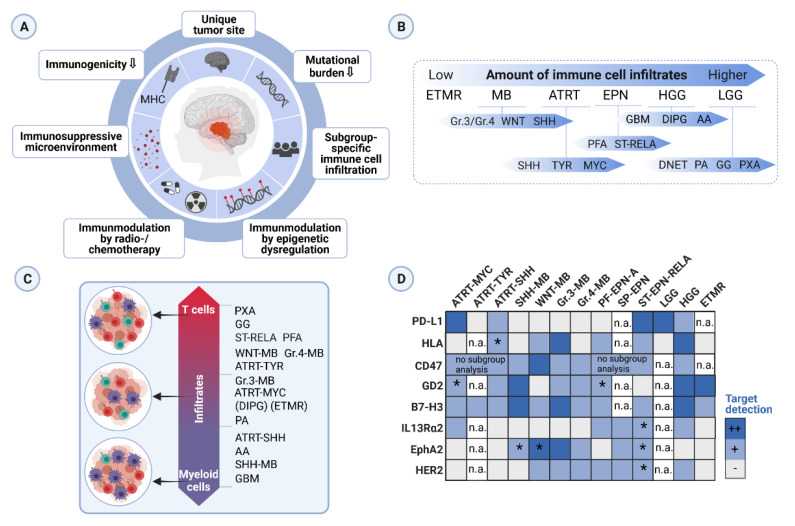
Pediatric brain tumors are genetically heterogeneous solid neoplasms. With a prevailing poor prognosis and widespread resistance to conventional multimodal therapy, these aggressive tumors are the leading cause of childhood cancer-related deaths worldwide. Advancement in molecular research revealed their unique genetic and epigenetic characteristics and paved the way for more defined prognostication and targeted therapeutic approaches. Furthermore, uncovering the intratumoral metrics on a single-cell level placed non-malignant cell populations such as innate immune cells into the context of tumor manifestation and progression. Targeting immune cells in pediatric brain tumors entails unique challenges but promising opportunities to improve outcome. Herein, we outline the current understanding of the role of the immune regulation in pediatric brain tumors.
小儿脑肿瘤是基因异质性实体肿瘤。由于预后普遍较差且对传统多模式治疗普遍耐药,这些侵袭性肿瘤是全球儿童癌症相关死亡的主要原因。分子研究的进展揭示了它们独特的遗传和表观遗传特征,为更明确的预后评估和靶向治疗方法铺平了道路。此外,在单细胞水平上揭示肿瘤内指标,将诸如先天免疫细胞等非恶性细胞群体置于肿瘤表现和进展的背景中。靶向小儿脑肿瘤中的免疫细胞带来了独特的挑战,但也有改善预后的潜在机会。在此,我们概述了目前对免疫调节在小儿脑肿瘤中作用的理解。