Immunogenetics and Histocompatibility Lab, Instituto de Investigación Sanitaria Puerta de Hierro - Segovia de Arana, Madrid, Spain.
Medicine and Life Sciences, University Pompeu Fabra, Barcelona, Spain.
HLA. 2022 Nov;100(5):469-478. doi: 10.1111/tan.14734. Epub 2022 Jul 20.
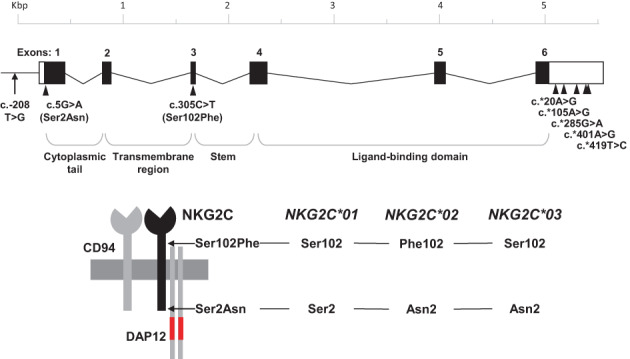
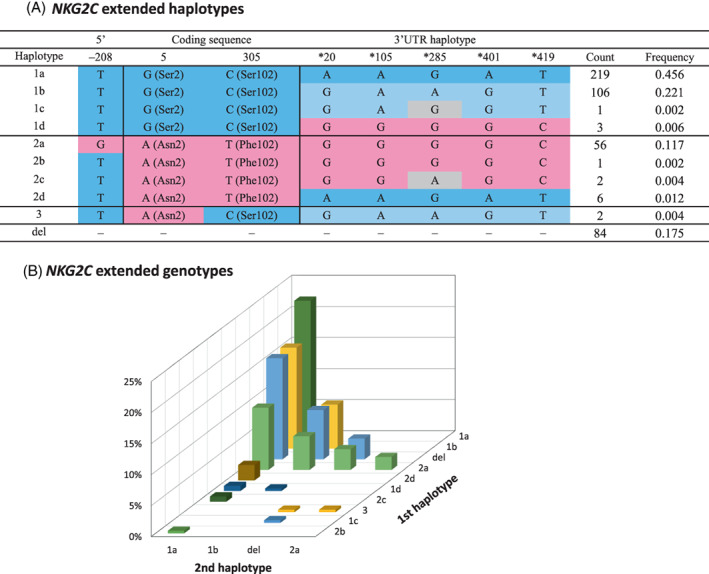
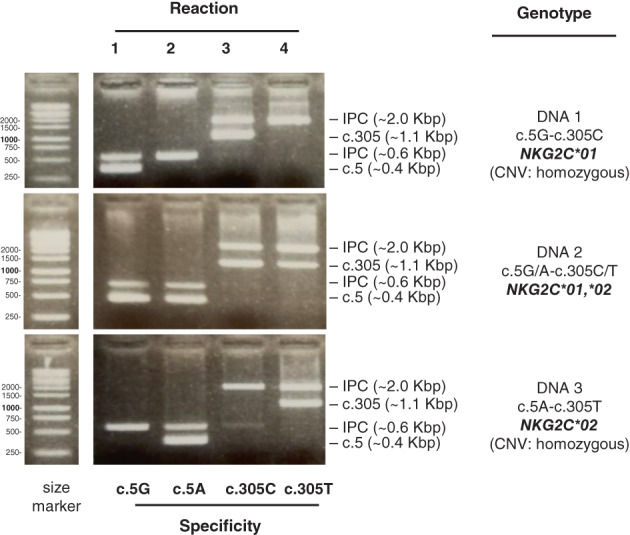
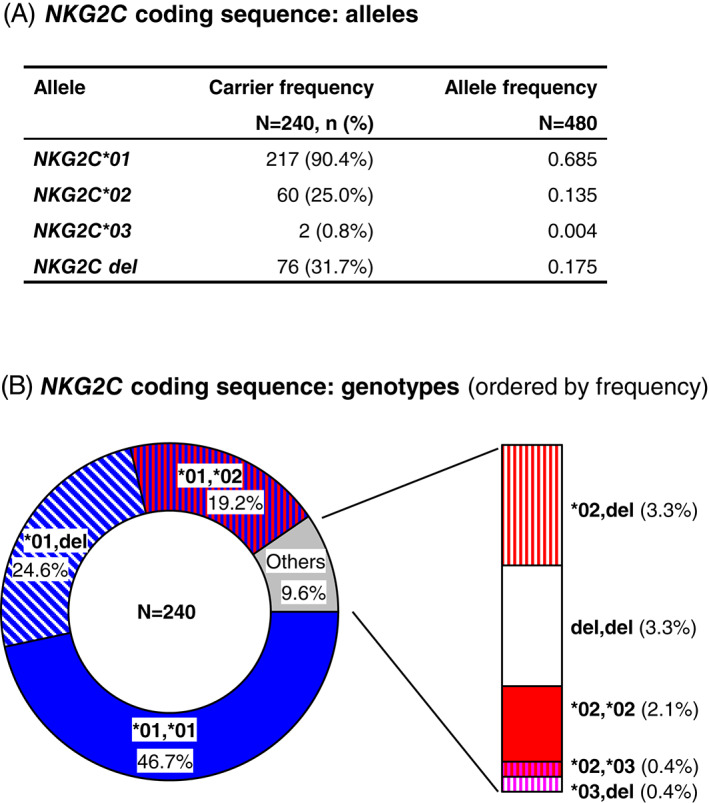
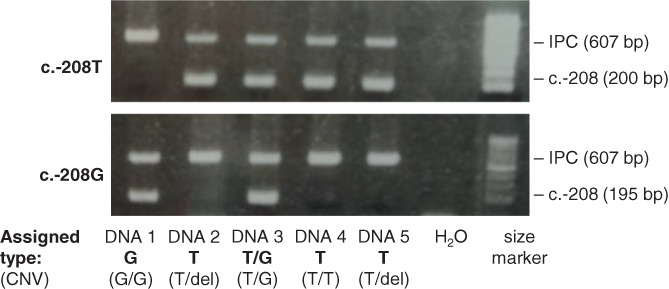
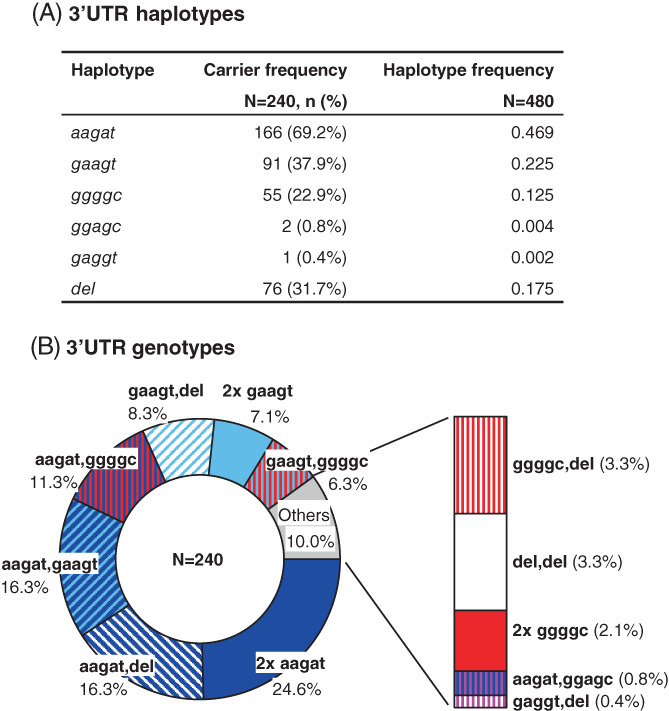
NK cells monitor altered molecular patterns in tumors and infected cells through an ample array of receptors. Two families of evolutionarily distant receptors have converged to enable human NK cells to sense levels of HLA class I ligands, frequently abnormal in altered cells. Whilst different forms of polymorphism are a hallmark of killer-cell immunoglobulin-like receptors and their classic HLA-A, B, and C ligands, genetic diversity of killer-cell lectin-like receptors for the non-classical HLA-E (CD94/NKG2 heterodimers) is less conspicuous and has attracted less attention. A common pattern of diversification in both receptor families is evolution of pairs of inhibitory and activating homologs for a common ligand, the genes encoding activating receptors being more frequently affected by copy number variation (CNV). This is exemplified by the gene encoding the activating NKG2C subunit (KLRC2 or NKG2C), which marks an NK-cell subpopulation that differentiates or expands in response to cytomegalovirus. We have studied NKG2C diversity in 240 South European individuals, using polymerase chain reaction and sequencing methods to assess both gene CNV and single-nucleotide polymorphisms (SNPs) affecting its promoter, coding and 3'-untranslated (3'UT) regions. Sequence analysis revealed eight common SNPs-one in the promoter, two in the coding sequence, and five in the 3'UT region. These SNPs associate strongly with each other, forming three conserved extended haplotypes (frequencies: 0.456, 0.221, and 0.117). Homo- and heterozygous combination of these, together with complete gene deletion (0.175) and additional haplotypes with frequencies lower than 0.015, generate a diversity of NKG2C genotypes of potential immunological importance.
NK 细胞通过大量受体监测肿瘤和感染细胞中改变的分子模式。两类进化上相距甚远的受体已趋同,使人类 NK 细胞能够感知 HLA Ⅰ类配体的水平,这些配体在改变的细胞中经常异常。虽然不同形式的多态性是杀伤细胞免疫球蛋白样受体及其经典 HLA-A、B 和 C 配体的标志,但非经典 HLA-E(CD94/NKG2 异二聚体)的杀伤细胞凝集素样受体的遗传多样性则不那么明显,也引起了较少的关注。这两种受体家族的一个共同多样化模式是为共同配体进化出一对抑制性和激活性同源物,编码激活受体的基因更频繁地受到拷贝数变异(CNV)的影响。这由编码激活 NKG2C 亚基(KLRC2 或 NKG2C)的基因所体现,该基因标记了一种 NK 细胞亚群,该亚群在巨细胞病毒的刺激下分化或扩增。我们研究了 240 名南欧个体的 NKG2C 多样性,使用聚合酶链反应和测序方法来评估基因 CNV 和影响其启动子、编码和 3'非翻译(3'UT)区的单核苷酸多态性(SNP)。序列分析显示了 8 个常见的 SNP-1 个在启动子中,2 个在编码序列中,5 个在 3'UT 区。这些 SNP 彼此强烈相关,形成三个保守的扩展单倍型(频率:0.456、0.221 和 0.117)。这些 SNP 的纯合和杂合组合,以及完全基因缺失(0.175)和频率低于 0.015 的其他单倍型,产生了具有潜在免疫重要性的 NKG2C 基因型的多样性。