Department of Human Physiology, School of Medicine, College of Medicine and Health Sciences, Hawassa University, Hawassa, Ethiopia.
Department of Human Physiology, School of Medicine, College of Medicine and Health Sciences, University of Gondar, Gondar, Ethiopia.
PLoS One. 2022 Jul 8;17(7):e0270480. doi: 10.1371/journal.pone.0270480. eCollection 2022.
Shift-work disrupts circadian rhythm, resulting in disturbed sleep time and excessive sleepiness during the work shift. Little is known about shift-work sleep disorder among health care workers in Ethiopia. This study examined the magnitude and associated factors of shift-work sleep disorder among health care workers in Public Hospitals in Sidama National Regional State, Southern Ethiopia.
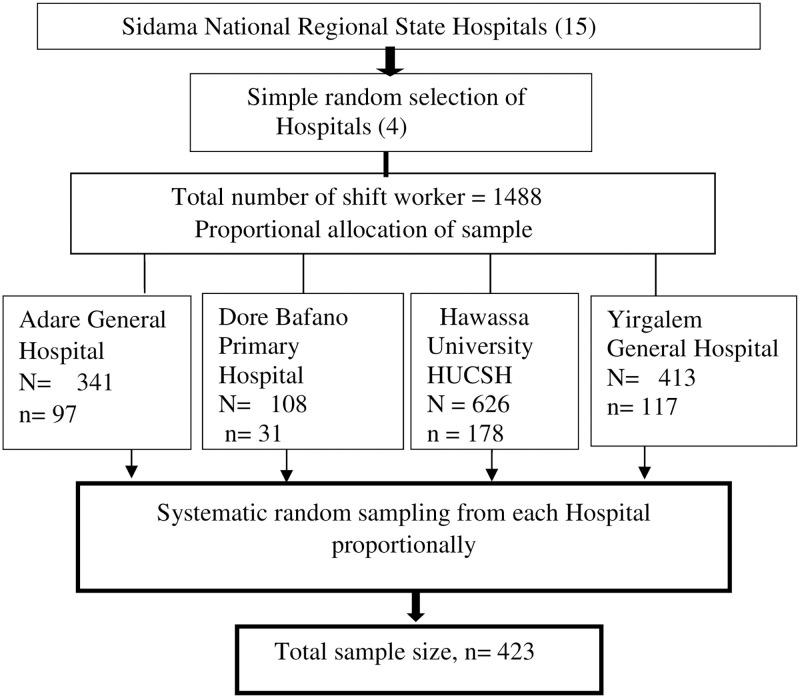
An institution-based cross-sectional study was carried out on 398 health care workers selected using a systematic random sampling technique. A self-administered structured questionnaire consisting of insomnia, sleepiness scales and international classification of sleep disorder criteria items was employed. Epi data version 4.6 and Stata 14 were used for data entry and statistical analysis respectively. Binary logistic regression was fitted to determine associated factors and decision for the statistical significance was made at p<0.05 in the multivariable binary logistic regression.
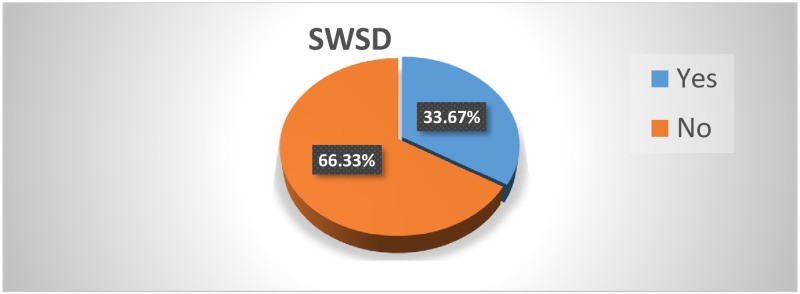
Three hundred and ninety-eight health care workers (female = 53%) were included in the analysis with a response rate of 94.8%. The prevalence of shift-work sleep disorder was 33.67% (95% CI: 29.17%-38.45%). Being married (AOR = 1.88 (1.01-3.28)), three-shift (AOR = 1.078 (1.00-3.16)), ≥11 night shifts per month (AOR = 2.44 (1.36-4.38)), missing nap (AOR = 1.85 (1.04-3.30)), daily sleep time < 7hours (AOR = 1.88 (1.05-3.38)), khat chewing (AOR = 2.98 (1.27-8.09)), alcohol drinking (AOR = 2.6(1.45-4.92)), and cigarette smoking (AOR = 3.32 (1.35-8.14)) were significantly associated with shift-work sleep disorder.
This study showed a high prevalence of shift-work sleep disorder. Two shift schedule, napping, and reduction of substance use might reduce shift-work sleep disorder.
轮班工作扰乱了生物钟,导致工作期间睡眠时间和过度嗜睡。在埃塞俄比亚,医疗保健工作者中的轮班工作睡眠障碍知之甚少。本研究调查了南埃塞俄比亚锡达莫国家地区州公立医院卫生保健工作者中轮班工作睡眠障碍的程度和相关因素。
采用基于机构的横断面研究,使用系统随机抽样技术对 398 名卫生保健工作者进行了研究。使用包含失眠、嗜睡量表和国际睡眠障碍分类标准项目的自我管理结构化问卷。分别使用 EpiData 版本 4.6 和 Stata 14 进行数据录入和统计分析。使用二元逻辑回归确定相关因素,在多变量二元逻辑回归中,p<0.05 为统计学显著。
398 名卫生保健工作者(女性=53%)纳入分析,应答率为 94.8%。轮班工作睡眠障碍的患病率为 33.67%(95%CI:29.17%-38.45%)。已婚(AOR=1.88(1.01-3.28))、三班倒(AOR=1.078(1.00-3.16))、每月≥11 个夜班(AOR=2.44(1.36-4.38))、缺觉(AOR=1.85(1.04-3.30))、每日睡眠时间<7 小时(AOR=1.88(1.05-3.38))、嚼卡特叶(AOR=2.98(1.27-8.09))、饮酒(AOR=2.6(1.45-4.92))和吸烟(AOR=3.32(1.35-8.14))与轮班工作睡眠障碍显著相关。
本研究显示轮班工作睡眠障碍患病率较高。两种轮班时间表、小睡和减少物质使用可能会减少轮班工作睡眠障碍。