Institute of Diabetes Research, Helmholtz Zentrum München, German Research Center for Environmental Health, Munich-Neuherberg, Germany; German Center for Diabetes Research (DZD), Munich, Germany; Technical University Munich, School of Medicine, Forschergruppe Diabetes at Klinikum rechts der Isar, Munich, Germany.
Institute of Diabetes Research, Helmholtz Zentrum München, German Research Center for Environmental Health, Munich-Neuherberg, Germany; German Center for Diabetes Research (DZD), Munich, Germany.
EBioMedicine. 2022 Aug;82:104118. doi: 10.1016/j.ebiom.2022.104118. Epub 2022 Jul 5.
Diabetes in childhood and adolescence includes autoimmune and non-autoimmune forms with heterogeneity in clinical and biochemical presentations. An unresolved question is whether there are subtypes, endotypes, or theratypes within these forms of diabetes.
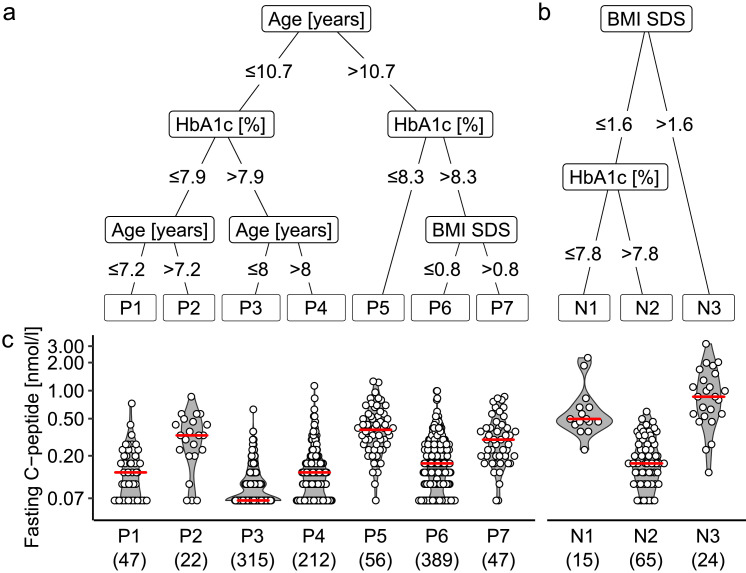
The multivariable classification and regression tree (CART) analysis method was used to identify subgroups of diabetes with differing residual C-peptide levels in patients with newly diagnosed diabetes before 20 years of age (n=1192). The robustness of the model was assessed in a confirmation and prognosis cohort (n=2722).
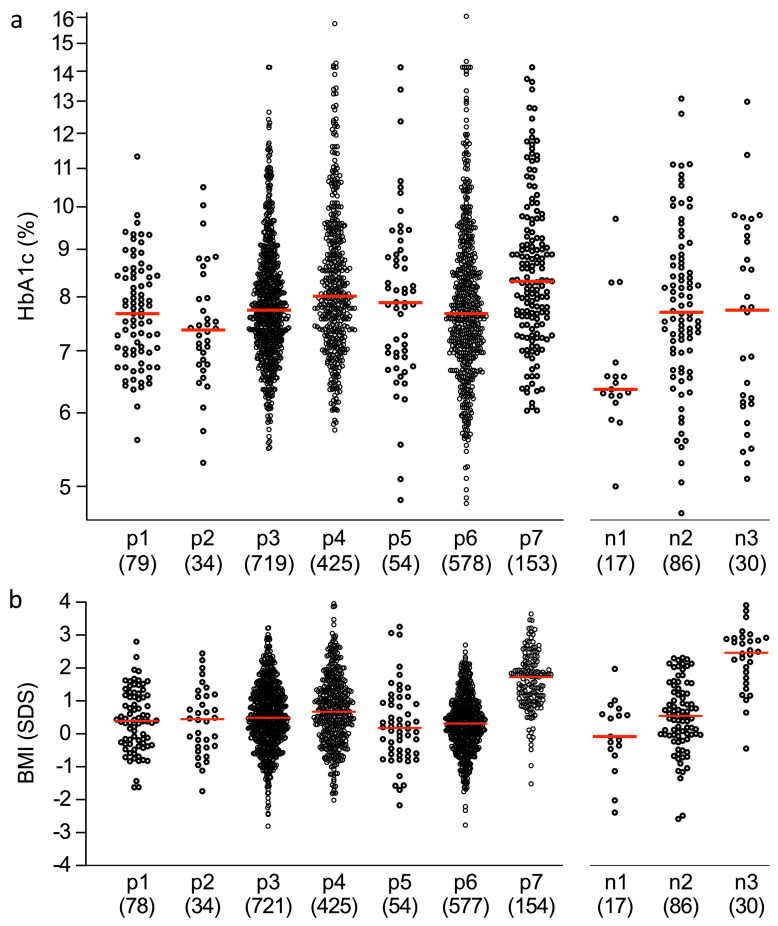
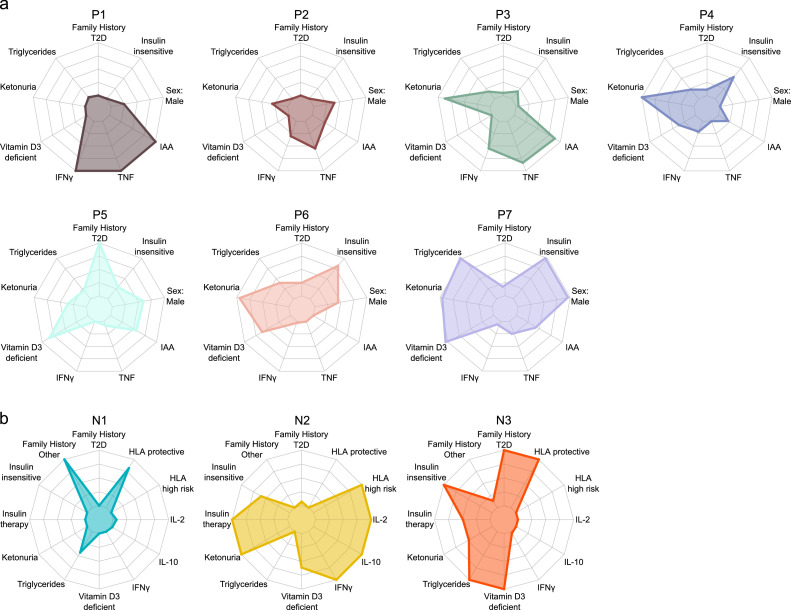
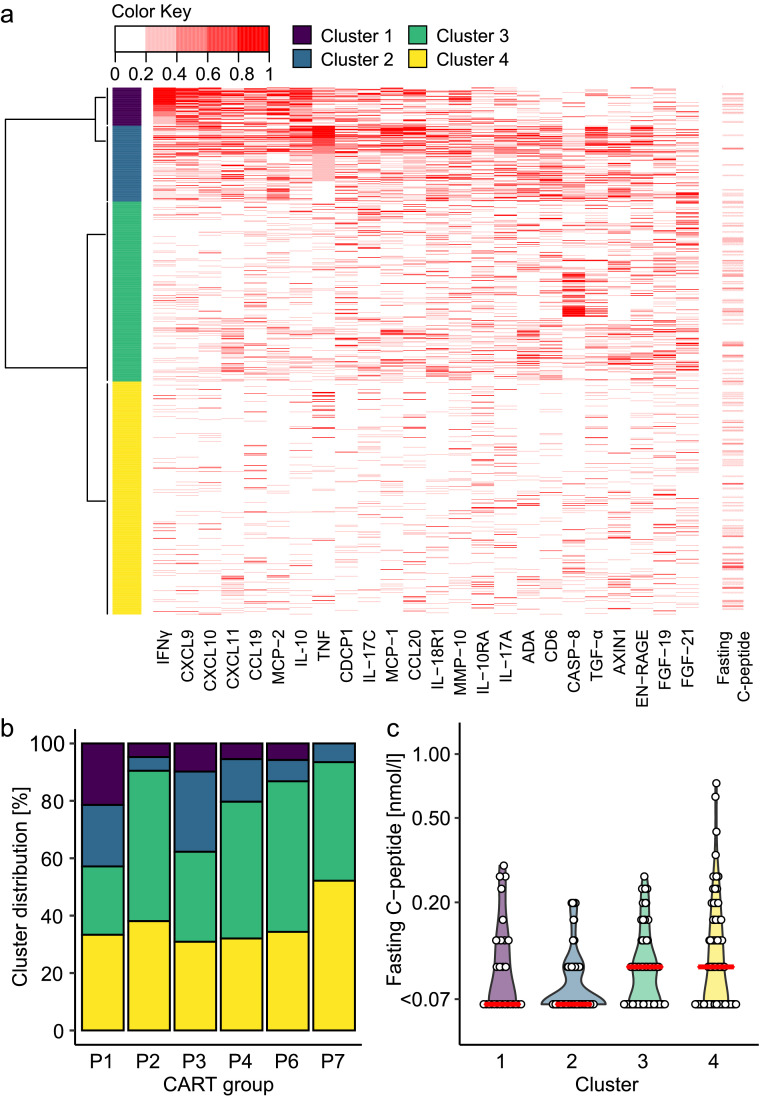
The analysis selected age, haemoglobin A1c (HbA1c), and body mass index (BMI) as split parameters that classified patients into seven islet autoantibody-positive and three autoantibody-negative groups. There were substantial differences in genetics, inflammatory markers, diabetes family history, lipids, 25-OH-Vitamin D3, insulin treatment, insulin sensitivity and insulin autoimmunity among the groups, and the method stratified patients with potentially different pathogeneses and prognoses. Interferon-ɣ and/or tumour necrosis factor inflammatory signatures were enriched in the youngest islet autoantibody-positive groups and in patients with the lowest C-peptide values, while higher BMI and type 2 diabetes characteristics were found in older patients. The prognostic relevance was demonstrated by persistent differences in HbA1c at 7 years median follow-up.
This multivariable analysis revealed subgroups of young patients with diabetes that have potential pathogenetic and therapeutic relevance.
The work was supported by funds from the German Federal Ministry of Education and Research (01KX1818; FKZ 01GI0805; DZD e.V.), the Innovative Medicine Initiative 2 Joint Undertaking INNODIA (grant agreement No. 115797), the German Robert Koch Institute, and the German Diabetes Association.
儿童和青少年糖尿病包括自身免疫和非自身免疫形式,其临床表现和生化特征存在异质性。目前尚未解决的问题是这些糖尿病形式中是否存在亚型、内型或治疗型。
使用多变量分类回归树(CART)分析方法,对 1192 名年龄在 20 岁以下新诊断为糖尿病的患者中不同残余 C 肽水平的糖尿病亚组进行鉴定。在确认和预后队列(n=2722)中评估了该模型的稳健性。
该分析选择年龄、糖化血红蛋白(HbA1c)和体重指数(BMI)作为分裂参数,将患者分为 7 个胰岛自身抗体阳性和 3 个自身抗体阴性组。组间存在遗传、炎症标志物、糖尿病家族史、脂质、25-羟维生素 D3、胰岛素治疗、胰岛素敏感性和胰岛素自身免疫等方面的显著差异,该方法对潜在不同发病机制和预后的患者进行了分层。在最年轻的胰岛自身抗体阳性组和 C 肽值最低的患者中,干扰素-ɣ 和/或肿瘤坏死因子炎症特征丰富,而在年龄较大的患者中,BMI 较高且具有 2 型糖尿病特征。在 7 年的中位随访中,HbA1c 持续存在差异,证明了该预后的相关性。
该多变量分析揭示了具有潜在发病机制和治疗相关性的年轻糖尿病患者亚组。
这项工作得到了德国联邦教育与研究部(01KX1818;FKZ 01GI0805;DZD e.V.)、创新药物倡议 2 联合企业 INNODIA(资助协议号 115797)、德国罗伯特科赫研究所和德国糖尿病协会的资助。