van Rheede Joram J, Feldmann Lucia K, Busch Johannes L, Fleming John E, Mathiopoulou Varvara, Denison Timothy, Sharott Andrew, Kühn Andrea A
Medical Research Council Brain Network Dynamics Unit, Nuffield Department of Clinical Neurosciences, University of Oxford, Mansfield Road, Oxford, OX1 3TH, United Kingdom.
Department of Neurology, Charité - Universitätsmedizin Berlin, corporate member of Freie Universität Berlin and Humboldt-Universität zu Berlin, Berlin, Germany.
NPJ Parkinsons Dis. 2022 Jul 8;8(1):88. doi: 10.1038/s41531-022-00350-7.
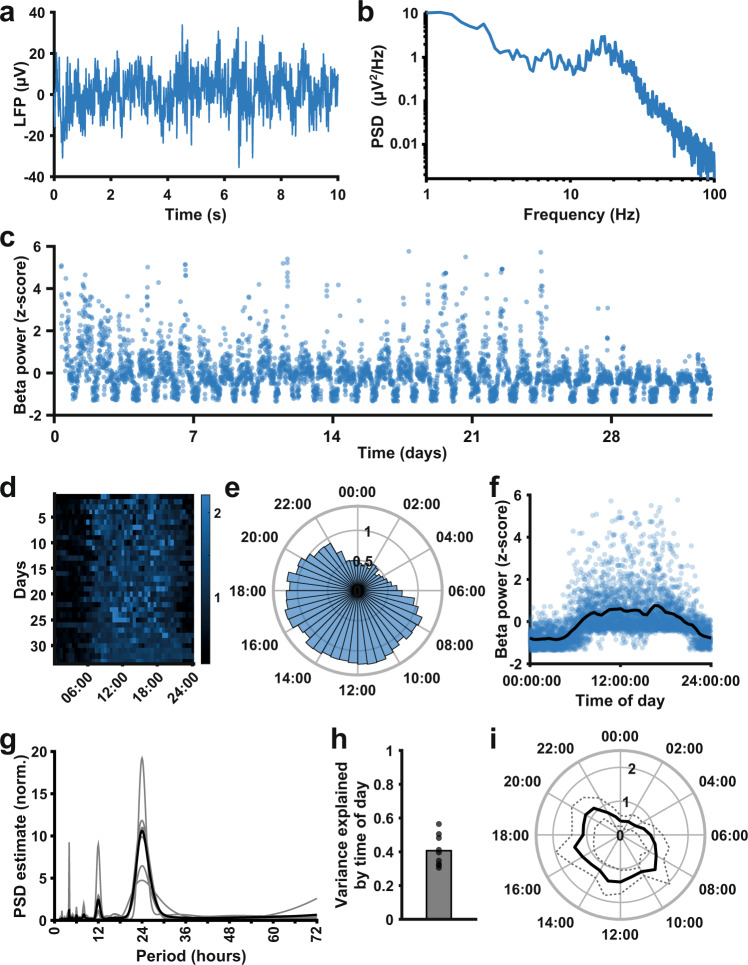
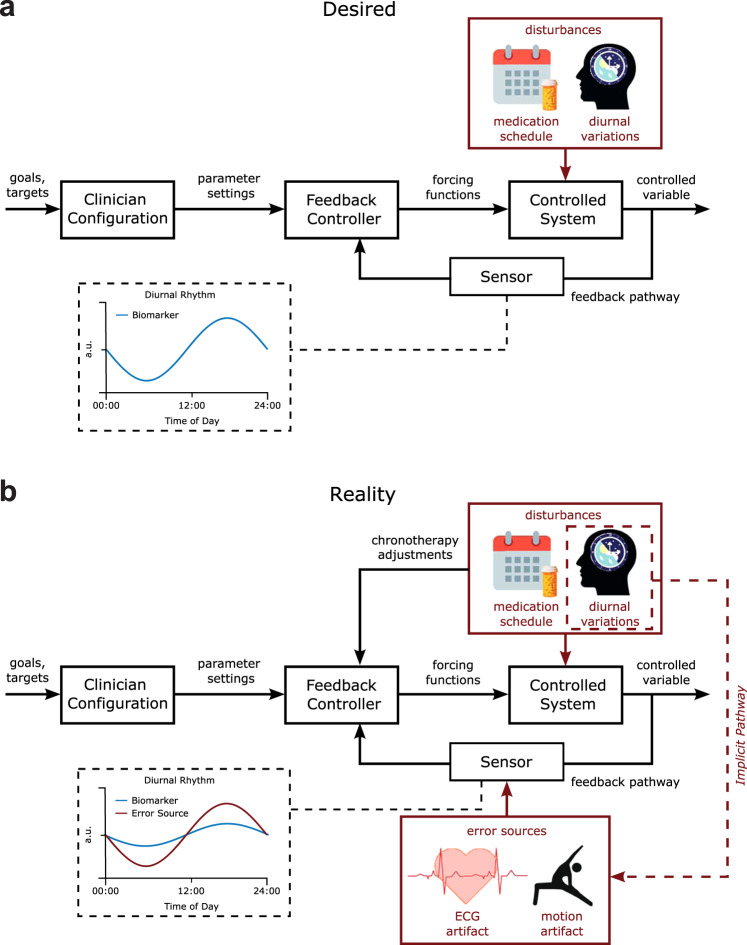
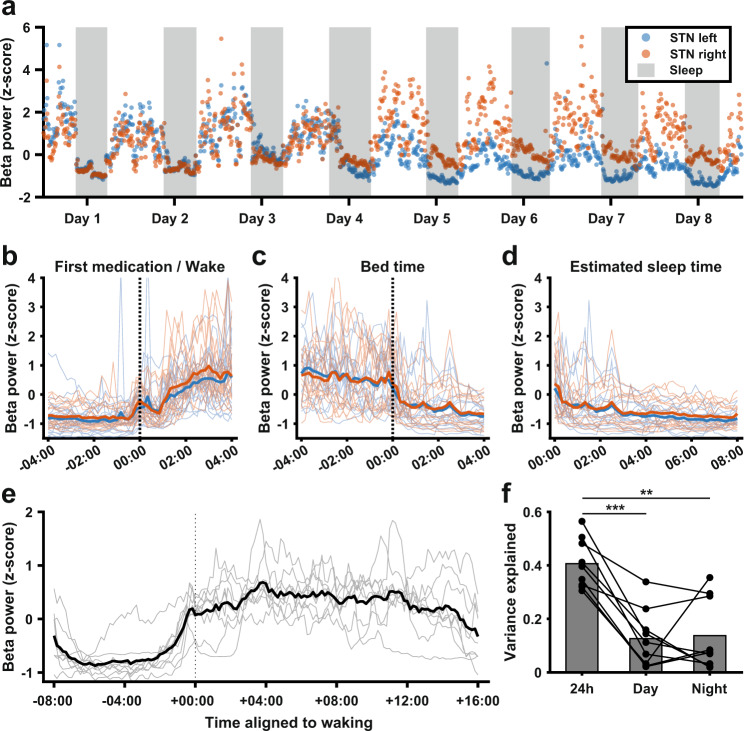
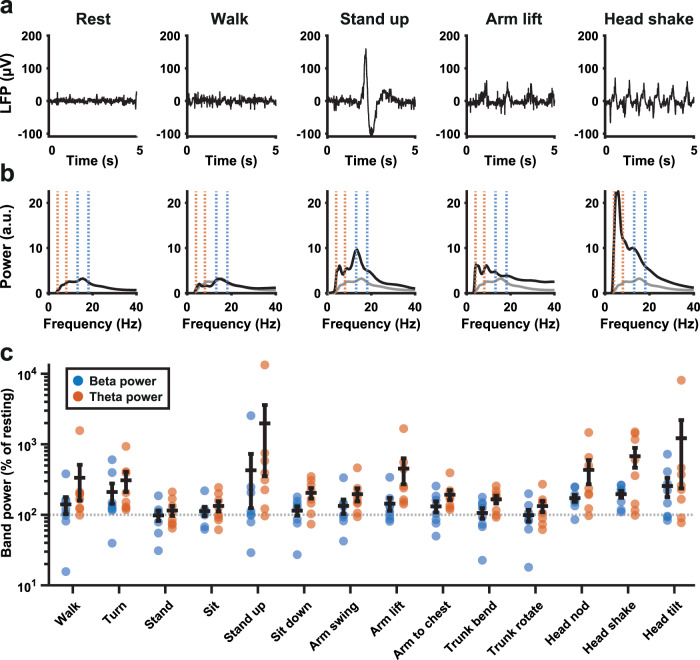
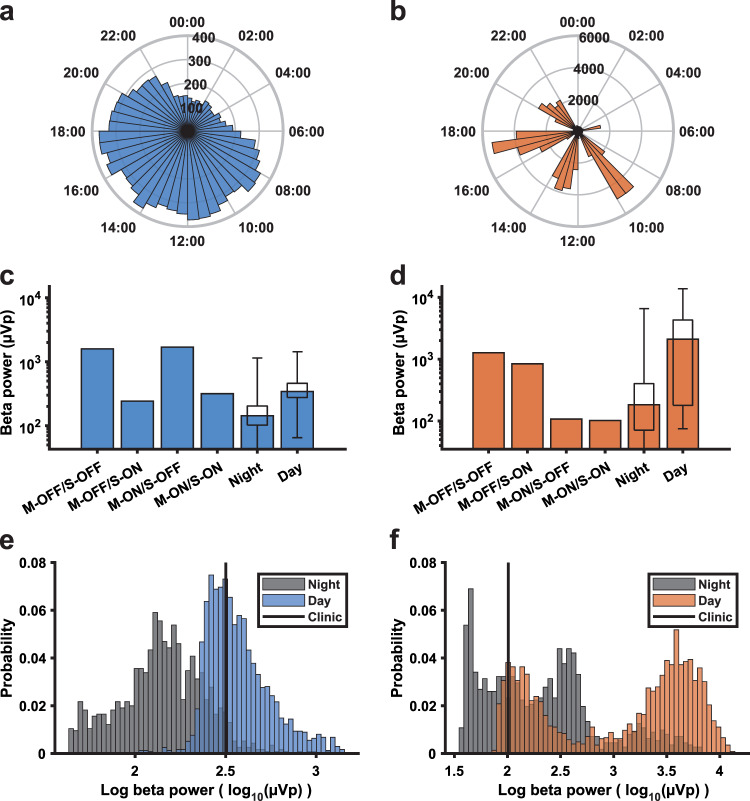
Beta-band activity in the subthalamic local field potential (LFP) is correlated with Parkinson's disease (PD) symptom severity and is the therapeutic target of deep brain stimulation (DBS). While beta fluctuations in PD patients are well characterized on shorter timescales, it is not known how beta activity evolves around the diurnal cycle, outside a clinical setting. Here, we obtained chronic recordings (34 ± 13 days) of subthalamic beta power in PD patients implanted with the Percept DBS device during high-frequency DBS and analysed their diurnal properties as well as sensitivity to artifacts. Time of day explained 41 ± 9% of the variance in beta power (p < 0.001 in all patients), with increased beta during the day and reduced beta at night. Certain movements affected LFP quality, which may have contributed to diurnal patterns in some patients. Future DBS algorithms may benefit from taking such diurnal and artifactual fluctuations in beta power into account.
丘脑底核局部场电位(LFP)中的β波段活动与帕金森病(PD)症状严重程度相关,并且是深部脑刺激(DBS)的治疗靶点。虽然PD患者的β波动在较短时间尺度上已有充分的特征描述,但在临床环境之外,β活动在昼夜周期中如何演变尚不清楚。在这里,我们对植入Percept DBS设备的PD患者在高频DBS期间丘脑底核β功率进行了长期记录(34±13天),并分析了它们的昼夜特性以及对伪迹的敏感性。一天中的时间解释了β功率方差的41±9%(所有患者p<0.001),白天β增加,夜间β减少。某些运动影响LFP质量,这可能导致了一些患者的昼夜模式。未来的DBS算法可能会受益于考虑β功率的这种昼夜和伪迹波动。