Ampem Gilbert, Le Gresley Adam, Grootveld Martin, Naughton Declan P
Department of Chemistry and Pharmaceutical Sciences, SEC Faculty, Kingston University, Kingston-upon-Thames, Surrey KT1 2EE, UK.
Leicester School of Pharmacy, De Montfort University, Leicester LE1 9BH, UK.
Foods. 2022 Jun 24;11(13):1864. doi: 10.3390/foods11131864.
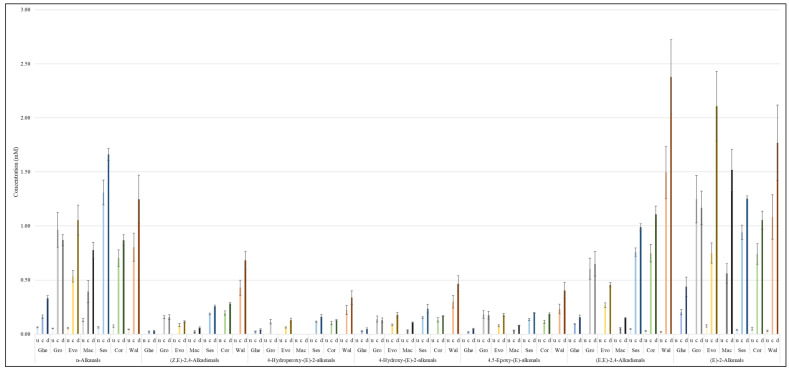
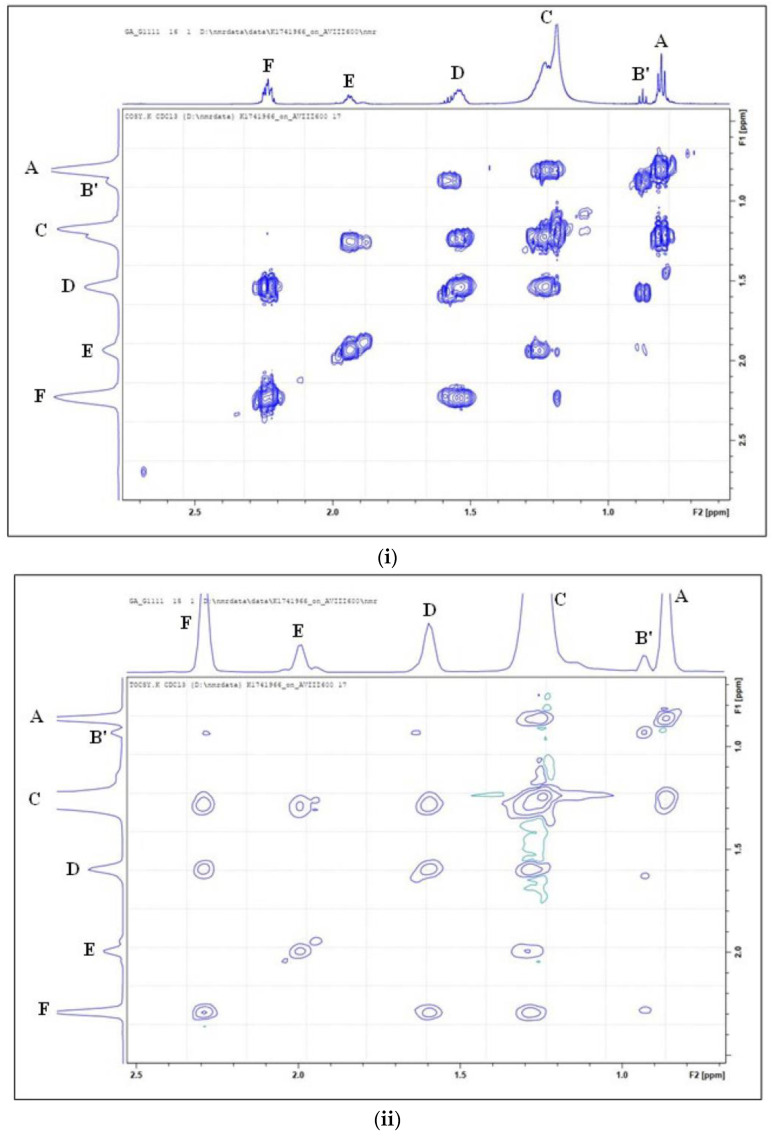
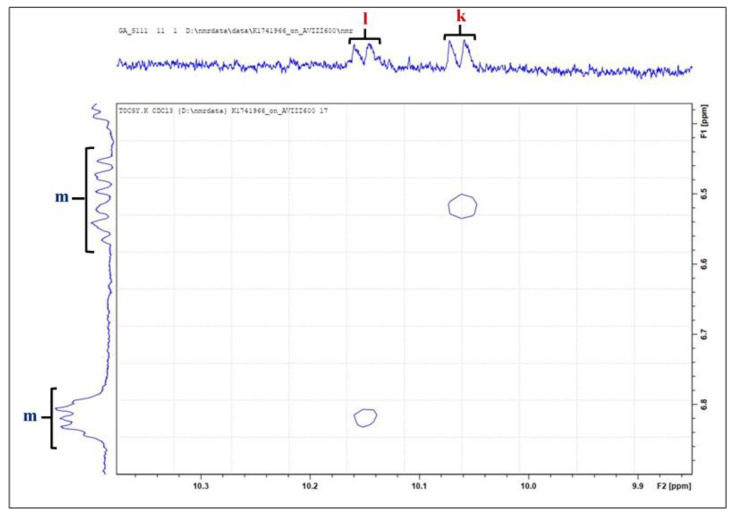
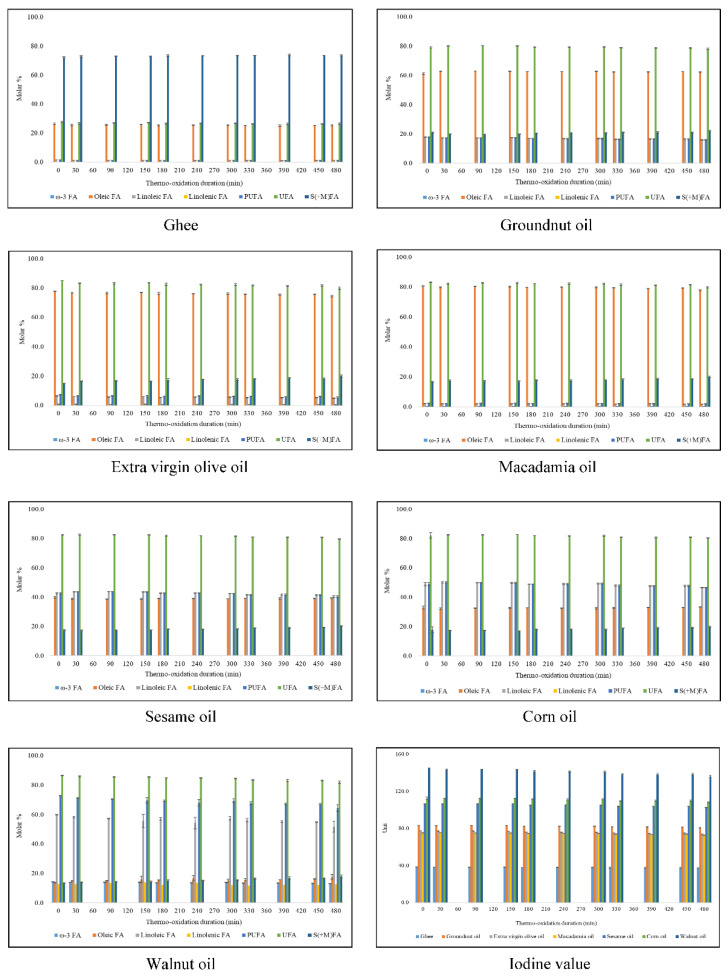
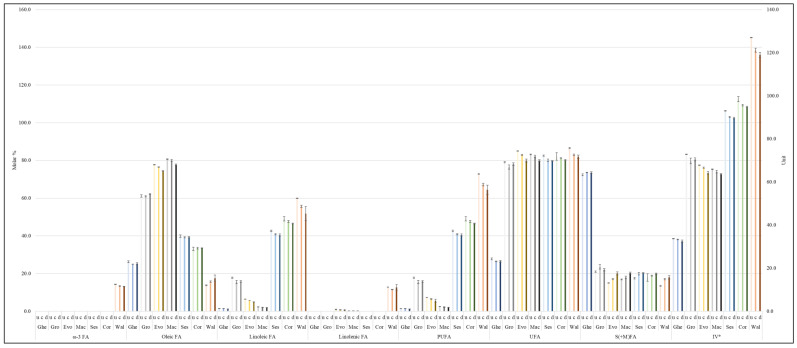
Scientific warnings on the deleterious health effects exerted by dietary lipid oxidation products (LOPs) present in thermally stressed culinary oils have, to date, not received adequate attention given that there has been an increase in the use and consumption of such oil products in everyday life. In this study, high-resolution H nuclear magnetic resonance (NMR) analysis was used to characterize and map chemical modifications to fatty acid (FA) acyl groups and the evolution of LOPs in saturated fatty acid (SFA)-rich ghee, monounsaturated fatty acid (MUFA)-rich groundnut, extra virgin olive, and macadamia oils, along with polyunsaturated fatty acid (PUFA)-rich sesame, corn and walnut oils, which were all thermally stressed at 180 °C, continuously and discontinuously for 300 and 480 min, respectively. Results acquired revealed that PUFA-rich culinary oils were more susceptible to thermo-oxidative stress than the others tested, as expected. However, ghee and macadamia oil both generated only low levels of toxic LOPs, and these results demonstrated a striking similarity. Furthermore, at the 120 min thermo-oxidation time-point, the discontinuous thermo-oxidation episodes produced higher concentrations of aldehydic LOPs than those produced during continuous thermo-oxidation sessions for the same duration. On completion of the thermo-oxidation period, a higher level of triacylglycerol chain degradation, and hence, higher concentrations of aldehydes, were registered in culinary oils thermally stressed continuously over those found in discontinuous thermo-oxidized oils. These findings may be crucial in setting targets and developing scientific methods for the suppression of LOPs in thermo-oxidized oils.
关于热应激烹饪油中膳食脂质氧化产物(LOPs)对健康的有害影响的科学警告,迄今为止尚未得到足够的关注,因为此类油品在日常生活中的使用和消费有所增加。在本研究中,采用高分辨率氢核磁共振(NMR)分析来表征和绘制富含饱和脂肪酸(SFA)的酥油、富含单不饱和脂肪酸(MUFA)的花生油、特级初榨橄榄油和澳洲坚果油以及富含多不饱和脂肪酸(PUFA)的芝麻油、玉米油和核桃油中脂肪酸(FA)酰基的化学修饰和LOPs的演变,这些油分别在180°C下连续和间断热应激300分钟和480分钟。所获得的结果表明,正如预期的那样,富含PUFA的烹饪油比其他测试油更容易受到热氧化应激的影响。然而,酥油和澳洲坚果油均仅产生低水平的有毒LOPs,并且这些结果显示出惊人的相似性。此外,在120分钟热氧化时间点,间断热氧化阶段产生的醛类LOPs浓度高于相同持续时间的连续热氧化阶段。在热氧化期结束时,连续热应激的烹饪油中三酰甘油链降解水平更高,因此醛类浓度也高于间断热氧化油中的浓度。这些发现对于设定目标和开发抑制热氧化油中LOPs的科学方法可能至关重要。