• 文献检索
  • 文档翻译
  • 深度研究
  • 学术资讯
  • Suppr Zotero 插件Zotero 插件
  • 邀请有礼
  • 套餐&价格
  • 历史记录
应用&插件
Suppr Zotero 插件Zotero 插件浏览器插件Mac 客户端Windows 客户端微信小程序
定价
高级版会员购买积分包购买API积分包
服务
文献检索文档翻译深度研究API 文档MCP 服务
关于我们
关于 Suppr公司介绍联系我们用户协议隐私条款
关注我们

Suppr 超能文献

核心技术专利:CN118964589B侵权必究
粤ICP备2023148730 号-1Suppr @ 2026

文献检索

告别复杂PubMed语法,用中文像聊天一样搜索,搜遍4000万医学文献。AI智能推荐,让科研检索更轻松。

立即免费搜索

文件翻译

保留排版,准确专业,支持PDF/Word/PPT等文件格式,支持 12+语言互译。

免费翻译文档

深度研究

AI帮你快速写综述,25分钟生成高质量综述,智能提取关键信息,辅助科研写作。

立即免费体验

南非的艾滋病毒疫情:2017 年全国人口普查的主要发现。

The HIV Epidemic in South Africa: Key Findings from 2017 National Population-Based Survey.

机构信息

Human Sciences Research Council, Pretoria 0001, South Africa.

School of Public Health, University of the Witwatersrand, Johannesburg 2000, South Africa.

出版信息

Int J Environ Res Public Health. 2022 Jul 1;19(13):8125. doi: 10.3390/ijerph19138125.

DOI:10.3390/ijerph19138125
PMID:35805784
原文链接:https://pmc.ncbi.nlm.nih.gov/articles/PMC9265818/
Abstract

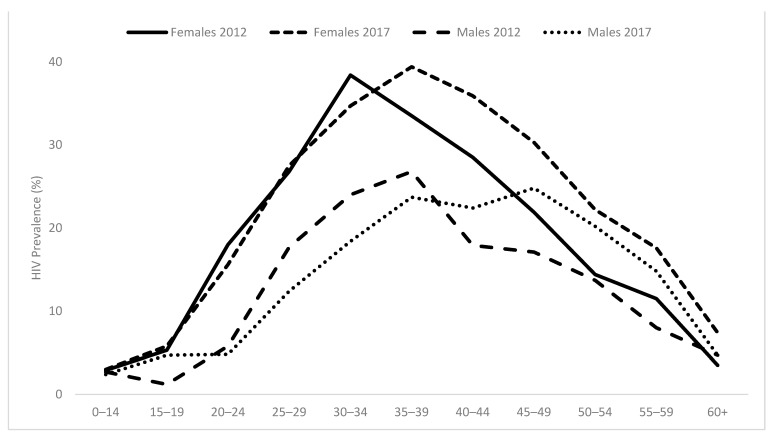
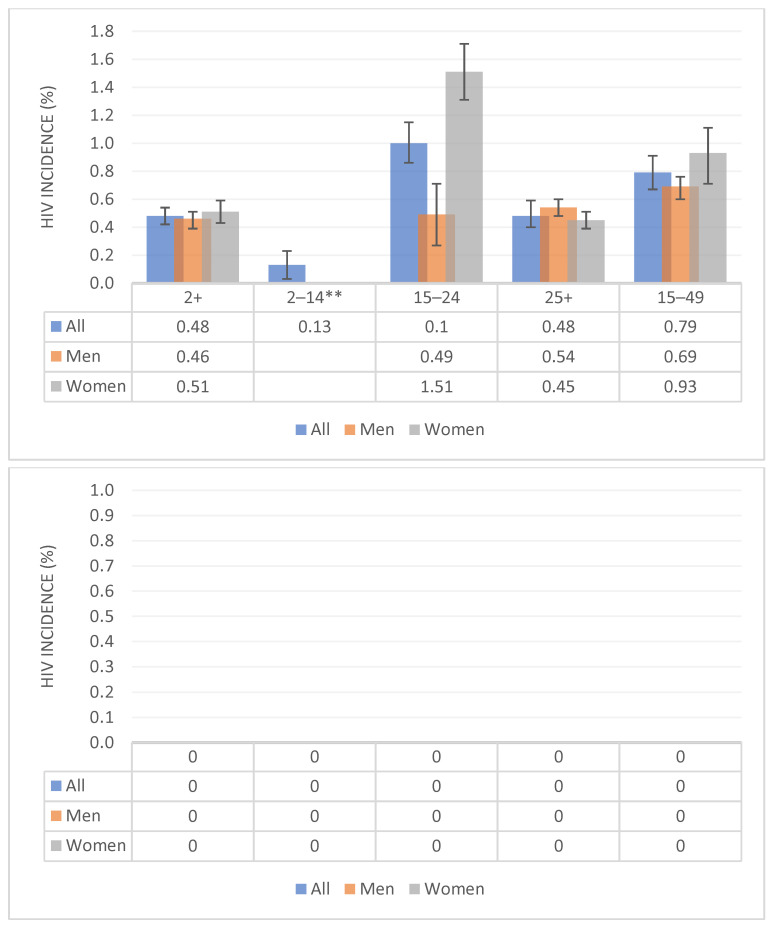
South Africa has the largest number of people living with HIV worldwide. South Africa has implemented five population-based HIV prevalence surveys since 2002 aimed at understanding the dynamics and the trends of the epidemic. This paper presents key findings from the fifth HIV prevalence, incidence, and behaviour survey conducted in 2017 following policy, programme, and epidemic change since the prior survey was conducted in 2012. A cross-sectional population-based household survey collected behavioural and biomedical data on all members of the eligible households. A total of 39,132 respondents from 11,776 households were eligible to participate, of whom 93.6% agreed to be interviewed, and 61.1% provided blood specimens. The provided blood specimens were used to determine HIV status, HIV incidence, viral load, exposure to antiretroviral treatment, and HIV drug resistance. Overall HIV incidence among persons aged 2 years and above was 0.48% which translates to an estimated 231,000 new infections in 2017. HIV prevalence was 14.0% translating to 7.9 million people living with HIV. Antiretroviral (ARV) exposure was 62.3%, with the lowest exposure among those aged 15 to 24 years (39.9%) with 10% lower ARV coverage among males compared to females. Viral suppression among those on treatment was high (87.3%), whilst HIV population viral load suppression was much lower (62.3%). In terms of risk behaviours, 13.6% of youth reported having had an early sexual debut (first sex before the age of 15 years), with more males reporting having done so (19.5%) than females (7.6%). Age-disparate relationships, defined as having a sexual partner 5+ years different from oneself,) among adolescents were more common among females (35.8%) than males (1.5%). Self-reported multiple sexual partnerships (MSPs), defined as having more than one sexual partner in the previous 12 months, were more commonly reported by males (25.5%) than females (9.0%). Condom use at last sexual encounter was highest among males than females. Three quarters (75.2%) of people reported they had ever been tested for HIV, with more females (79.3%) having had done so than males (70.9%). Two-thirds of respondents (66.8%) self-reported having tested for HIV in the past 12 months. Finally, 61.6% of males in the survey self-reported as having been circumcised, with circumcision being more common among youth aged 15-24 years (70.2%), Black Africans (68.9%), and those living in both rural informal (tribal) areas (65%) and urban areas (61.9%). Slightly more (51.2%) male circumcisions were reported to have occurred in a medical setting than in traditional settings (44.8%), with more young males aged 15-24 (62.6%) and men aged 25-49 (51.5%) reporting to have done so compared to most men aged 50 and older (57.1%) who reported that they had undergone circumcision in a traditional setting. The results of this survey show that strides have been made in controlling the HIV epidemic, especially in the reduction of HIV incidence, HIV testing, and treatment. Although condom use at last sex act remains unchanged, there continue to be some challenges with the lack of significant behaviour change as people, especially youth, continue to engage in risky behaviour and delay treatment initiation. Therefore, there is a need to develop or scale up targeted intervention programmes to increase HIV testing further and put more people living with HIV on treatment as well as prevent risky behaviours that put young people at risk of HIV infection.

摘要

南非是全球拥有艾滋病毒感染者人数最多的国家。自 2002 年以来,南非已经进行了五次基于人口的艾滋病毒流行率调查,旨在了解疫情的动态和趋势。本文介绍了 2017 年进行的第五次艾滋病毒流行率、发病率和行为调查的主要结果,该调查是在 2012 年进行上次调查以来政策、规划和疫情变化的背景下进行的。一项基于横断面的家庭住户调查收集了所有符合条件的家庭中成员的行为和生物医学数据。共有 39132 名符合条件的受访者来自 11776 个家庭,其中 93.6%同意接受采访,61.1%提供了血液样本。提供的血液样本用于确定艾滋病毒状况、艾滋病毒发病率、病毒载量、抗逆转录病毒治疗的暴露情况以及艾滋病毒耐药性。2 岁及以上人群的总体艾滋病毒发病率为 0.48%,这意味着 2017 年估计有 23.1 万人新感染艾滋病毒。艾滋病毒流行率为 14.0%,相当于有 790 万人感染艾滋病毒。抗逆转录病毒(ARV)暴露率为 62.3%,年龄在 15 至 24 岁的人群中最低(39.9%),与女性相比,男性的 ARV 覆盖率低 10%。接受治疗的人中病毒抑制率较高(87.3%),而艾滋病毒人群的病毒载量抑制率则低得多(62.3%)。就危险行为而言,13.6%的年轻人报告说有过早的性行为(15 岁之前发生的第一次性行为),其中男性报告有过这种行为的比例(19.5%)高于女性(7.6%)。青少年中存在年龄差异的关系(与自己年龄相差 5 岁以上的性伴侣),女性更为常见(35.8%),而男性则较为罕见(1.5%)。自我报告的多重性伴侣(MSP),即在过去 12 个月中有多个性伴侣,男性(25.5%)比女性(9.0%)更为常见。在最近一次性行为中使用安全套的比例在男性中高于女性。四分之三(75.2%)的人报告他们曾经接受过艾滋病毒检测,女性(79.3%)比男性(70.9%)更常接受检测。三分之二的受访者(66.8%)自我报告在过去 12 个月中进行了艾滋病毒检测。最后,调查中有 61.6%的男性自我报告曾接受过割礼,年龄在 15-24 岁的年轻人(70.2%)、非洲黑人(68.9%)以及居住在农村非正式(部落)地区(65%)和城市地区(61.9%)的人中割礼更为常见。在医疗环境中进行的男性割礼报告略多于传统环境(44.8%),与大多数年龄在 50 岁及以上的男性(57.1%)相比,年龄在 15-24 岁的年轻男性(62.6%)和年龄在 25-49 岁的男性(51.5%)报告说他们在医疗环境中进行了割礼。这项调查的结果表明,在控制艾滋病毒疫情方面已经取得了一些进展,特别是在降低艾滋病毒发病率、艾滋病毒检测和治疗方面。尽管在最近一次性行为中使用安全套的比例保持不变,但由于人们,尤其是年轻人,继续从事危险行为并延迟开始治疗,因此在行为方面仍存在一些挑战。因此,需要制定或扩大有针对性的干预计划,以进一步增加艾滋病毒检测,并让更多的艾滋病毒感染者接受治疗,同时防止使年轻人面临艾滋病毒感染风险的危险行为。
https://cdn.ncbi.nlm.nih.gov/pmc/blobs/a74d/9265818/101840f7e43b/ijerph-19-08125-g002.jpg
https://cdn.ncbi.nlm.nih.gov/pmc/blobs/a74d/9265818/b67a99a34feb/ijerph-19-08125-g001.jpg
https://cdn.ncbi.nlm.nih.gov/pmc/blobs/a74d/9265818/101840f7e43b/ijerph-19-08125-g002.jpg
https://cdn.ncbi.nlm.nih.gov/pmc/blobs/a74d/9265818/b67a99a34feb/ijerph-19-08125-g001.jpg
https://cdn.ncbi.nlm.nih.gov/pmc/blobs/a74d/9265818/101840f7e43b/ijerph-19-08125-g002.jpg

相似文献

1
The HIV Epidemic in South Africa: Key Findings from 2017 National Population-Based Survey.南非的艾滋病毒疫情:2017 年全国人口普查的主要发现。
Int J Environ Res Public Health. 2022 Jul 1;19(13):8125. doi: 10.3390/ijerph19138125.
2
Towards achieving the 90-90-90 HIV targets: results from the south African 2017 national HIV survey.迈向实现 90-90-90 艾滋病毒目标:南非 2017 年全国艾滋病毒调查结果。
BMC Public Health. 2020 Sep 9;20(1):1375. doi: 10.1186/s12889-020-09457-z.
3
New insights into HIV epidemic in South Africa: key findings from the National HIV Prevalence, Incidence and Behaviour Survey, 2012.南非艾滋病毒疫情新见解:2012年全国艾滋病毒流行率、发病率及行为调查主要发现
Afr J AIDS Res. 2016;15(1):67-75. doi: 10.2989/16085906.2016.1153491.
4
Impact of HIV testing and treatment services on risky sexual behaviour in the uMgungundlovu District, KwaZulu-Natal, South Africa: a cross-sectional study.南非夸祖鲁-纳塔尔省乌姆古伦古杜卢地区的艾滋病毒检测和治疗服务对高危性行为的影响:一项横断面研究。
AIDS Res Ther. 2019 Aug 21;16(1):20. doi: 10.1186/s12981-019-0237-z.
5
Vital need to engage the community in HIV control in South Africa.南非迫切需要让社区参与到艾滋病病毒防控工作中。
Glob Health Action. 2015 Aug 7;8:27450. doi: 10.3402/gha.v8.27450. eCollection 2015.
6
Trends and determinants of ever having tested for HIV among youth and adults in South Africa from 2005-2017: Results from four repeated cross-sectional nationally representative household-based HIV prevalence, incidence, and behaviour surveys.2005-2017 年南非青年和成年人中进行 HIV 检测的趋势和决定因素:四次全国代表性基于家庭的 HIV 流行率、发病率和行为调查的重复横断面研究结果。
PLoS One. 2020 May 14;15(5):e0232883. doi: 10.1371/journal.pone.0232883. eCollection 2020.
7
Change in sexual behaviour and decline in HIV infection among young pregnant women in urban Uganda.乌干达城市年轻孕妇性行为的变化及艾滋病毒感染率的下降
AIDS. 1997 Nov 15;11(14):1757-63. doi: 10.1097/00002030-199714000-00013.
8
The effects of intimate partner violence on women's risk of HIV acquisition and engagement in the HIV treatment and care cascade: a pooled analysis of nationally representative surveys in sub-Saharan Africa.亲密伴侣暴力对女性感染艾滋病毒风险以及参与艾滋病毒治疗和照护流程的影响:撒哈拉以南非洲地区全国代表性调查的汇总分析
Lancet HIV. 2023 Feb;10(2):e107-e117. doi: 10.1016/S2352-3018(22)00305-8. Epub 2022 Dec 1.
9
Is There Risk Compensation among HIV Infected Youth and Adults 15 Years and Older on Antiretroviral Treatment in South Africa? Findings from the 2017 National HIV Prevalence, Incidence, Behaviour and Communication Survey.南非接受抗逆转录病毒治疗的 15 岁及以上艾滋病毒感染者和成人中是否存在风险补偿?2017 年全国艾滋病毒流行率、发病率、行为和传播调查的结果。
Int J Environ Res Public Health. 2022 May 18;19(10):6156. doi: 10.3390/ijerph19106156.
10
Trends in HIV Prevention, Treatment, and Incidence in a Hyperendemic Area of KwaZulu-Natal, South Africa.南非夸祖鲁-纳塔尔省高度流行地区艾滋病毒预防、治疗和发病趋势。
JAMA Netw Open. 2019 Nov 1;2(11):e1914378. doi: 10.1001/jamanetworkopen.2019.14378.

引用本文的文献

1
The management outcomes of chronic subdural hematoma in HIV-Infected individuals.HIV感染个体慢性硬膜下血肿的管理结果
BMC Neurol. 2025 Aug 20;25(1):341. doi: 10.1186/s12883-025-04364-5.
2
Regional Disparities and Emerging Topics in Human Milk Research Across Africa: A Scoping Review.非洲母乳研究中的地区差异与新出现的主题:一项范围综述
Food Sci Nutr. 2025 Aug 15;13(8):e70810. doi: 10.1002/fsn3.70810. eCollection 2025 Aug.
3
Socio-demographic and geographic disparities in HIV prevalence, HIV testing and treatment coverage: An analysis of 108 national household surveys in 33 African countries.

本文引用的文献

1
HIV incidence trends in Africa: young women at highest risk.非洲的艾滋病毒感染率趋势:年轻女性风险最高。
Lancet HIV. 2021 Jul;8(7):e389-e390. doi: 10.1016/S2352-3018(21)00079-5.
2
Recent levels and trends in HIV incidence rates among adolescent girls and young women in ten high-prevalence African countries: a systematic review and meta-analysis.近十年来,非洲十个高流行国家青少年女孩和年轻妇女艾滋病毒感染率的水平和趋势:系统评价和荟萃分析。
Lancet Glob Health. 2019 Nov;7(11):e1521-e1540. doi: 10.1016/S2214-109X(19)30410-3.
3
Global, regional, and national incidence, prevalence, and mortality of HIV, 1980-2017, and forecasts to 2030, for 195 countries and territories: a systematic analysis for the Global Burden of Diseases, Injuries, and Risk Factors Study 2017.
艾滋病毒流行率、艾滋病毒检测及治疗覆盖率方面的社会人口和地理差异:对33个非洲国家108次全国住户调查的分析
J Int AIDS Soc. 2025 Aug;28(8):e70024. doi: 10.1002/jia2.70024.
4
Designing Artificial Intelligence-Powered Health Care Assistants to Reach Vulnerable Populations: A Discrete Choice Experiment Among South African University Students.设计人工智能驱动的医疗保健助手以惠及弱势群体:南非大学生的离散选择实验
Mayo Clin Proc Digit Health. 2025 Jul 10;3(3):100248. doi: 10.1016/j.mcpdig.2025.100248. eCollection 2025 Sep.
5
Narrative Review on the Management of Neck of Femur Fractures in People Living with HIV: Challenges, Complications, and Long-Term Outcomes.关于艾滋病毒感染者股骨颈骨折管理的叙述性综述:挑战、并发症及长期结局
Microorganisms. 2025 Jun 30;13(7):1530. doi: 10.3390/microorganisms13071530.
6
Stigma and Time: A Longitudinal Qualitative Analysis of Co-occurring HIV and Tuberculosis Stigma in South Africa.耻辱与时间:南非艾滋病毒与结核病并发耻辱感的纵向定性分析
AIDS Behav. 2025 Jul 16. doi: 10.1007/s10461-025-04803-x.
7
Safety and immunogenicity of investigational tuberculosis vaccine M72/AS01 in people living with HIV in South Africa: an observer-blinded, randomised, controlled, phase 2 trial.研究性结核病疫苗M72/AS01在南非HIV感染者中的安全性和免疫原性:一项观察者盲法、随机、对照的2期试验。
Lancet HIV. 2025 Jul 1. doi: 10.1016/S2352-3018(25)00124-9.
8
Population pharmacokinetics of pyrazinamide and isoniazid in plasma and cerebrospinal fluid from South African adults with tuberculous meningitis.南非结核性脑膜炎成年患者血浆和脑脊液中吡嗪酰胺及异烟肼的群体药代动力学
Antimicrob Agents Chemother. 2025 Aug 6;69(8):e0009925. doi: 10.1128/aac.00099-25. Epub 2025 Jul 1.
9
When evidence is not enough: A qualitative exploration of healthcare workers' perspectives on expansion of two-way texting (2wT) for post- circumcision follow-up in South Africa.证据不足时:对南非医护人员关于扩大包皮环切术后随访双向短信(2wT)的观点的定性探索。
PLOS Digit Health. 2025 Jun 5;4(6):e0000867. doi: 10.1371/journal.pdig.0000867. eCollection 2025 Jun.
10
A Disintegrin and Metalloprotease with Thrombospondin Motif, Member 13, and Von Willebrand Factor in Relation to the Duality of Preeclampsia and HIV Infection.含血小板反应蛋白基序的解聚素和金属蛋白酶13与血管性血友病因子在子痫前期和HIV感染双重性中的关系
Int J Mol Sci. 2025 Apr 25;26(9):4103. doi: 10.3390/ijms26094103.
全球、区域和国家艾滋病毒发病率、流行率和死亡率,1980-2017 年,并预测至 2030 年,为 195 个国家和地区:全球疾病、伤害和危险因素研究 2017 年的系统分析。
Lancet HIV. 2019 Dec;6(12):e831-e859. doi: 10.1016/S2352-3018(19)30196-1. Epub 2019 Aug 19.
4
Viral suppression among persons living with HIV in Trinidad & Tobago: Implications for targeted prevention programmes.特立尼达和多巴哥艾滋病毒感染者的病毒抑制情况:对目标预防规划的影响。
Glob Public Health. 2019 Nov;14(11):1569-1577. doi: 10.1080/17441692.2019.1633379. Epub 2019 Jun 30.
5
Sexual risk behaviour in a cohort of HIV-negative and HIV-positive Rwandan women.卢旺达一群艾滋病毒阴性和阳性女性的性风险行为。
Epidemiol Infect. 2018 Dec 3;147:e54. doi: 10.1017/S0950268818003023.
6
Stigma-Based Bullying Interventions: A Systematic Review.基于污名的欺凌干预措施:一项系统综述。
Dev Rev. 2018 Jun;48:178-200. doi: 10.1016/j.dr.2018.02.001. Epub 2018 Feb 22.
7
Population-level HIV incidence estimates using a combination of synthetic cohort and recency biomarker approaches in KwaZulu-Natal, South Africa.南非夸祖鲁-纳塔尔省采用合成队列和近期生物标志物方法相结合估算人群 HIV 发病率。
PLoS One. 2018 Sep 13;13(9):e0203638. doi: 10.1371/journal.pone.0203638. eCollection 2018.
8
Equity of antiretroviral treatment use in high HIV burden countries: Analyses of data from nationally-representative surveys in Kenya and South Africa.高 HIV 负担国家中抗逆转录病毒治疗的使用公平性:肯尼亚和南非全国代表性调查数据的分析。
PLoS One. 2018 Aug 10;13(8):e0201899. doi: 10.1371/journal.pone.0201899. eCollection 2018.
9
"Late for testing, early for antiretroviral therapy, less likely to die": results from a large HIV cohort study in China, 2006-2014.“检测晚,抗逆转录病毒治疗早,死亡率低”:来自中国一项大型 HIV 队列研究的结果,2006-2014 年。
BMC Infect Dis. 2018 Jun 13;18(1):272. doi: 10.1186/s12879-018-3158-x.
10
Sexual Risk Behaviors of Patients with HIV/AIDS over the Course of Antiretroviral Treatment in Northern Vietnam.越南北部抗逆转录病毒治疗过程中 HIV/AIDS 患者的性行为风险。
Int J Environ Res Public Health. 2018 May 29;15(6):1106. doi: 10.3390/ijerph15061106.