Zawadka-Kunikowska Monika, Rzepiński Łukasz, Tafil-Klawe Małgorzata, Klawe Jacek J, Zalewski Paweł, Słomko Joanna
Department of Human Physiology, Nicolaus Copernicus University Ludwik Rydygier Collegium Medicum in Bydgoszcz, Karłowicza 24, 85-092 Bydgoszcz, Poland.
Sanitas-Neurology Outpatient Clinic, Dworcowa 110, 85-010 Bydgoszcz, Poland.
J Clin Med. 2022 Jun 27;11(13):3697. doi: 10.3390/jcm11133697.
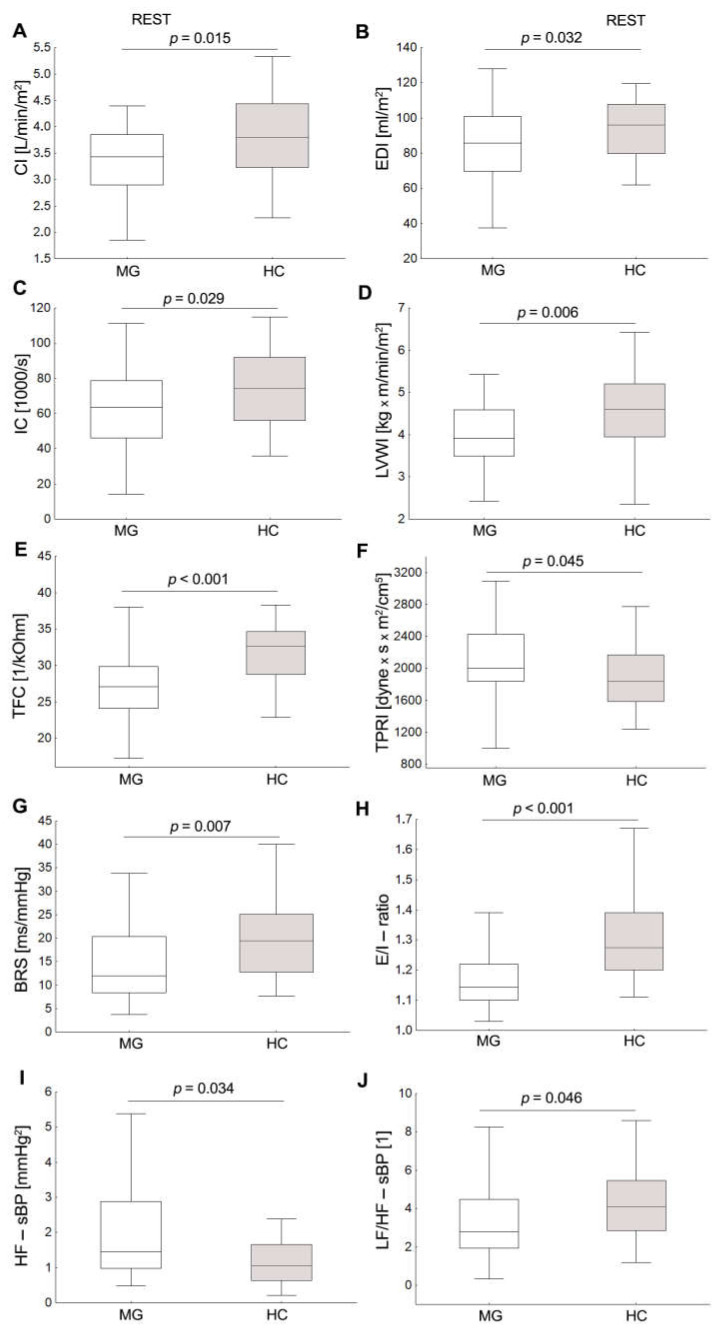
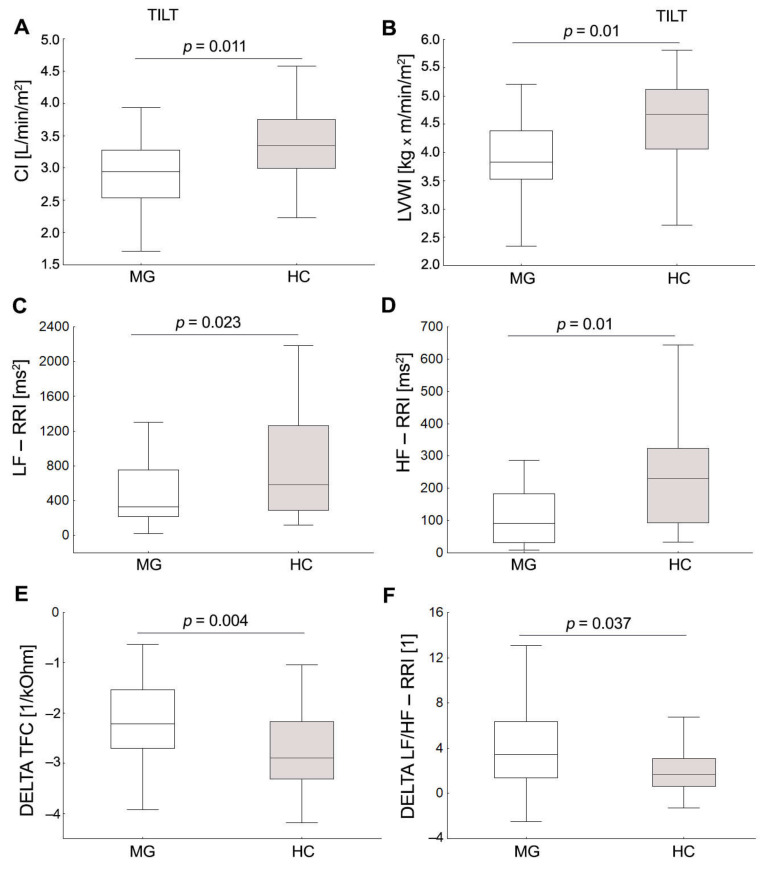
Introduction: The aim of the study was to assess cardiac and autonomic function in patients with myasthenia gravis (MG) and to explore its relationship with disease outcomes. Methods: Thirty-eight patients with an MG were enrolled (median age 40.5 years; median disease duration 5.5 years). Cardiovascular parameters, baroreflex sensitivity (BRS), spectral indices of short-term heart rate (HRV), and systolic blood pressure variability (SBPV) were compared with age- and gender-matched controls (n = 30). Cardiac autonomic function was assessed during the response to standing (tilt) and deep breathing tests (expiration/inspiration ratio-E/I). Results: HR and BP responses to the tilt test were similar in both groups. MG patients, as compared to controls, were characterized by altered SBPV at rest, significantly reduced HR response to the deep breathing test (p < 0.001), increased sympathovagal balance after tilt (delta LF/HF-RRI, p = 0.037), and lower values of BRS (p = 0.007) and hemodynamic parameters, i.e., cardiac index, index contractility, left ventricular work index, at rest and during tilt. There was no association between disease duration and autonomic parameters. Disease severity, as determined by MGFA (Myasthenia Gravis Foundation of America) corrected for age and sex, was an independent predictor of diminished vagal tone (E/I ratio) and increased sympathetic response to tilt (delta LF/HF-RRI) as measured with HRV. Lower BRS was associated with greater disease severity and older age. Hemodynamic parameters were predominantly predicted by age and sex. Conclusion: Our results confirm cardiac autonomic dysfunction among MG patients with predominant parasympathetic impairment. Clinicians should consider evaluation of autonomic balance in MG patients with, or at risk for, cardiovascular disease.
本研究旨在评估重症肌无力(MG)患者的心脏和自主神经功能,并探讨其与疾病预后的关系。方法:纳入38例MG患者(中位年龄40.5岁;中位病程5.5年)。将心血管参数、压力反射敏感性(BRS)、短期心率变异性(HRV)频谱指标和收缩压变异性(SBPV)与年龄和性别匹配的对照组(n = 30)进行比较。在站立(倾斜)和深呼吸试验(呼气/吸气比 - E/I)反应期间评估心脏自主神经功能。结果:两组患者对倾斜试验的心率和血压反应相似。与对照组相比,MG患者的特征为静息时SBPV改变、对深呼吸试验的心率反应显著降低(p < 0.001)、倾斜后交感迷走平衡增加(δLF/HF - RRI,p = 0.037)以及BRS(p = 0.007)和血流动力学参数(即心脏指数、心肌收缩力指数、左心室作功指数)在静息和倾斜时的值较低。病程与自主神经参数之间无关联。经年龄和性别校正的美国重症肌无力基金会(MGFA)确定的疾病严重程度是迷走神经张力降低(E/I比值)和倾斜时交感神经反应增加(δLF/HF - RRI)的独立预测因子,通过HRV测量。较低的BRS与更高的疾病严重程度和年龄较大有关。血流动力学参数主要由年龄和性别预测。结论:我们的结果证实了以副交感神经损害为主的MG患者存在心脏自主神经功能障碍。临床医生应考虑对患有心血管疾病或有心血管疾病风险的MG患者进行自主神经平衡评估。