Tiron Vasile, Ciolan Mihai Alexandru, Bulai Georgiana, Mihalache Gabriela, Lipsa Florin Daniel, Jijie Roxana
Research Center on Advanced Materials and Technologies, Department of Exact and Natural Sciences, Institute of Interdisciplinary Research, Alexandru Ioan Cuza University of Iasi, Iasi 700506, Romania.
Integrated Center of Environmental Science Studies in the North-Eastern Development Region (CERNESIM), Department of Exact and Natural Sciences, Institute of Interdisciplinary Research, Alexandru Ioan Cuza University of Iasi, Iasi 700506, Romania.
Nanomaterials (Basel). 2022 Jun 26;12(13):2193. doi: 10.3390/nano12132193.
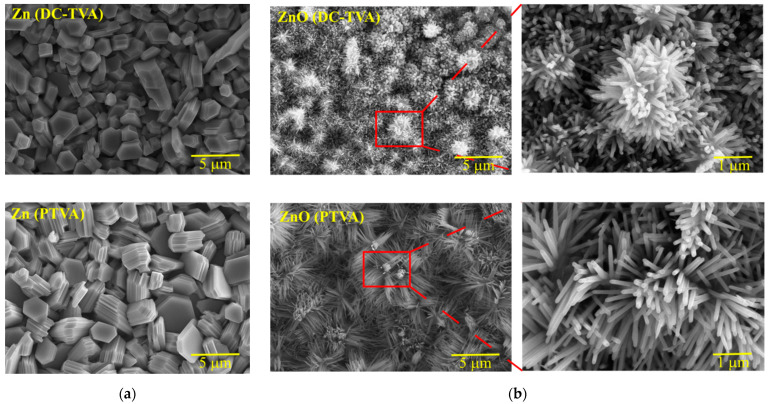
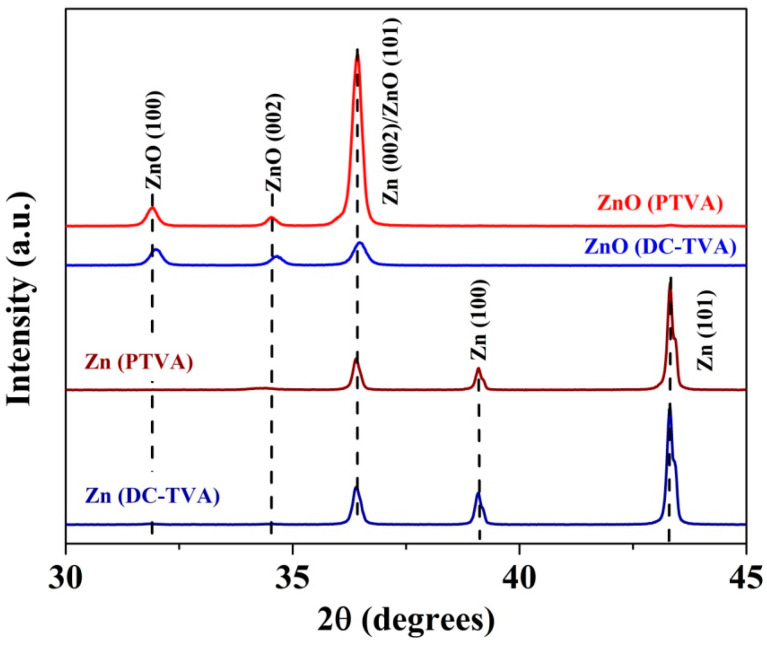
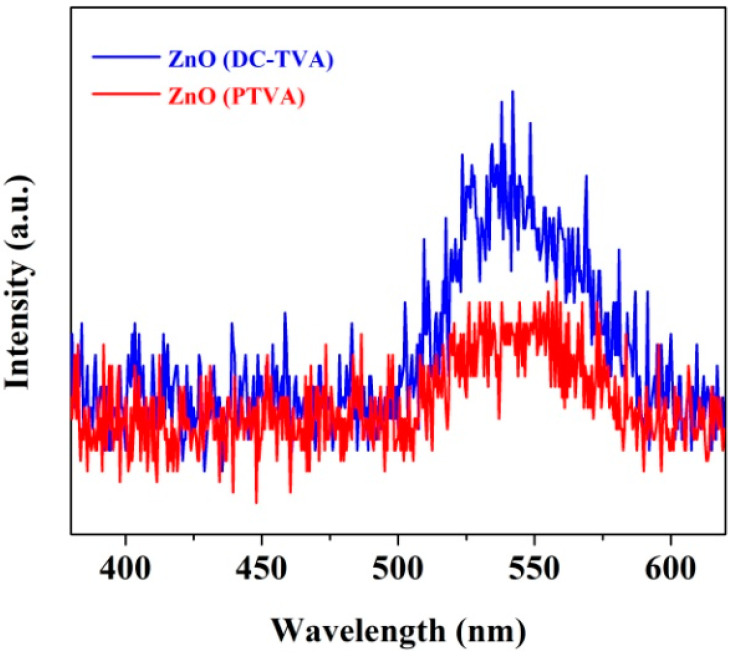
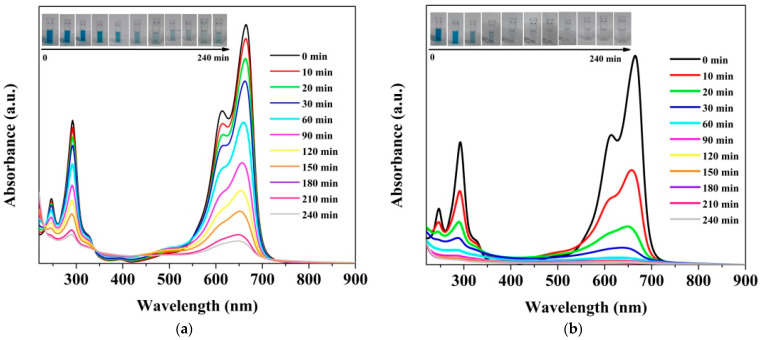
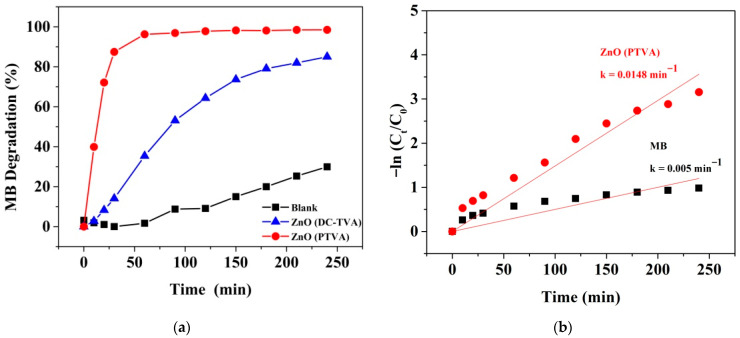
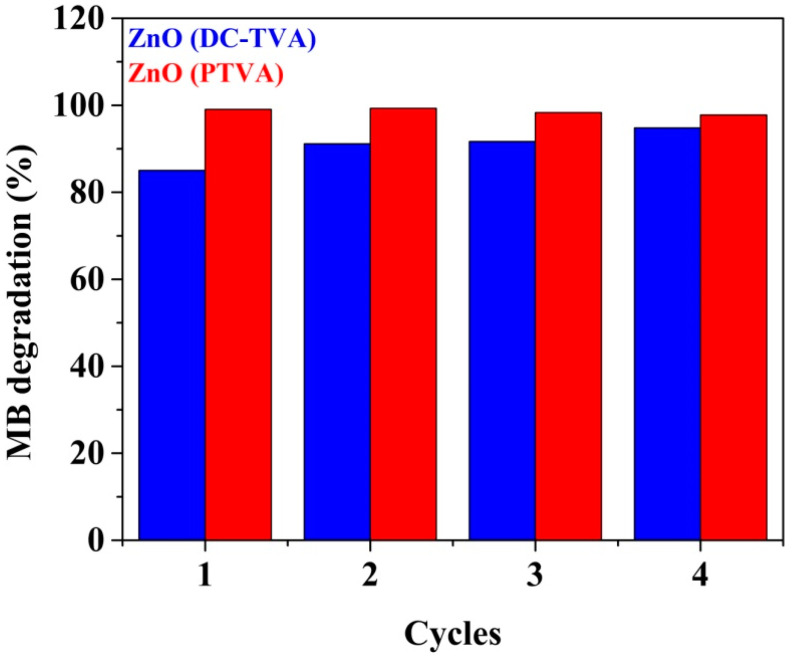
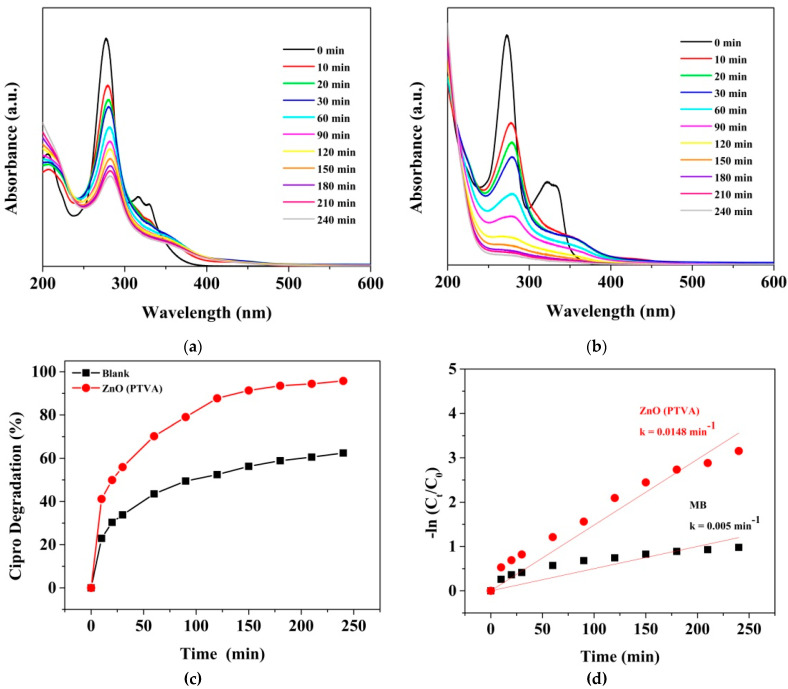
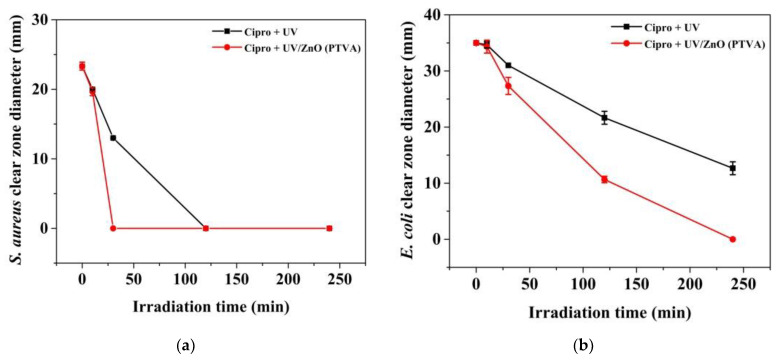
Flower-like ZnO architectures assembled with many nanorods were successfully synthesized through Thermionic Vacuum Arc, operated both in direct current (DC-TVA) and a pulsed mode (PTVA), and coupled with annealing in an oxygen atmosphere. The prepared coatings were analysed by scanning-electron microscopy with energy-dispersive X-ray-spectroscopy (SEM-EDX), X-ray-diffraction (XRD), and photoluminescence (PL) measurements. By simply modifying the TVA operation mode, the morphology and uniformity of ZnO nanorods can be tuned. The photocatalytic performance of synthesized nanostructured ZnO coatings was measured by the degradation of methylene-blue (MB) dye and ciprofloxacin (Cipro) antibiotic. The ZnO (PTVA) showed enhancing results regarding the photodegradation of target contaminants. About 96% of MB molecules were removed within 60 min of UV irradiation, with a rate constant of 0.058 min, which is almost nine times higher than the value of ZnO (DC-TVA). As well, ZnO (PTVA) presented superior photocatalytic activity towards the decomposition of Cipro, after 240 min of irradiation, yielding 96% degradation efficiency. Moreover, the agar-well diffusion assay performance against both Gram-positive and Gram-negative bacteria confirms the degradation of antibiotic molecules by the UV/ZnO (PTVA) approach, without the formation of secondary hazardous products during the photocatalysis process. Repeated cyclic usage of coatings revealed excellent reusability and operational stability.
通过热离子真空电弧法成功合成了由许多纳米棒组装而成的花状ZnO结构,该方法可在直流(DC-TVA)和脉冲模式(PTVA)下运行,并结合在氧气气氛中退火。通过扫描电子显微镜结合能量色散X射线光谱(SEM-EDX)、X射线衍射(XRD)和光致发光(PL)测量对制备的涂层进行了分析。通过简单地改变TVA操作模式,可以调节ZnO纳米棒的形态和均匀性。通过亚甲基蓝(MB)染料和环丙沙星(Cipro)抗生素的降解来测量合成的纳米结构ZnO涂层的光催化性能。ZnO(PTVA)在目标污染物的光降解方面显示出增强的结果。在紫外线照射60分钟内,约96%的MB分子被去除,速率常数为0.058分钟,这几乎是ZnO(DC-TVA)值的九倍。同样,在照射240分钟后,ZnO(PTVA)对环丙沙星的分解表现出优异的光催化活性,降解效率达96%。此外,针对革兰氏阳性和革兰氏阴性细菌的琼脂孔扩散试验性能证实了通过UV/ZnO(PTVA)方法可降解抗生素分子,且在光催化过程中不会形成二次有害产物。涂层的重复循环使用显示出优异的可重复使用性和操作稳定性。