Biomedical Engineering and Telemedicine Centre, ETSI Telecomunicación, Centre for Biomedical Technology, Universidad Politécnica de Madrid, 28040 Madrid, Spain.
Hospital Universitario La Paz de Madrid, 28046 Madrid, Spain.
Sensors (Basel). 2022 Jun 29;22(13):4913. doi: 10.3390/s22134913.
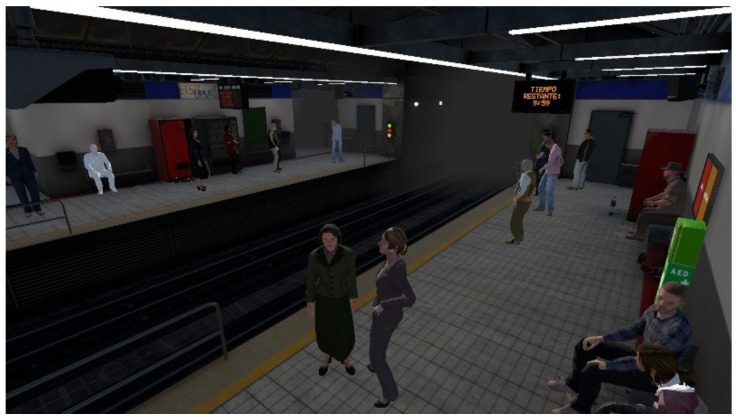
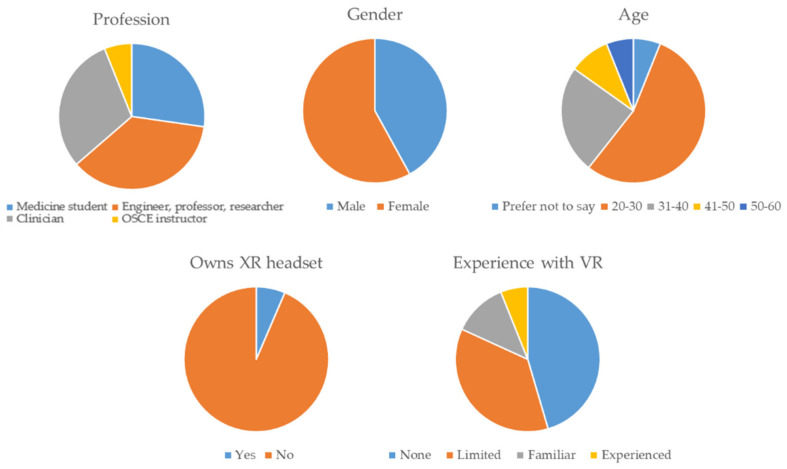
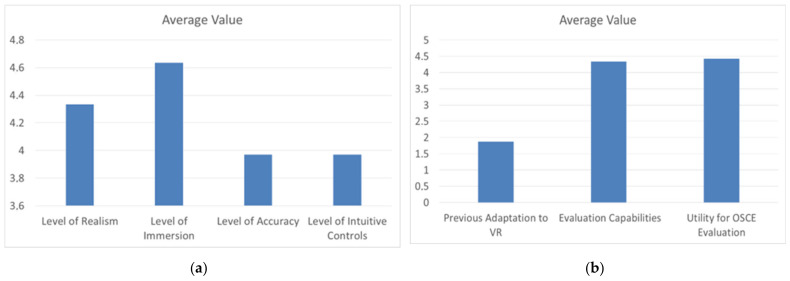
The Objective Structured Clinical Exam (OSCE) is an assessment tool used as a reliable method for clinical competence evaluation of students. This paper presents an investigation focused on the chain of survival, its related exploration, management, and technical skills, and how Virtual Reality (VR) can be used for the creation of immersive environments capable of evaluating students' performance while applying the correct protocols. In particular, the Cardiopulmonary Resuscitation (CPR) procedure is studied as an essential step in the development of the chain of survival. The paper also aims to highlight the limitations of traditional methods using mechanical mannequins and the benefits of the new approaches that involve the students in virtual, immersive, and dynamic environments. Furthermore, an immersive VR station is presented as a new technique for assessing CPR performance through objective data collection and posterior evaluation. A usability test was carried out with 33 clinicians and OSCE evaluators to test the viability of the presented scenario, reproducing conditions of a real examination. Results suggest that the environment is intuitive, quick, and easy to learn and could be used in clinical practice to improve CPR performance and OSCE evaluation.
客观结构化临床考试(OSCE)是一种评估工具,可作为评估学生临床能力的可靠方法。本文介绍了一项专注于生存链的研究,涉及生存链的相关探索、管理和技术技能,以及虚拟现实(VR)如何用于创建可评估学生表现的沉浸式环境,同时应用正确的协议。特别地,研究了心肺复苏(CPR)程序作为生存链发展的重要步骤。本文还旨在强调使用机械模型的传统方法的局限性和涉及学生参与虚拟、沉浸式和动态环境的新方法的优势。此外,还提出了一种沉浸式 VR 站,作为通过客观数据收集和后续评估来评估 CPR 性能的新技术。对 33 名临床医生和 OSCE 评估员进行了可用性测试,以测试所提出方案的可行性,再现了真实考试的条件。结果表明,该环境直观、快速、易于学习,可用于临床实践以提高 CPR 性能和 OSCE 评估。