Hepatobiliary/Liver Transplantation Center, The First Affiliated Hospital of Nanjing Medical University, Key Laboratory of Living Donor Transplantation, Chinese Academy of Medical Sciences, Nanjing, China.
Department of Anesthesiology, The First Affiliated Hospital of Nanjing Medical University, Nanjing, China.
Front Immunol. 2022 Jun 22;13:876048. doi: 10.3389/fimmu.2022.876048. eCollection 2022.
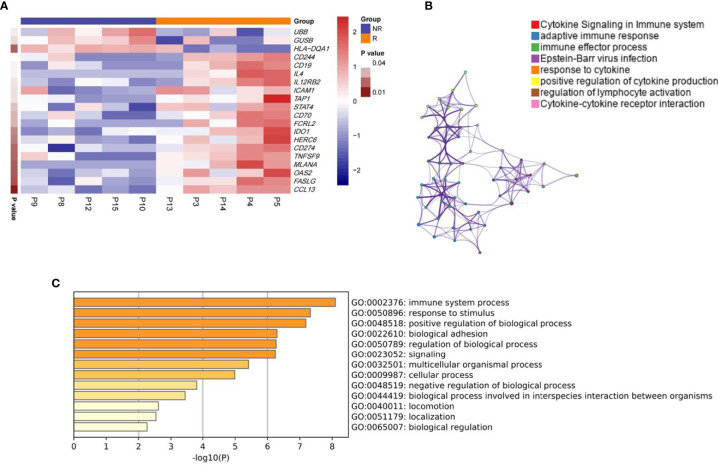
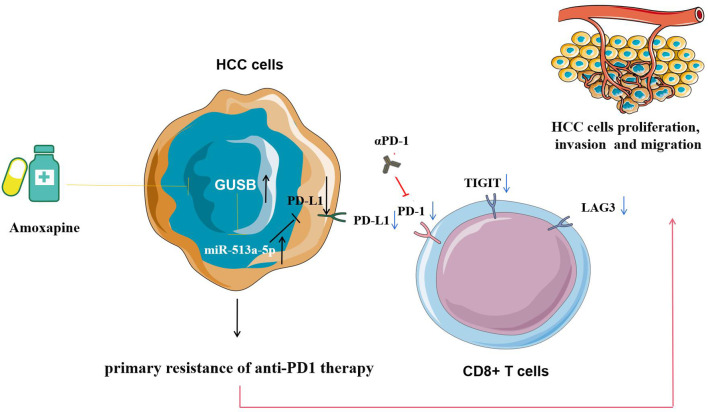
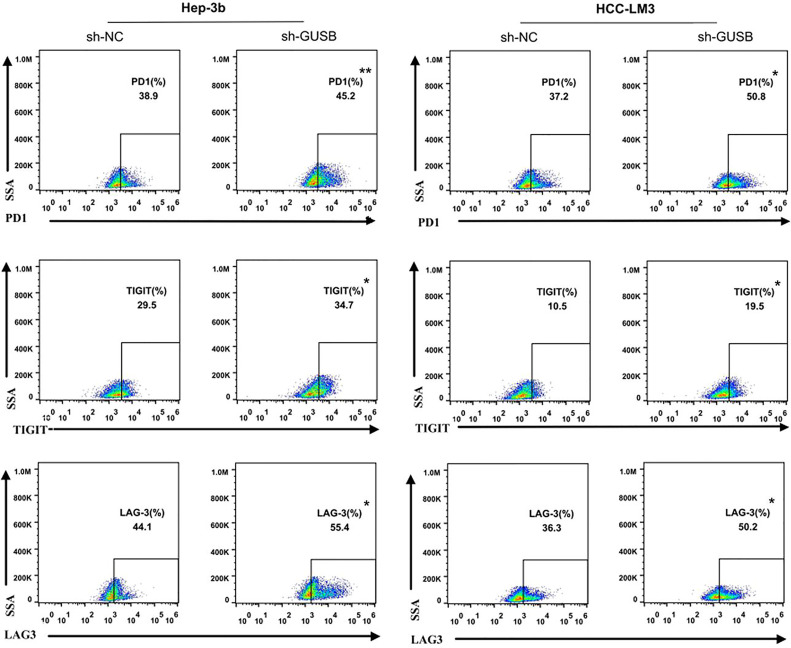
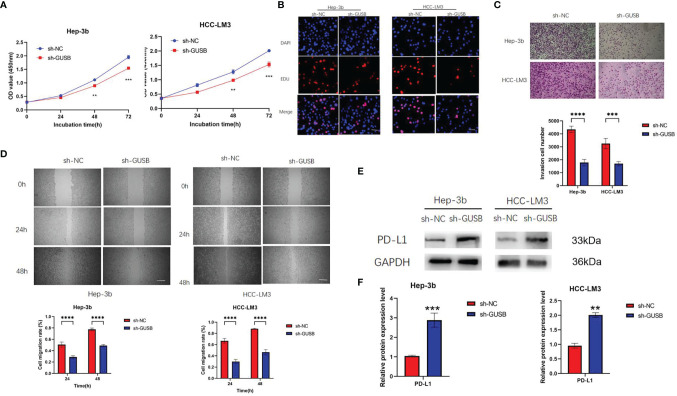
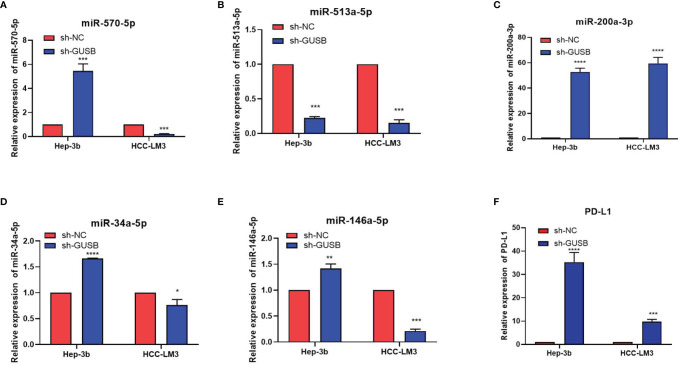
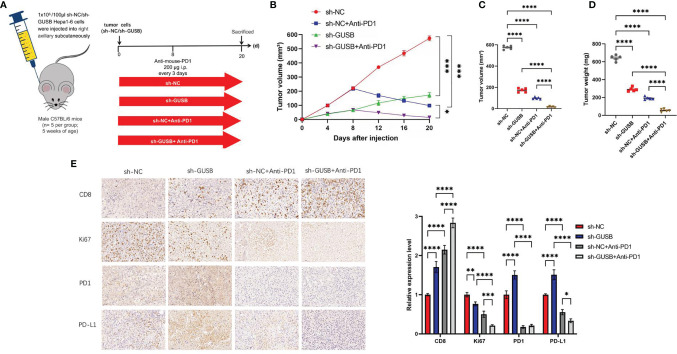
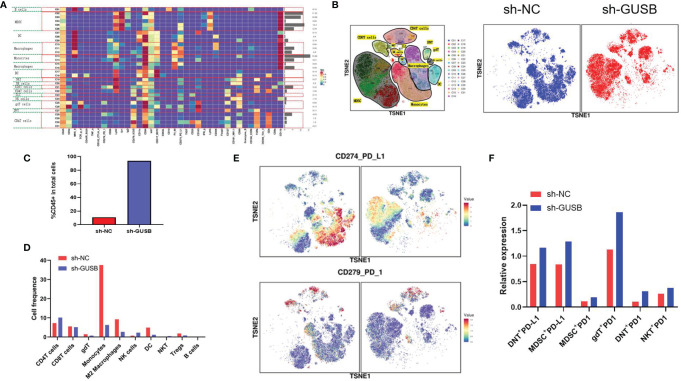
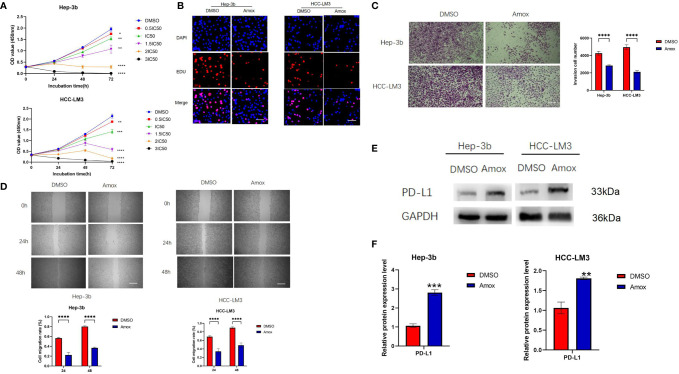
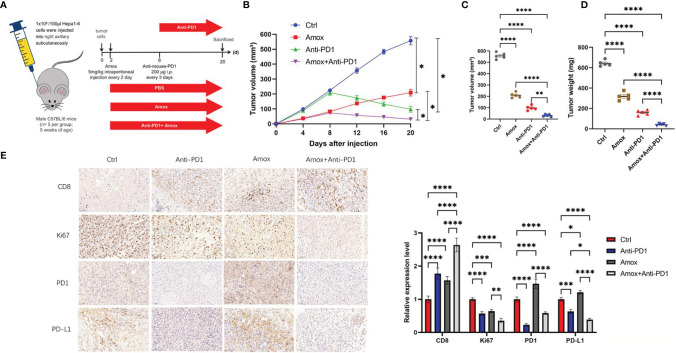
Immunotherapy treatments, particularly immune checkpoint blockade, can result in benefits in clinical settings. But many pre-clinical and clinical studies have shown that resistance to anti-PD1 therapy frequently occurs, leading to tumor recurrence and treatment failure, including in patients with hepatocellular carcinoma (HCC). In this study, 10 patients with HCC were remedied with anti-PD1, and pre-treatment biopsy samples were sequenced for 289 nanostring panel RNA to compare responsive and non-responsive tumors to identify possible pretreatment biomarkers or targets of anti-PD1 therapeutic responses. Fortunately, the expression of β-Glucuronidase (GUSB) in the non-responding tumors was found to be remarkably higher than that in responding tumors. Results of the cell counting kit 8 (CCK8), 5-ethynyl-2'-deoxyuridine (EdU), transwell, wound healing test, and flow cytometry showed that GUSB facilitated proliferation, invasion, as well as migration of human HCC cells and downregulated PD-L1 expression by promoting miR-513a-5p. Additionally, as a GUSB inhibitor, amoxapine can reduce the progression of human HCC cells, and was an effective treatment for HCC and improved the sensitivity of anti-PD1 therapy. In summary, this study reveals that increased GUSB downregulates PD-L1 expression by promoting miR-513a-5p, leading to primary resistance to anti-PD1 treatment in HCC, and amoxapine enhances the sensitivity of anti-PD1 therapy by inhibiting GUSB, providing a new strategy and method for improving the efficacy of anti-PD1 therapy and bringing new prospects for therapy of HCC.
免疫疗法治疗,特别是免疫检查点阻断治疗,在临床环境中可以带来益处。但许多临床前和临床研究表明,抗 PD1 治疗经常会出现耐药性,导致肿瘤复发和治疗失败,包括肝细胞癌(HCC)患者。在这项研究中,10 名 HCC 患者接受了抗 PD1 治疗,并对治疗前的活检样本进行了 289 个纳米串 RNA 测序,以比较反应性和非反应性肿瘤,以确定可能的治疗前生物标志物或抗 PD1 治疗反应的靶点。幸运的是,研究发现非反应性肿瘤中β-葡萄糖醛酸酶(GUSB)的表达明显高于反应性肿瘤。细胞计数试剂盒 8(CCK8)、5-乙炔基-2'-脱氧尿苷(EdU)、Transwell、划痕愈合试验和流式细胞术的结果表明,GUSB 通过促进 miR-513a-5p 的表达来促进人 HCC 细胞的增殖、侵袭和迁移,并下调 PD-L1 的表达。此外,作为 GUSB 抑制剂,阿莫沙平可以减缓人 HCC 细胞的进展,是治疗 HCC 的有效方法,并提高了抗 PD1 治疗的敏感性。综上所述,这项研究揭示了 GUSB 的增加通过促进 miR-513a-5p 的表达下调 PD-L1 的表达,导致 HCC 对抗 PD1 治疗的原发性耐药,而阿莫沙平通过抑制 GUSB 提高了抗 PD1 治疗的敏感性,为提高抗 PD1 治疗的疗效提供了新的策略和方法,为 HCC 的治疗带来了新的前景。