Hepatobiliary/Liver Transplantation Center, The First Affiliated Hospital of Nanjing Medical University, Key Laboratory of Living Donor Transplantation, Chinese Academy of Medical Sciences, Nanjing, Jiangsu, China.
Department of General Surgery, Nanjing First Hospital, Nanjing Medical University, Nanjing, Jiangsu, China.
J Immunother Cancer. 2022 Dec;10(12). doi: 10.1136/jitc-2022-005655.
Glycogen synthase kinase 3β (GSK3β) was originally discovered to regulate glycogen synthesis and show a relationship to tumors. However, the biological functions of GSK3β in tumor-associated macrophages (TAMs) in cancers including hepatocellular carcinoma (HCC) remain unclear.
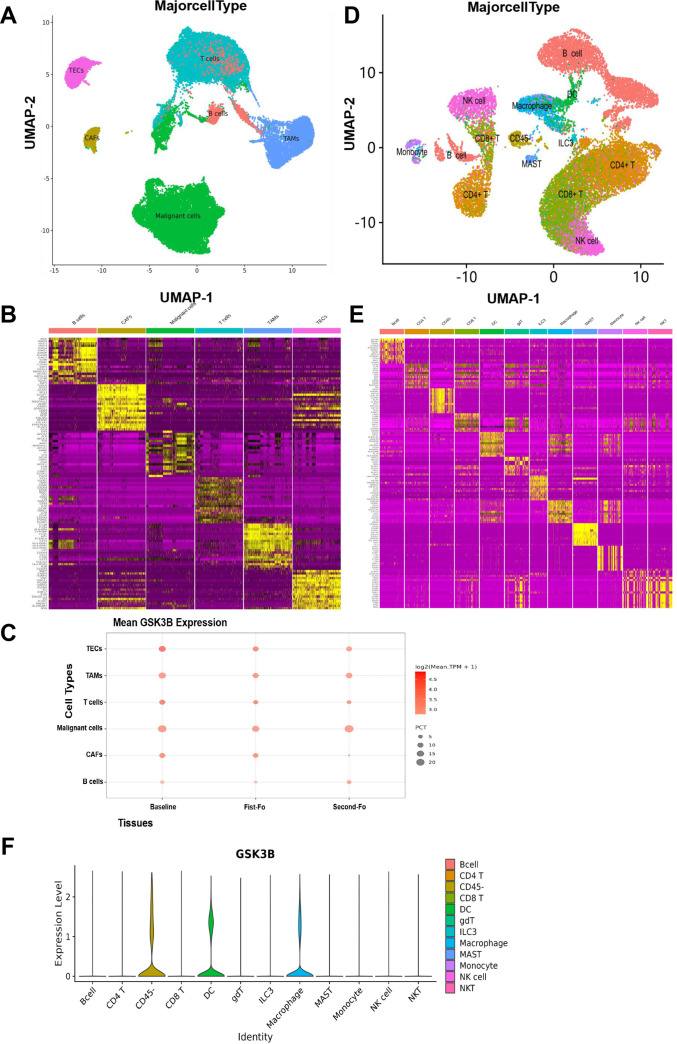
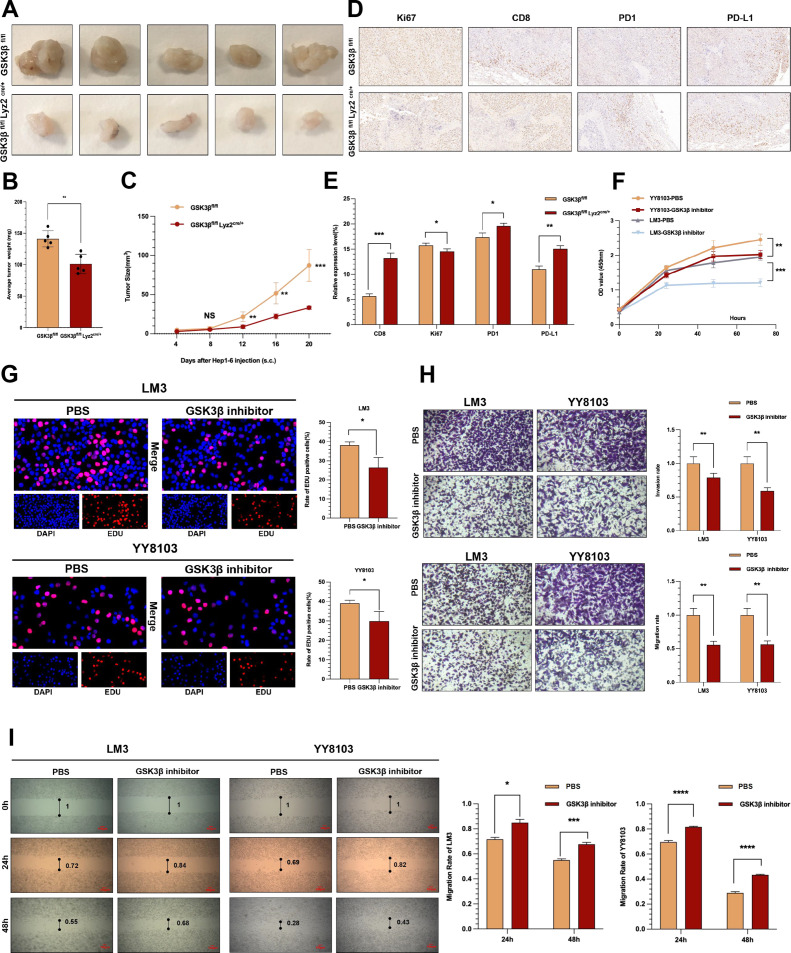
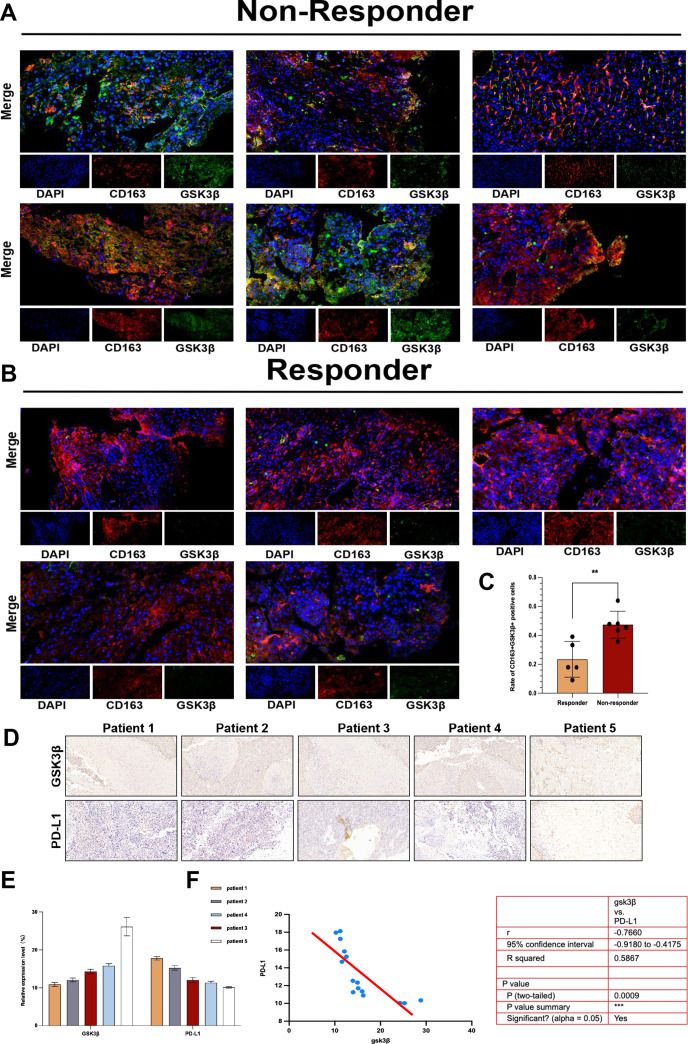
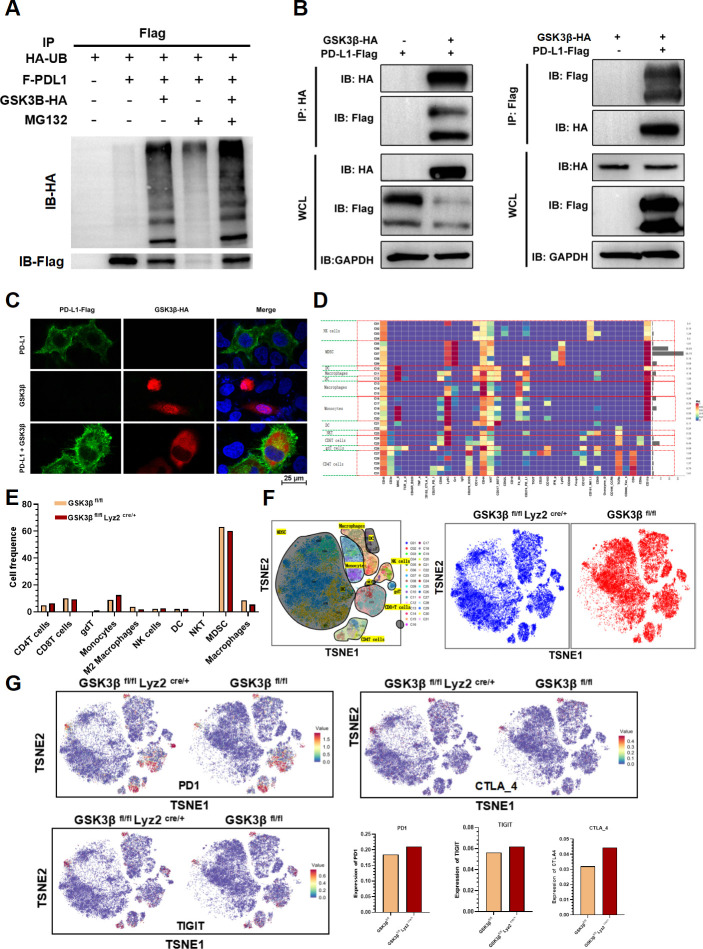
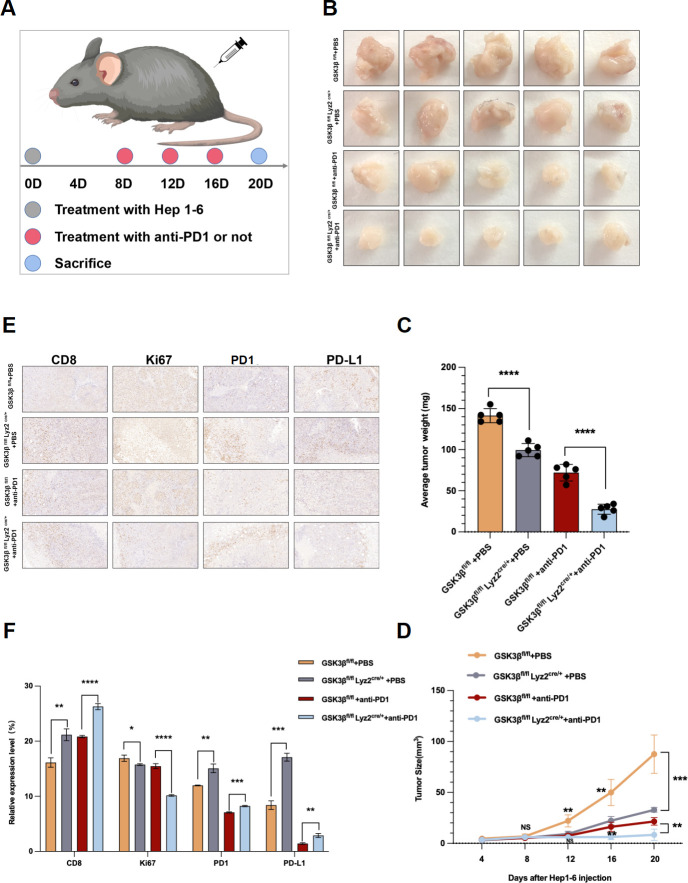
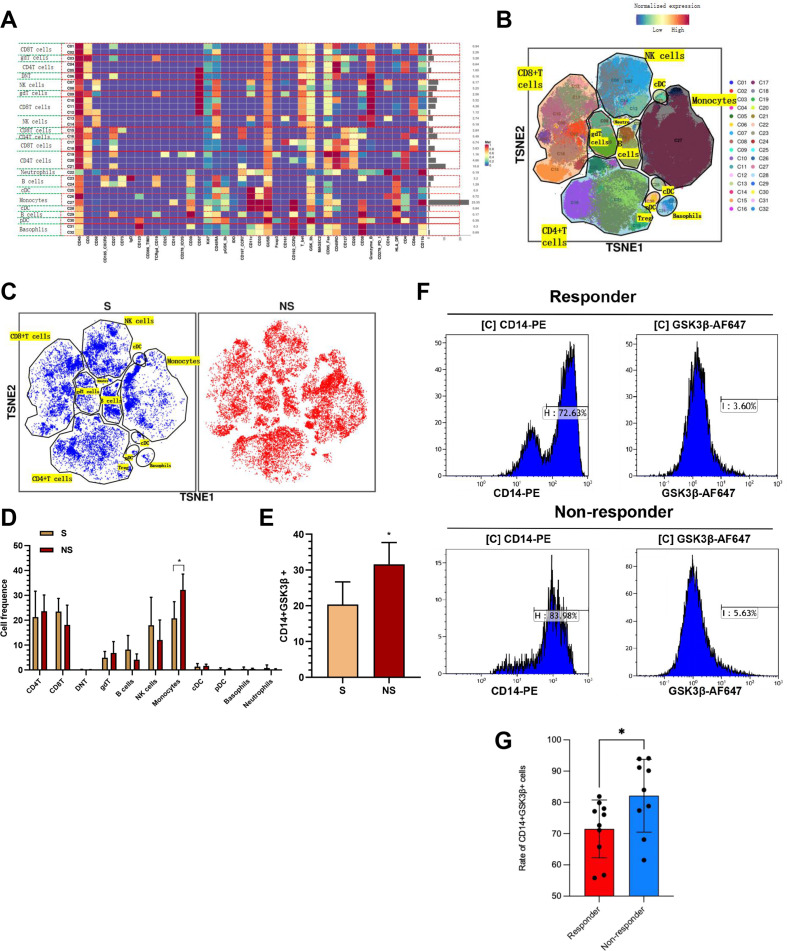
The enrichment of GSK3β in tumor tissues was assessed by Gene Expression Omnibus (GEO) database. The in vitro and in vivo assays assisted in evaluating how GSK3β in TAMs affected HCC in terms of proliferation, invasion and migration. Immunofluorescence was used to assess GSK3β expression in TAMs in the anti-PD1 therapy non-responsive HCC group and the responsive group. Western blot and coimmunoprecipitation were performed to demonstrate the interaction between GSK3β and PD-L1. We carried out in vivo experiments in a C57BL/6 mouse model of HCC established through subcutaneous injection.
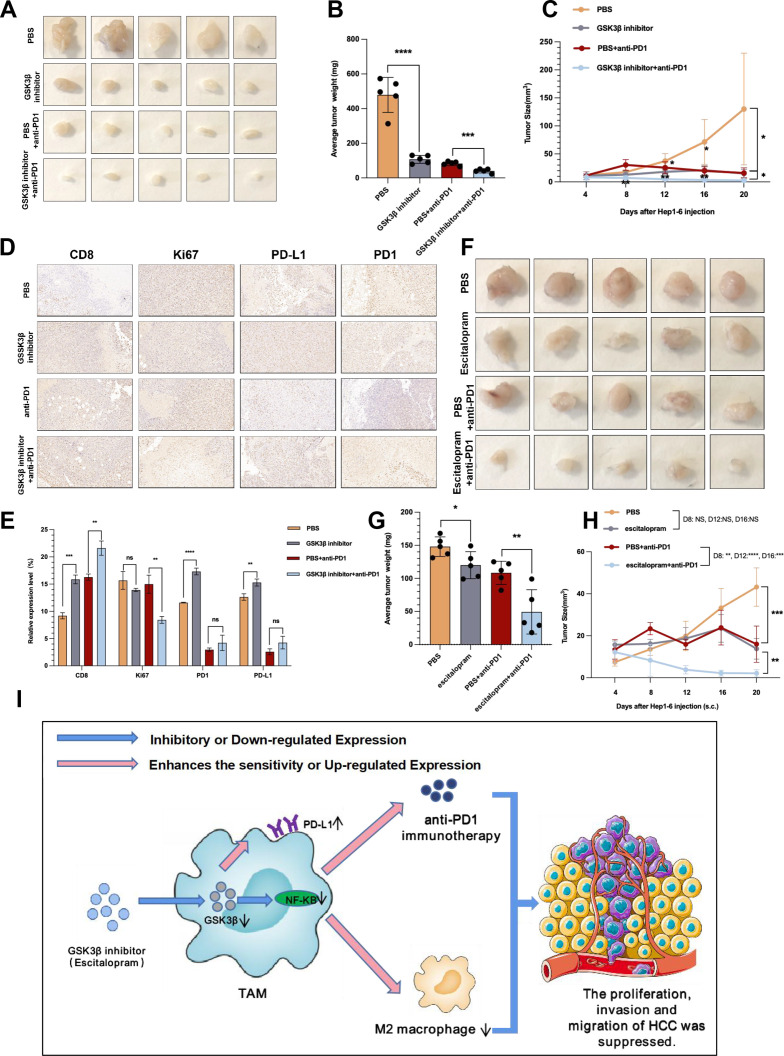
GEO single-cell RNA sequencing data suggested that GSK3β was highly enriched in TAMs of HCC. According to in vitro and in vivo experiments, reducing GSK3β in TAMs inhibits the cancer cell proliferation, invasion, and migration. The immunofluorescence and immunohistochemistry results confirmed that the GSK3β is significantly upregulated in TAMs of the anti-PD1 therapy non-responsive group in comparison with the responsive group. In vitro and in vivo experiments confirmed that reduced GSK3β in TAMs are capable of enhancing the sensitivity of anti-PD1 immunotherapy for HCC by decreasing PD-L1 ubiquitination. Mass spectrometry results suggested that high expression of CD14GSK3β in the peripheral blood mononuclear cell (PBMC) can predict non-responsive to anti-PD1 treatment. Moreover, escitalopram is confirmed to act as GSK3β inhibitor that can increase the sensitivity of anti-PD1 immunotherapy for HCC.
This study revealed that macrophage GSK3β deficiency can inhibit the development of HCC by inhibiting the M2 phenotype and enhance the sensitivity of anti-PD1 immunotherapy for HCC by decreasing PD-L1 ubiquitination. The expression of CD14GSK3β in PBMC can noninvasively predict anti-PD1 sensitivity in HCC patients, which provides novel strategies to predict anti-PD1 sensitivity, increase anti-PD1 therapeutic effect, and bring new hope for HCC patients.
糖原合酶激酶 3β(GSK3β)最初被发现可调节糖原合成,并与肿瘤有关。然而,GSK3β 在包括肝细胞癌(HCC)在内的癌症相关巨噬细胞(TAMs)中的生物学功能仍不清楚。
通过基因表达综合数据库(GEO)评估 GSK3β 在肿瘤组织中的富集情况。体外和体内实验评估了 TAMs 中的 GSK3β 如何影响 HCC 的增殖、侵袭和迁移。免疫荧光法用于评估抗 PD-1 治疗无反应 HCC 组和有反应组中 TAMs 中的 GSK3β 表达。Western blot 和 co-immunoprecipitation 用于证明 GSK3β 与 PD-L1 之间的相互作用。我们在通过皮下注射建立的 C57BL/6 小鼠 HCC 模型中进行了体内实验。
GEO 单细胞 RNA 测序数据表明,GSK3β 在 HCC 的 TAMs 中高度富集。根据体外和体内实验,降低 TAMs 中的 GSK3β 可抑制癌细胞的增殖、侵袭和迁移。免疫荧光和免疫组织化学结果证实,与有反应组相比,抗 PD-1 治疗无反应组的 TAMs 中 GSK3β 显著上调。体外和体内实验证实,降低 TAMs 中的 GSK3β 可通过降低 PD-L1 泛素化来增强 HCC 抗 PD-1 免疫治疗的敏感性。质谱结果表明,外周血单个核细胞(PBMC)中 CD14GSK3β 的高表达可预测对抗 PD-1 治疗无反应。此外,艾司西酞普兰被证实为 GSK3β 抑制剂,可增加 HCC 抗 PD-1 免疫治疗的敏感性。
本研究表明,巨噬细胞 GSK3β 缺失可通过抑制 M2 表型抑制 HCC 的发展,并通过降低 PD-L1 泛素化增强 HCC 抗 PD-1 免疫治疗的敏感性。PBMC 中 CD14GSK3β 的表达可无创预测 HCC 患者对 PD-1 的敏感性,为预测抗 PD-1 敏感性、提高抗 PD-1 治疗效果提供了新策略,为 HCC 患者带来了新希望。