Department of Animal Biosciences, University of Guelph, Guelph, ON, Canada.
Cell and Developmental Biology Center, National Heart, Lung, and Blood Institute, National Institute of Health, Bethesda, MD, United States.
Front Endocrinol (Lausanne). 2022 Jun 23;13:852127. doi: 10.3389/fendo.2022.852127. eCollection 2022.
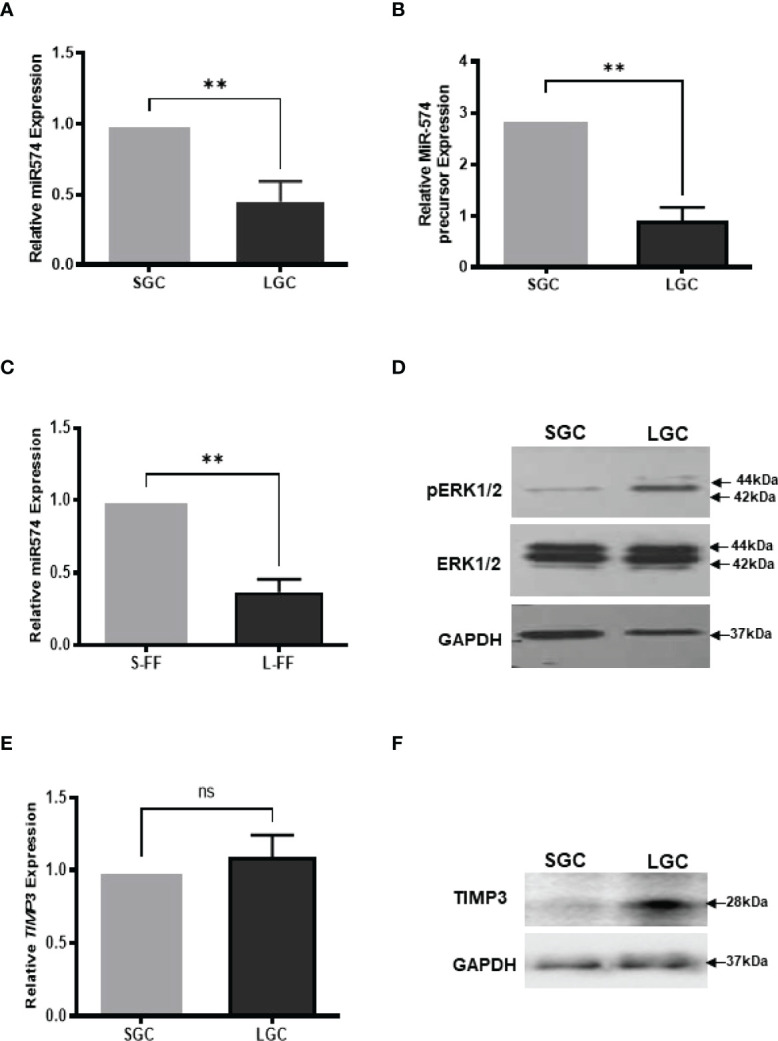
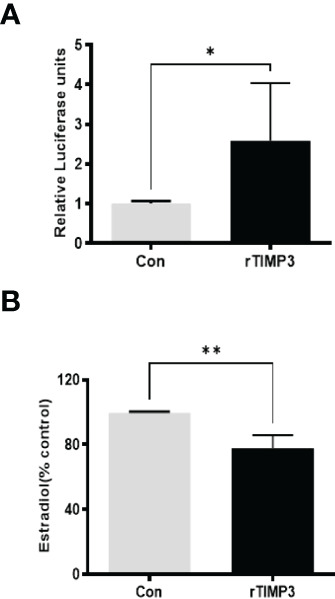
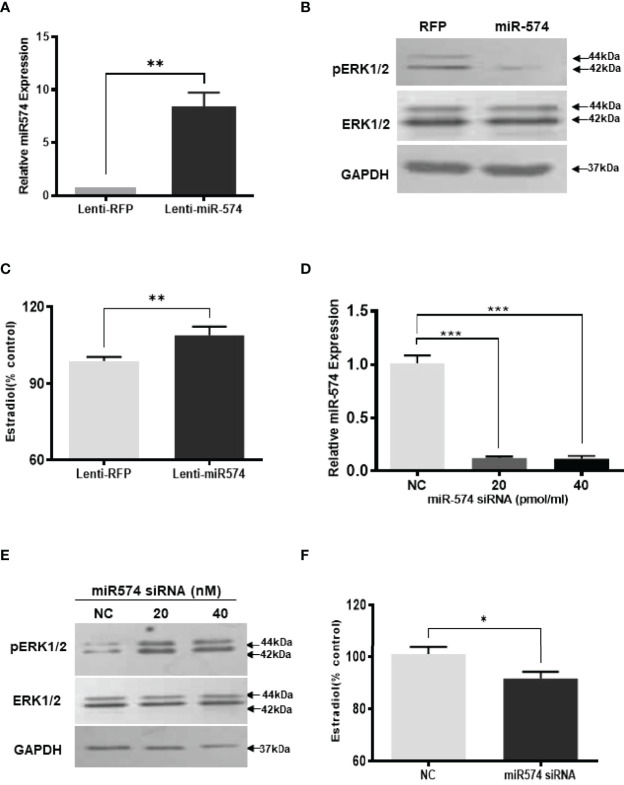
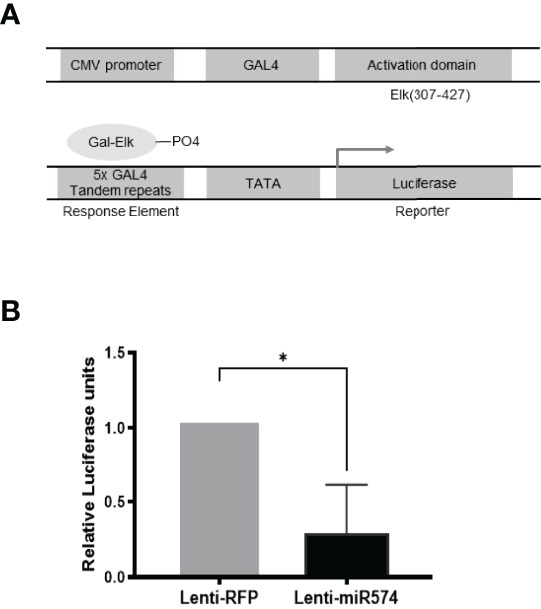
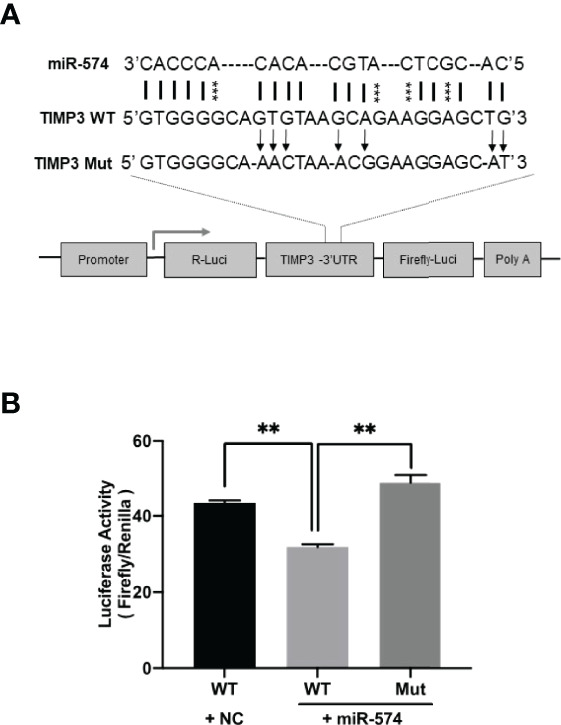
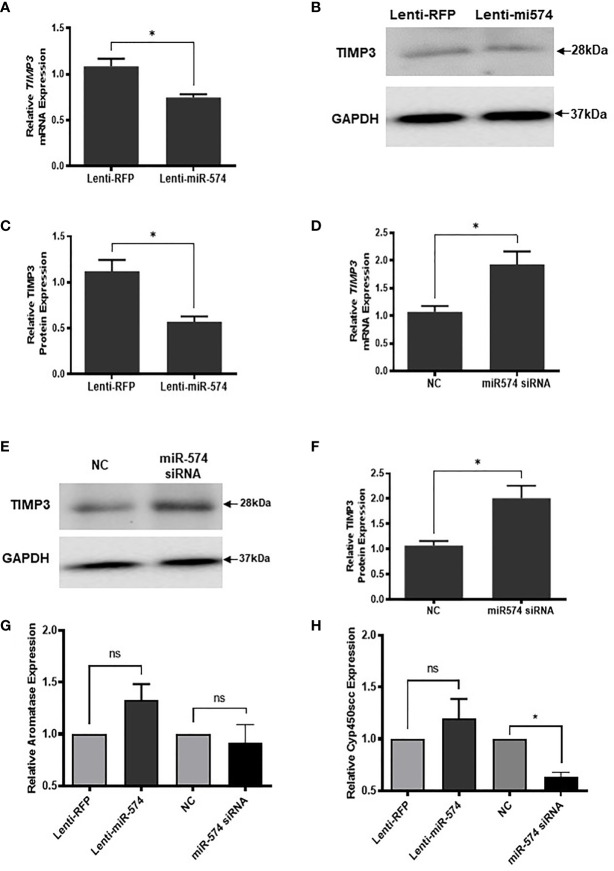
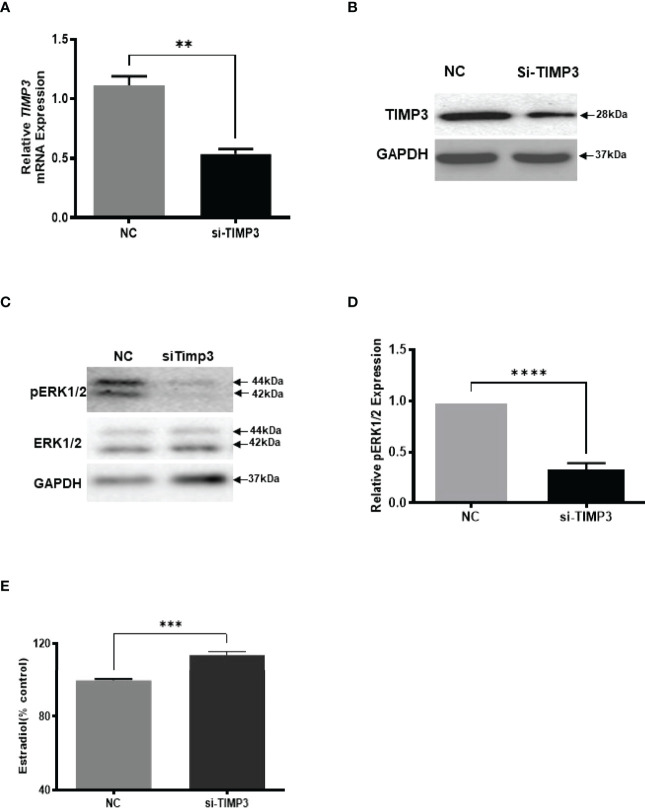
Estradiol represents a key steroid ovarian hormone that not only plays a vital role in ovarian follicular development but also is associated with many other reproductive functions. Our primary study revealed that miR-574 expression decreased in porcine granulosa cells during development from small to large follicles, and the increase of ERK1/2 phosphorylation accompanies this change. Since it has been well established that the ERK1/2 activity is tightly associated with granulosa cell functions, including ovarian hormone production, we thus further investigate if the miRNA is involved in the regulation of estradiol production in granulosa cells. We found that overexpression of miR-574 decreased phosphorylated ERK1/2 without affecting the level of ERK1/2 protein, and on the other hand, the inhibition of miR-574 increased phosphorylated ERK1/2 level (P<0.05); meanwhile, overexpression of miR-574 increased estradiol production but knockdown of miR-574 decreased estradiol level in granulosa cells. To further identify the potential mechanism involved in the miR-574 regulatory effect, screening was performed and revealed a potential binding site on the 3'UTR region of the tissue inhibitor of metalloproteinase 3 (TIMP3). Our gain-, loss- of function experiments, and luciferase reporter assay confirmed that TIMP3 is indeed the target of miR-574 in granulosa cell. Furthermore, the siRNA TIMP3 knockdown resulted in decreased phosphorylated ERK1/2, and an increase in estradiol production. In contrast, the addition of recombinant TIMP3 increased phosphorylated ERK1/2 level and decreased estradiol production. In summary, our results suggest that the miR-574-TIMP3-pERK1/2 cascade may be one of the pathways by which microRNAs regulate granulosa cell estradiol production.
雌二醇是一种关键的甾体卵巢激素,不仅在卵巢卵泡发育中起着至关重要的作用,而且与许多其他生殖功能有关。我们的初步研究表明,miR-574 在猪颗粒细胞从小卵泡发育到大卵泡的过程中表达减少,而 ERK1/2 磷酸化的增加伴随着这种变化。由于 ERK1/2 活性与颗粒细胞功能(包括卵巢激素产生)密切相关,因此我们进一步研究了该 miRNA 是否参与调节颗粒细胞中的雌二醇产生。我们发现,miR-574 的过表达降低了磷酸化的 ERK1/2,而不影响 ERK1/2 蛋白的水平,另一方面,miR-574 的抑制增加了磷酸化的 ERK1/2 水平(P<0.05);同时,miR-574 的过表达增加了雌二醇的产生,但 miR-574 的敲低降低了颗粒细胞中的雌二醇水平。为了进一步确定 miR-574 调节作用涉及的潜在机制,进行了筛选,揭示了组织金属蛋白酶抑制剂 3(TIMP3)3'UTR 区域的一个潜在结合位点。我们的增益、损失功能实验和荧光素酶报告基因测定证实,TIMP3 确实是颗粒细胞中 miR-574 的靶标。此外,TIMP3 的 siRNA 敲低导致磷酸化的 ERK1/2 减少,雌二醇的产生增加。相反,添加重组 TIMP3 增加了磷酸化的 ERK1/2 水平并减少了雌二醇的产生。总之,我们的结果表明,miR-574-TIMP3-pERK1/2 级联可能是 microRNAs 调节颗粒细胞雌二醇产生的途径之一。