Ince Bahar, Sezgintürk Mustafa Kemal
Çanakkale Onsekiz Mart University, Faculty of Engineering, Bioengineering Department, Çanakkale, Turkey.
Trends Analyt Chem. 2022 Dec;157:116725. doi: 10.1016/j.trac.2022.116725. Epub 2022 Jul 5.
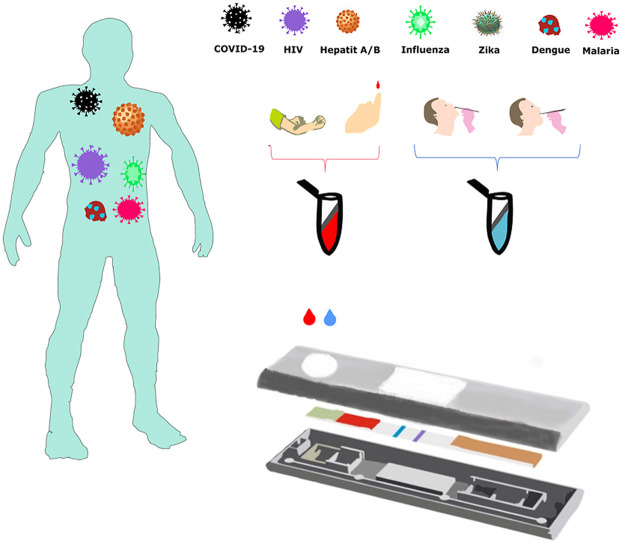
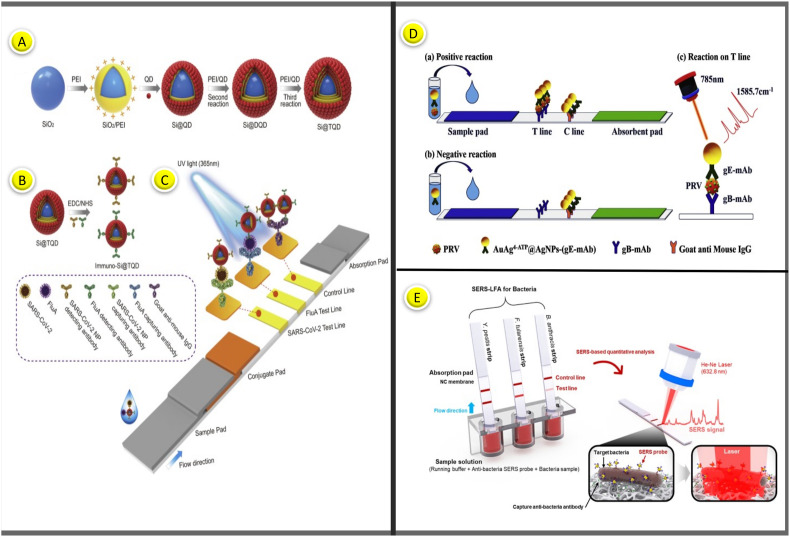
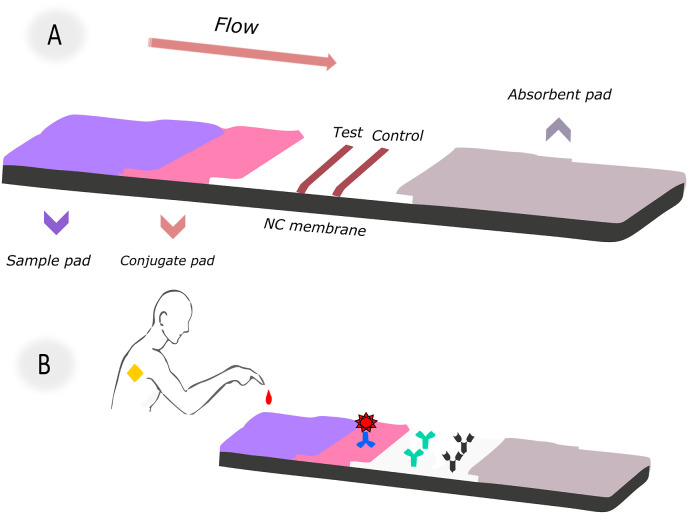
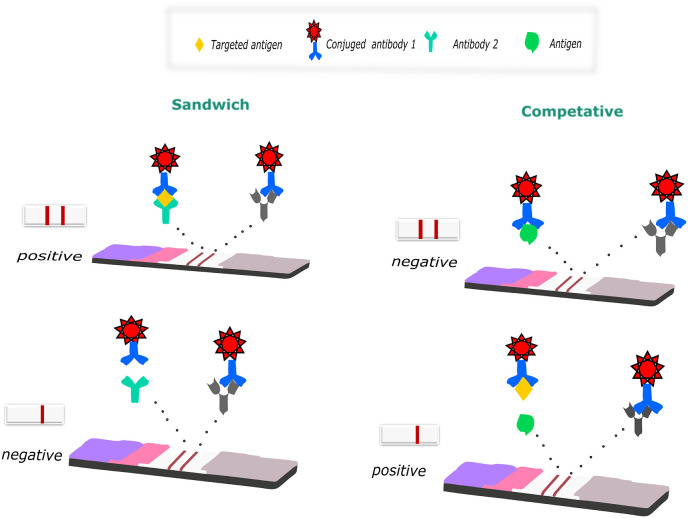
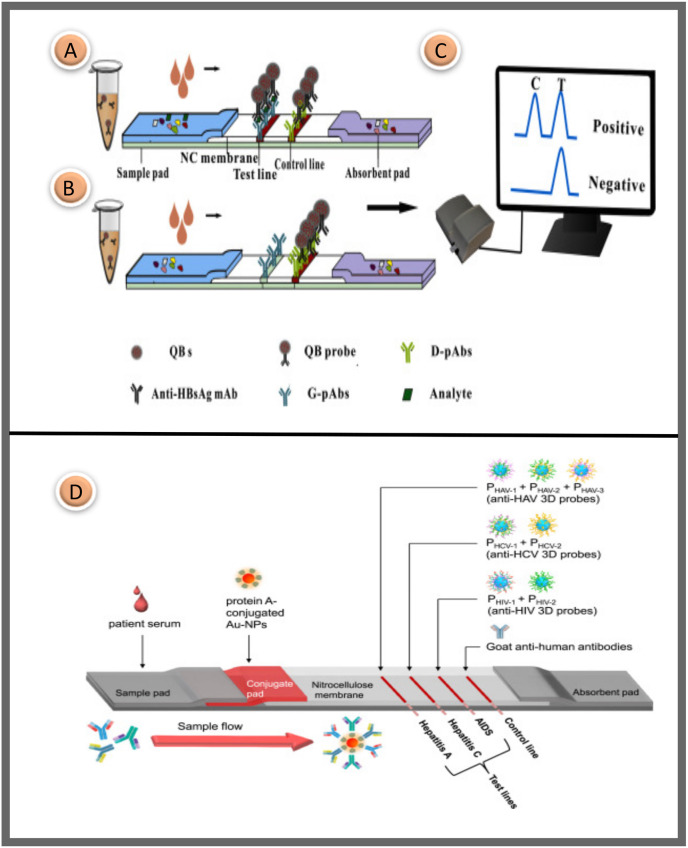
Bacteria, viruses, and parasites are harmful microorganisms that cause infectious diseases. Early detection of diseases is critical to prevent disease transmission and provide epidemic preparedness, as these can cause widespread deaths and public health crises, particularly in resource-limited countries. Lateral flow assay (LFA) systems are simple-to-use, disposable, inexpensive diagnostic devices to test biomarkers in blood and urine samples. Thus, LFA has recently received significant attention, especially during the pandemic. Here, first of all, the design principles and working mechanisms of existing LFA methods are examined. Then, current LFA implementation strategies are presented for communicable disease diagnoses, including COVID-19, zika and dengue, HIV, hepatitis, influenza, malaria, and other pathogens. Furthermore, this review focuses on an overview of current problems and accessible solutions in detecting infectious agents and diseases by LFA, focusing on increasing sensitivity with various detection methods. In addition, future trends in LFA-based diagnostics are envisioned.
细菌、病毒和寄生虫是导致传染病的有害微生物。疾病的早期检测对于预防疾病传播和做好疫情防范至关重要,因为这些传染病会导致大量死亡和公共卫生危机,尤其是在资源有限的国家。侧向流动分析(LFA)系统是用于检测血液和尿液样本中生物标志物的简单易用、一次性使用且价格低廉的诊断设备。因此,LFA最近受到了广泛关注,尤其是在疫情期间。在此,首先探讨现有LFA方法的设计原理和工作机制。然后,介绍目前用于传染病诊断的LFA实施策略,包括新冠病毒、寨卡病毒和登革热病毒、艾滋病毒、肝炎病毒、流感病毒、疟原虫及其他病原体。此外,本综述重点概述了LFA在检测传染病病原体和疾病方面当前存在的问题及可行的解决方案,着重于通过各种检测方法提高灵敏度。此外,还展望了基于LFA的诊断技术的未来发展趋势。