Xu Ya-Ming, Inacio Marielle Cascaes, Liu Manping X, Gunatilaka A A Leslie
Southwest Center for Natural Products Research, School of Natural Resources and the Environment, College of Agriculture and Life Sciences, University of Arizona, Tucson, AZ 85706, USA.
Curr Res Chem Biol. 2022;2:100023. doi: 10.1016/j.crchbi.2022.100023. Epub 2022 Mar 14.
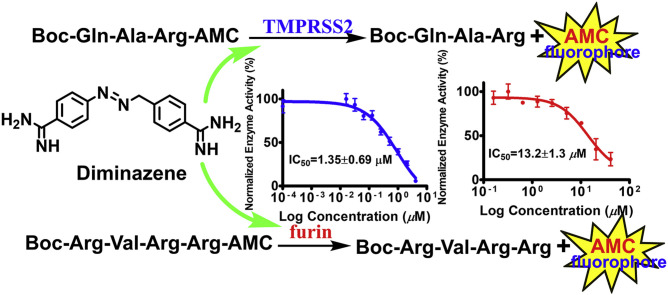
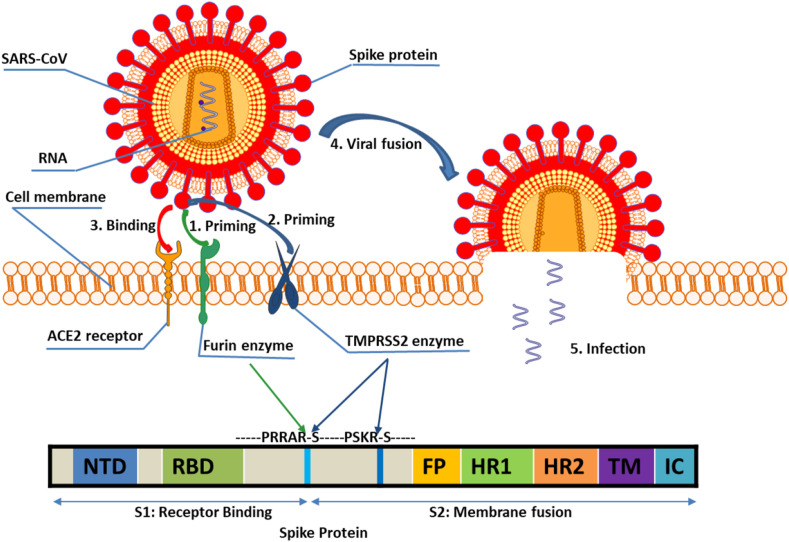
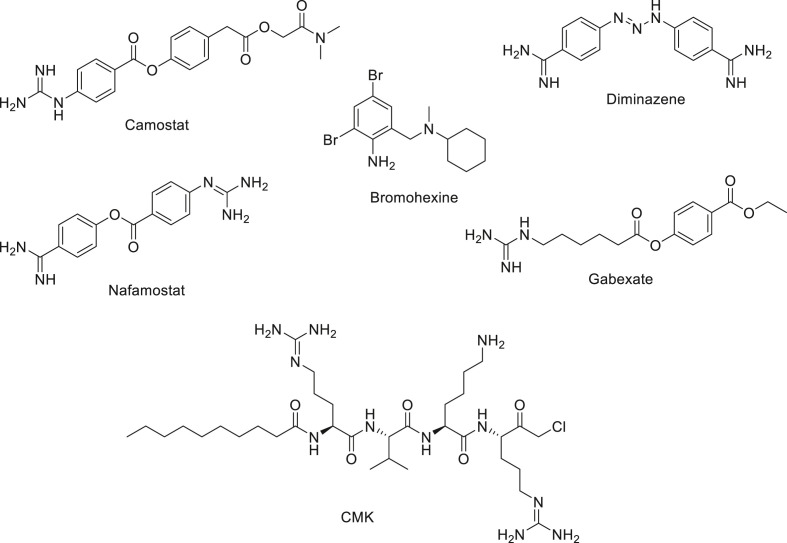
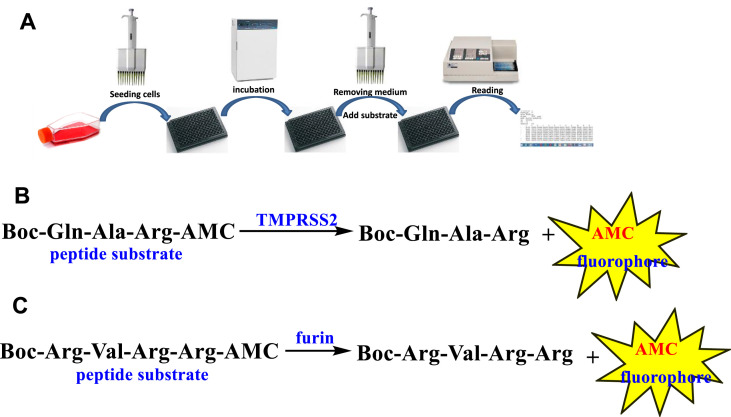
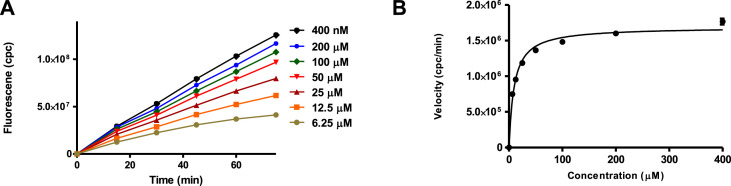
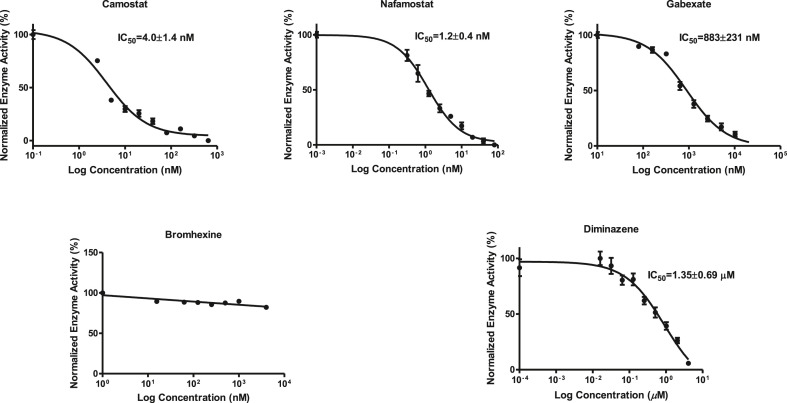
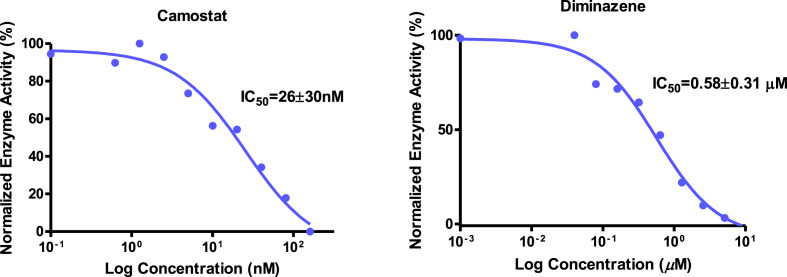
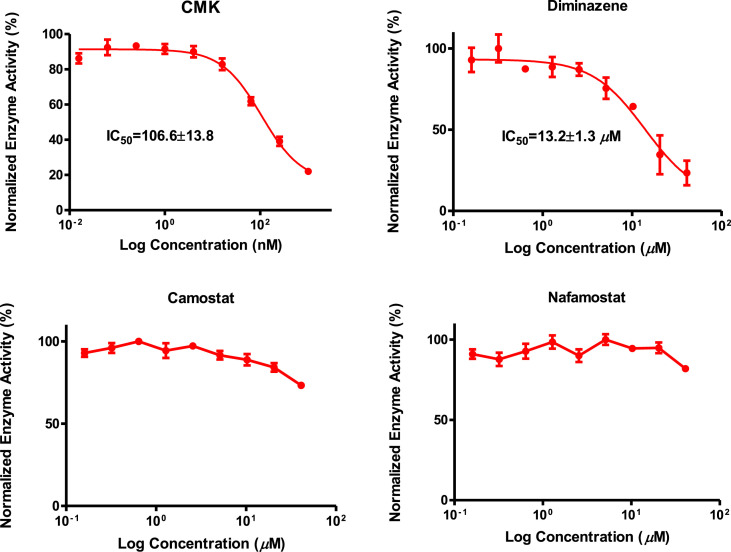
The proteases TMPRSS2 (transmembrane protease serine 2) and furin are known to play important roles in viral infectivity including systematic COVID-19 infection through priming of the spike protein of SARS-CoV-2 and related viruses. To discover small-molecules capable of inhibiting these host proteases, we established convenient and cost-effective cell-based assays employing Vero cells overexpressing TMPRSS2 and furin. A cell-based proteolytic assay for broad-spectrum protease inhibitors was also established using human prostate cancer cell line LNCaP. Evaluation of camostat, nafamostat, and gabexate in these cell-based assays confirmed their known TMPRSS2 inhibitory activities. Diminazene, a veterinary medicinal agent and a known furin inhibitor was found to inhibit both TMPRSS2 and furin with ICs of 1.35 and 13.2 M, respectively. Establishment and the use of cell-based assays for evaluation TMPRSS2 and furin inhibitory activity and implications of dual activity of diminazene vs TMPRSS2 and furin are presented.
已知蛋白酶TMPRSS2(跨膜蛋白酶丝氨酸2)和弗林蛋白酶在病毒感染性中发挥重要作用,包括通过引发严重急性呼吸综合征冠状病毒2(SARS-CoV-2)及相关病毒的刺突蛋白来引发系统性冠状病毒病2019(COVID-19)感染。为了发现能够抑制这些宿主蛋白酶的小分子,我们建立了便捷且经济高效的基于细胞的检测方法,使用过表达TMPRSS2和弗林蛋白酶的非洲绿猴肾细胞(Vero细胞)。还利用人前列腺癌细胞系LNCaP建立了一种用于广谱蛋白酶抑制剂的基于细胞的蛋白水解检测方法。在这些基于细胞的检测中对加贝酯、萘莫司他和抑肽酶的评估证实了它们已知的TMPRSS2抑制活性。发现作为兽用药物且为已知弗林蛋白酶抑制剂的双脒苯脲分别以1.35和13.2 μM的半数抑制浓度(IC50)抑制TMPRSS2和弗林蛋白酶。本文介绍了用于评估TMPRSS2和弗林蛋白酶抑制活性的基于细胞的检测方法的建立与应用,以及双脒苯脲对TMPRSS2和弗林蛋白酶双重活性的意义。