Mlowe Fredy, Karimuribo Esron, Mkupasi Ernatus, Churi Ayubu, Nyerere Antony D, Schmidt Veronika, Ngowi Helena, Winkler Andrea S, Mlangwa James
Ileje District Council, Ileje, Songwe, Tanzania.
Department of Veterinary Medicine and Public Health, College of Veterinary Medicine and Biomedical Sciences, Sokoine University of Agriculture, Morogoro, Tanzania.
Vet Med Int. 2022 Jun 30;2022:7472051. doi: 10.1155/2022/7472051. eCollection 2022.
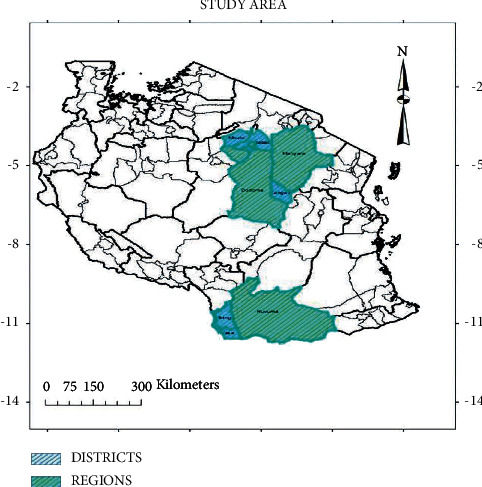
(neuro) cysticercosis/taeniosis (TSCT) is a zoonotic disease complex. There is a perceived inefficient diagnosis of infections by either form, the adult pork tapeworm (taeniosis) and the larval stage of it (cysticercosis), in low-income settings, including Tanzania. This study aimed at identifying potential gaps around TSCT diagnosis and knowledge of primary healthcare providers (officers in charge (OICs) of primary healthcare facilities (PHFs)) and veterinarians (meat inspectors (MIs)) on various aspects of TSCT disease complex and addressing effective disease control in Tanzania. . A cross-sectional study was conducted between January and April 2020 in Manyara, Dodoma, Ruvuma, Iringa, and Arusha regions in Babati, Mbulu, Kongwa, Mbinga, and Nyasa districts. We interviewed 152 OICs of PHFs and 108 MIs using a structured questionnaire and 33 medical and veterinary officers from level I healthcare facilities and district livestock offices, respectively, from selected study districts to the respective ministerial level using key informant interviews.
Quantitative data revealed inadequate microscopic diagnostic facilities (54.6%) and personnel (100%) for taeniosis diagnosis in PHFs ( = 152). Approximately 81.2% of MIs compared with only 42.1% of OICs of PHFs scored above average regarding cysticerci knowledge. Nevertheless, 61.2% of OICs of PHFs compared with only 42.6% of MIs scored above average regarding the adult tapeworm knowledge. Qualitative data revealed inadequate availability of advanced diagnostic facilities (neuroimaging) and trained personnel for specific diagnosis of TSCT with a focus on neurocysticercosis (NCC) in secondary and tertiary healthcare facilities. Inadequately number of qualified MIs, slaughter slabs, and resource facilitation challenged porcine cysticercosis diagnosis.
It is concluded that diagnostic capacity and knowledge of OICs of PHFs and MIs regarding TSCT are insufficient in both medical and veterinary sectors. A One Health approach should be adopted to improve TSCT diagnostic capacity and practitioners' knowledge in both medical and veterinary sectors.
(神经)囊尾蚴病/绦虫病(TSCT)是一种人畜共患疾病复合体。在包括坦桑尼亚在内的低收入地区,人们认为对成虫猪肉绦虫(绦虫病)及其幼虫阶段(囊尾蚴病)这两种形式感染的诊断效率低下。本研究旨在找出TSCT诊断方面以及初级医疗保健提供者(初级医疗保健机构(PHF)的负责人(OIC))和兽医(肉类检查员(MI))对TSCT疾病复合体各个方面的认识方面的潜在差距,并解决坦桑尼亚有效的疾病控制问题。2020年1月至4月在曼亚拉、多多马、鲁伍马、伊林加和阿鲁沙地区的巴巴蒂、姆布卢、孔瓜、姆宾加和尼亚萨等县进行了一项横断面研究。我们使用结构化问卷对152名PHF的OIC和108名MI进行了访谈,并分别对来自选定研究县的一级医疗保健机构和地区畜牧办公室的33名医学和兽医官员进行了关键信息访谈,直至各自的部级层面。
定量数据显示,PHF(n = 152)中用于绦虫病诊断的显微镜诊断设施(54.6%)和人员(100%)不足。在囊尾蚴知识方面,约81.2%的MI得分高于平均水平,而PHF的OIC中只有42.1%。然而,在成虫绦虫知识方面,61.2%的PHF的OIC得分高于平均水平,而MI中只有42.6%。定性数据显示,二级和三级医疗保健机构中用于TSCT特别是神经囊尾蚴病(NCC)特异性诊断的先进诊断设施(神经影像学)和经过培训的人员供应不足。合格MI的数量不足、屠宰场以及资源便利条件对猪囊尾蚴病的诊断构成挑战。
得出的结论是,PHF的OIC和MI在医学和兽医领域对TSCT的诊断能力和知识均不足。应采用“同一健康”方法来提高医学和兽医领域TSCT的诊断能力以及从业者的知识水平。