Laranjo-González Minerva, Devleesschauwer Brecht, Trevisan Chiara, Allepuz Alberto, Sotiraki Smaragda, Abraham Annette, Afonso Mariana Boaventura, Blocher Joachim, Cardoso Luís, Correia da Costa José Manuel, Dorny Pierre, Gabriël Sarah, Gomes Jacinto, Gómez-Morales María Ángeles, Jokelainen Pikka, Kaminski Miriam, Krt Brane, Magnussen Pascal, Robertson Lucy J, Schmidt Veronika, Schmutzhard Erich, Smit G Suzanne A, Šoba Barbara, Stensvold Christen Rune, Starič Jože, Troell Karin, Rataj Aleksandra Vergles, Vieira-Pinto Madalena, Vilhena Manuela, Wardrop Nicola Ann, Winkler Andrea S, Dermauw Veronique
IRTA, Centre de Recerca en Sanitat Animal (CReSA, IRTA-UAB), Campus de la Universitat Autònoma de Barcelona, Bellaterra, 08193, Barcelona, Spain.
Department of Public Health and Surveillance, Scientific Institute of Public Health (WIV-ISP), Brussels, Belgium.
Parasit Vectors. 2017 Jul 21;10(1):349. doi: 10.1186/s13071-017-2280-8.
Taenia solium and Taenia saginata are zoonotic parasites of public health importance. Data on their occurrence in humans and animals in western Europe are incomplete and fragmented. In this study, we aimed to update the current knowledge on the epidemiology of these parasites in this region.
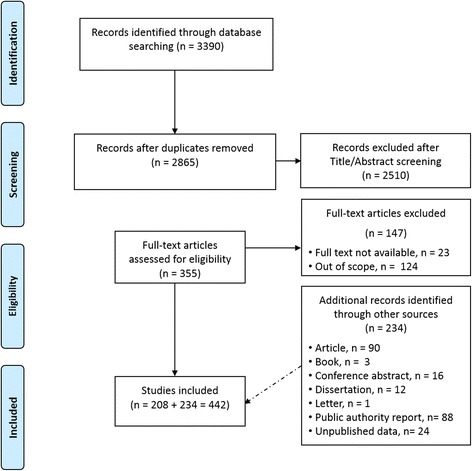
We conducted a systematic review of scientific and grey literature published from 1990 to 2015 on the epidemiology of T. saginata and T. solium in humans and animals. Additionally, data about disease occurrence were actively sought by contacting local experts in the different countries.
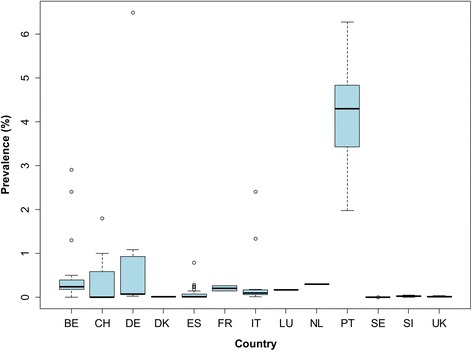
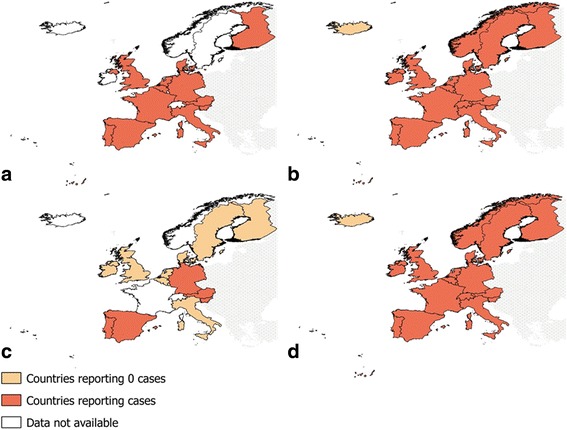
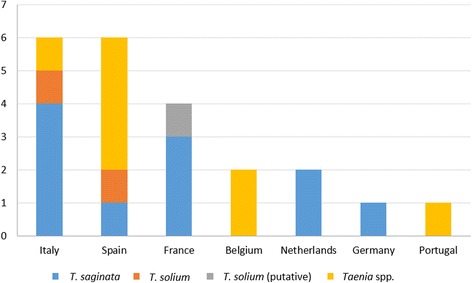
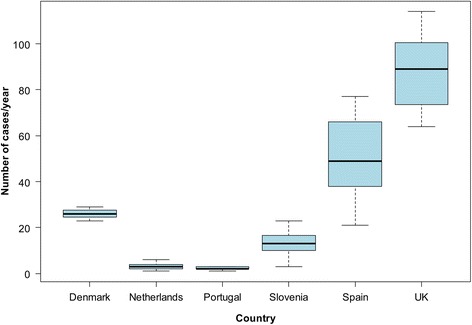
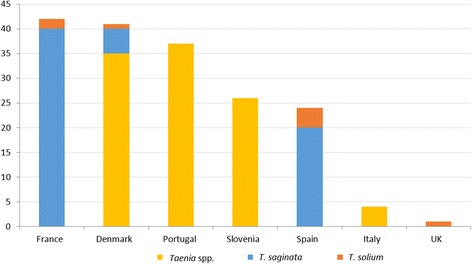
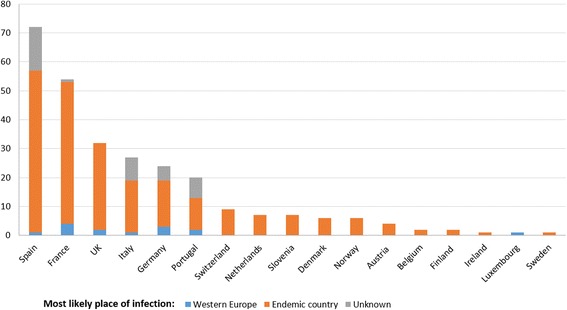
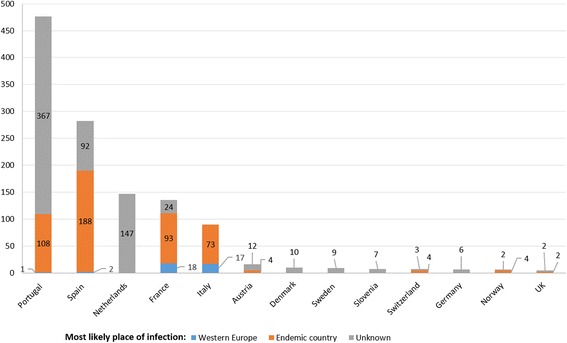
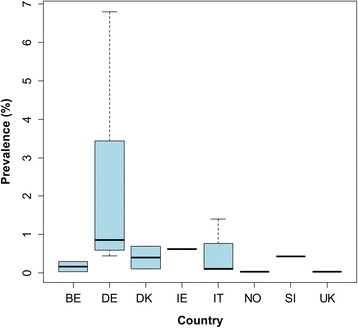
Taeniosis cases were found in twelve out of eighteen countries in western Europe. No cases were identified in Iceland, Ireland, Luxembourg, Norway, Sweden and Switzerland. For Denmark, Netherlands, Portugal, Slovenia, Spain and the UK, annual taeniosis cases were reported and the number of detected cases per year ranged between 1 and 114. Detected prevalences ranged from 0.05 to 0.27%, whereas estimated prevalences ranged from 0.02 to 0.67%. Most taeniosis cases were reported as Taenia spp. or T. saginata, although T. solium was reported in Denmark, France, Italy, Spain, Slovenia, Portugal and the UK. Human cysticercosis cases were reported in all western European countries except for Iceland, with the highest number originating from Portugal and Spain. Most human cysticercosis cases were suspected to have acquired the infection outside western Europe. Cases of T. solium in pigs were found in Austria and Portugal, but only the two cases from Portugal were confirmed with molecular methods. Germany, Spain and Slovenia reported porcine cysticercosis, but made no Taenia species distinction. Bovine cysticercosis was detected in all countries except for Iceland, with a prevalence based on meat inspection of 0.0002-7.82%.
Detection and reporting of taeniosis in western Europe should be improved. The existence of T. solium tapeworm carriers, of suspected autochthonous cases of human cysticercosis and the lack of confirmation of porcine cysticercosis cases deserve further attention. Suspected cases of T. solium in pigs should be confirmed by molecular methods. Both taeniosis and human cysticercosis should be notifiable and surveillance in animals should be improved.
猪带绦虫和牛带绦虫是具有公共卫生重要性的人畜共患寄生虫。关于它们在西欧人类和动物中的发生情况的数据不完整且零散。在本研究中,我们旨在更新该地区这些寄生虫流行病学的现有知识。
我们对1990年至2015年发表的关于牛带绦虫和猪带绦虫在人类和动物中流行病学的科学文献和灰色文献进行了系统综述。此外,通过联系不同国家的当地专家积极收集疾病发生的数据。
在西欧18个国家中的12个国家发现了绦虫病病例。在冰岛、爱尔兰、卢森堡、挪威、瑞典和瑞士未发现病例。对于丹麦、荷兰、葡萄牙、斯洛文尼亚、西班牙和英国,报告了年度绦虫病病例,每年检测到的病例数在1至114例之间。检测到的患病率在0.05%至0.27%之间,而估计患病率在0.02%至0.67%之间。大多数绦虫病病例报告为带绦虫属或牛带绦虫,尽管在丹麦、法国、意大利、西班牙、斯洛文尼亚、葡萄牙和英国报告了猪带绦虫。除冰岛外,所有西欧国家均报告了人类囊尾蚴病病例,其中数量最多的来自葡萄牙和西班牙。大多数人类囊尾蚴病病例被怀疑是在西欧以外感染的。在奥地利和葡萄牙发现了猪的猪带绦虫病例,但只有葡萄牙的两例通过分子方法得到证实。德国、西班牙和斯洛文尼亚报告了猪囊尾蚴病,但未区分带绦虫种类。除冰岛外,所有国家均检测到牛囊尾蚴病,基于肉类检查的患病率为0.0002%至7.82%。
应改进西欧绦虫病的检测和报告。猪带绦虫携带者的存在、疑似本土人类囊尾蚴病病例以及猪囊尾蚴病病例缺乏确诊值得进一步关注。猪的疑似猪带绦虫病例应通过分子方法进行确诊。绦虫病和人类囊尾蚴病均应报告,并且应改进动物监测。