Brigham Young University, Provo, Utah, USA (Department of Public Health, College of Life Sciences).
Wellsteps, Mapleton, Utah, USA.
Int J Occup Med Environ Health. 2022 Aug 1;35(4):449-457. doi: 10.13075/ijomeh.1896.01895. Epub 2022 Jul 1.
Companies that understand the collective health risks of their employees, as well as worker productivity as it relates to health risks can provide more effective and necessary interventions. Health Risk Assessments (HRAs) are an important source of information for understanding overall health risks of a company's employees. However, HRA data tend to represent only a subset of employees, thereby providing employers an incomplete picture of employee health risks. The current study identifies the representativeness of those completing a worksite HRA by selected demographics, health care costs, and health risks in a large US company.
A retrospective analysis of employees in a large US company during 2017-2019, with statistically significant results reported, adjusted for sex, age, and year.
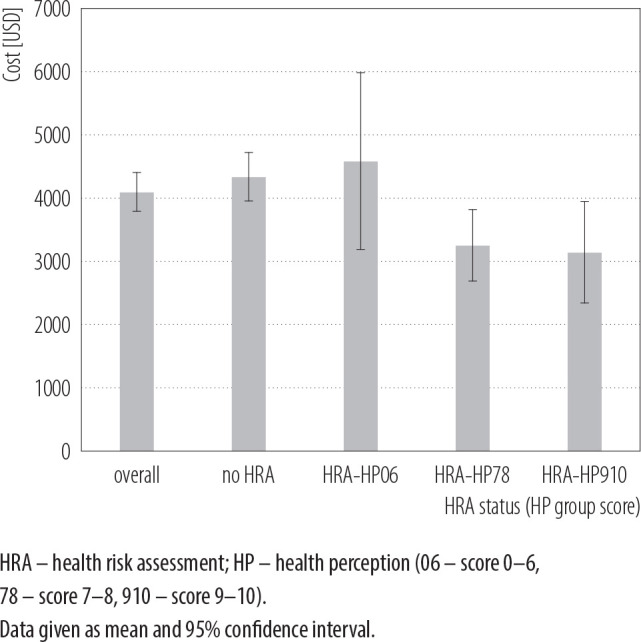
The percentage of employees completing the HRA increased from 23.9% in 2017 to 28.4% in 2018 to 32.3% in 2019. These employees were more likely women, middle aged, have lower health care costs, remain employed from year to year, and have better health behaviors and biometric scores. If all employees looked like employees completing the HRA, total medical costs would be 17% lower. If all employees looked like employees completing the HRA who had a health perception rating (1-10 [excellent]) of 7-8 (57.4%) or 9-10 (25.2%) vs. 1-6, total medical costs would be 21.9% and 25.6% lower, respectively.
A minority of employees completed the worksite HRA. Basing overall employee health risks on the HRA underestimates health risks and can result in a poorly representative health intervention program. Int J Occup Med Environ Health. 2022;35(4):449-57.
了解员工的集体健康风险以及与健康风险相关的员工生产力的公司,可以提供更有效和必要的干预措施。健康风险评估(HRA)是了解公司员工整体健康风险的重要信息来源。然而,HRA 数据往往只代表员工的一部分,从而使雇主对员工的健康风险了解不完整。本研究通过选定的人口统计学、医疗保健成本和健康风险,确定了一家大型美国公司中完成工作场所 HRA 的员工的代表性。
对 2017-2019 年期间一家大型美国公司的员工进行回顾性分析,报告了具有统计学意义的结果,并按性别、年龄和年份进行了调整。
完成 HRA 的员工比例从 2017 年的 23.9%增加到 2018 年的 28.4%,再增加到 2019 年的 32.3%。这些员工更可能是女性、中年、医疗保健成本较低、每年保持就业,并且具有更好的健康行为和生物计量评分。如果所有员工都像完成 HRA 的员工一样,总医疗费用将降低 17%。如果所有员工都像完成 HRA 的员工一样,健康感知评分(1-10[优秀])为 7-8(57.4%)或 9-10(25.2%),而不是 1-6,总医疗费用将分别降低 21.9%和 25.6%。
少数员工完成了工作场所 HRA。根据 HRA 来确定员工的整体健康风险会低估健康风险,并可能导致健康干预计划代表性不足。国际职业医学与环境卫生杂志。2022;35(4):449-57.