Chu Eric Chun-Pu
New York Chiropractic and Physiotherapy Centre, 41/F Langham Place Office Tower, 8 Argyle Street, Hong Kong SAR, China.
Radiol Case Rep. 2022 Jul 4;17(9):3260-3265. doi: 10.1016/j.radcr.2022.06.033. eCollection 2022 Sep.
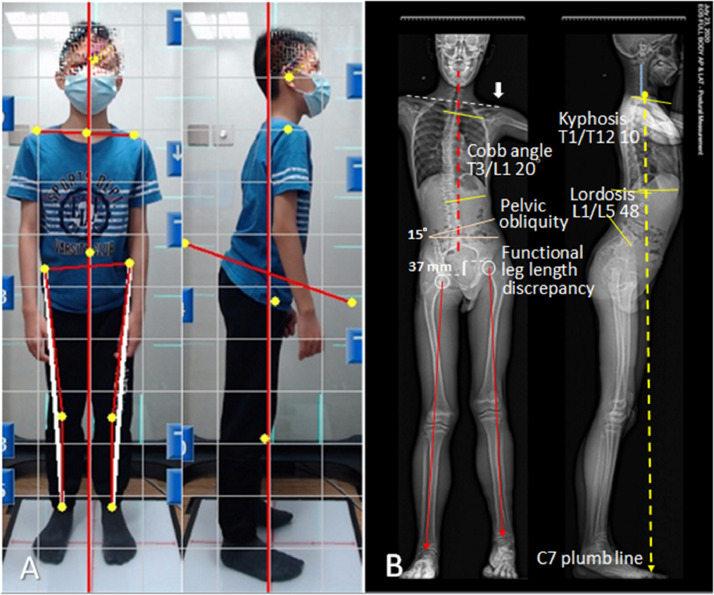
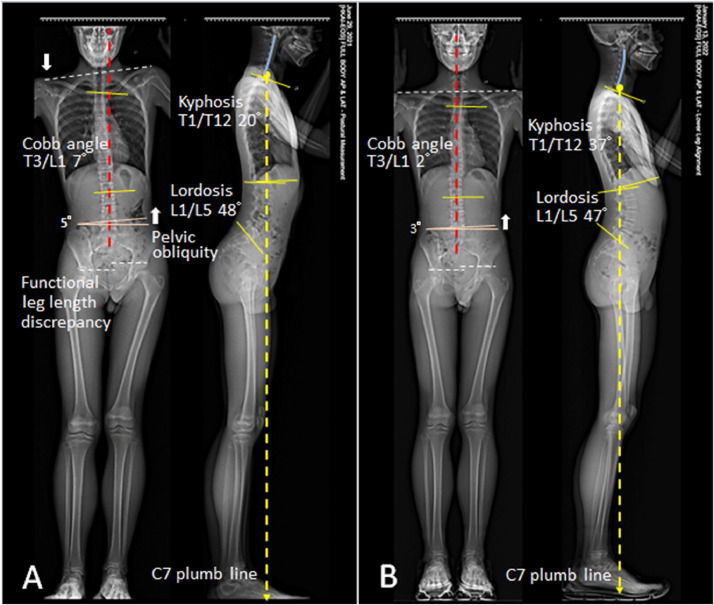
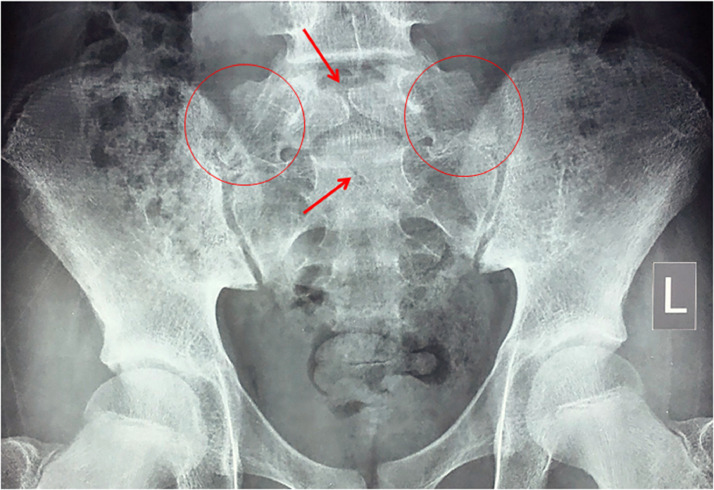
Common and minor birth defects, such as spina bifida occulta (SBO) and lumbosacral transitional vertebra (LSTV), are largely asymptomatic and overlooked. However, it is important for clinicians to consider their potential impacts on spinal stability. Neuromuscular scoliosis (NMS) is an abnormal lateral curvature of the spine that affects children with pre-existing neuromuscular conditions that are often complex to manage. The purpose of this case report is to describe the association of dual lumbosacral anomalies with complicated NMS. A 12-year-old boy was brought to the chiropractor by his mother for a consultation and possible care for the boy's back pain, progressive scoliosis, and long-standing walking abnormality that worsened quickly in the past 12 months. His mother stated that the patient walked on the balls of his left foot instead of putting weight on the heel ever since he started learning to walk. He had visited several pediatricians and neurologists since childhood. No one had been able to solve his problems. Radiographs showed right thoracolumbar curve of Cobb angle 20°, left pelvic obliquity, a cleft in the L5 and S1, and articulation of the transverse processes of L5 with the bilateral sacral alae. The patient was diagnosed with NMS and functional leg length discrepancy attributed to SBO and a LSTV at L5 level. Multimodal chiropractic care and foot orthotics were used. After 18 months of interventions, normal spinal curve, heel-to-toe gait, and posture balance were retrieved successfully. To date, few reports have been published on the impacts of SBO along with LSTV upon the lumbosacral spine. This article will allow a better understanding of the potential impacts of these birth defects and considerable consequences they would have on the growing spine and, therefore, may help to alleviate their impacts.
常见和轻微的出生缺陷,如隐性脊柱裂(SBO)和腰骶部移行椎(LSTV),大多没有症状且被忽视。然而,临床医生考虑它们对脊柱稳定性的潜在影响很重要。神经肌肉型脊柱侧弯(NMS)是脊柱的一种异常侧弯,影响患有先前存在的神经肌肉疾病的儿童,这些疾病通常难以管理。本病例报告的目的是描述双腰骶部异常与复杂NMS的关联。一名12岁男孩被母亲带到脊椎按摩师处咨询,并可能接受针对男孩背痛、进行性脊柱侧弯以及过去12个月迅速恶化的长期行走异常的治疗。他的母亲表示,自从男孩开始学走路以来,他一直用左脚的脚掌走路,而不是用脚后跟承重。他从小就看过几位儿科医生和神经科医生。没有人能够解决他的问题。X线片显示右胸腰段Cobb角为20°,左侧骨盆倾斜,L5和S1有裂隙,L5横突与双侧骶骨翼相连。该患者被诊断为NMS以及由于SBO和L5水平的LSTV导致的功能性腿长差异。采用了多模式脊椎按摩治疗和足部矫形器。经过18个月的干预,成功恢复了正常的脊柱曲度、足跟到足尖的步态和姿势平衡。迄今为止,关于SBO和LSTV对腰骶部脊柱影响的报道很少。本文将有助于更好地理解这些出生缺陷的潜在影响以及它们对生长中的脊柱可能产生的重大后果,因此可能有助于减轻其影响。