Daniell Henry, Nair Smruti K, Shi Yao, Wang Ping, Montone Kathleen T, Shaw Pamela A, Choi Grace H, Ghani Danyal, Weaver JoEllen, Rader Daniel J, Margulies Kenneth B, Collman Ronald G, Laudanski Krzysztof, Bar Katharine J
W. D. Miller Professor & Director of Translational Research, Vice Chair, Department of Basic and Translational Sciences, School of Dental Medicine, University of Pennsylvania, 240 South 40th Street, 547 Levy Building, Philadelphia, PA 19104-6030, USA.
Perelman School of Medicine, University of Pennsylvania, Philadelphia, PA 19104, USA.
Mol Ther Methods Clin Dev. 2022 Sep 8;26:266-278. doi: 10.1016/j.omtm.2022.07.003. Epub 2022 Jul 6.
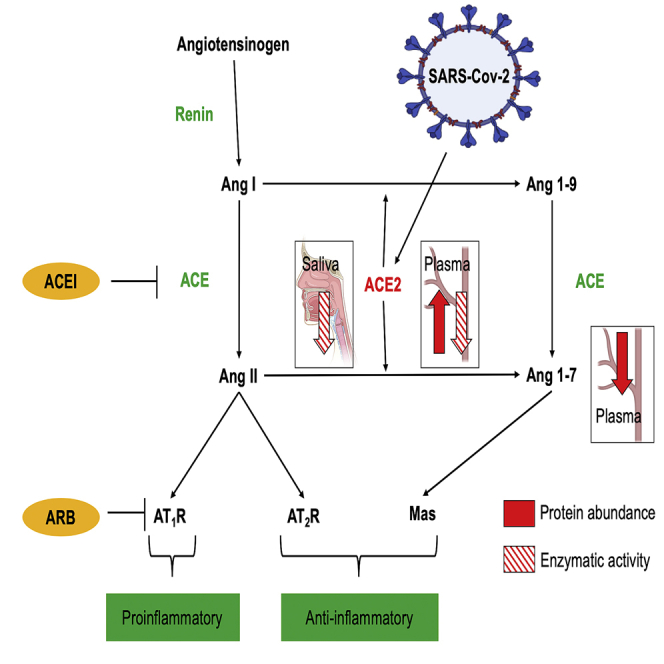
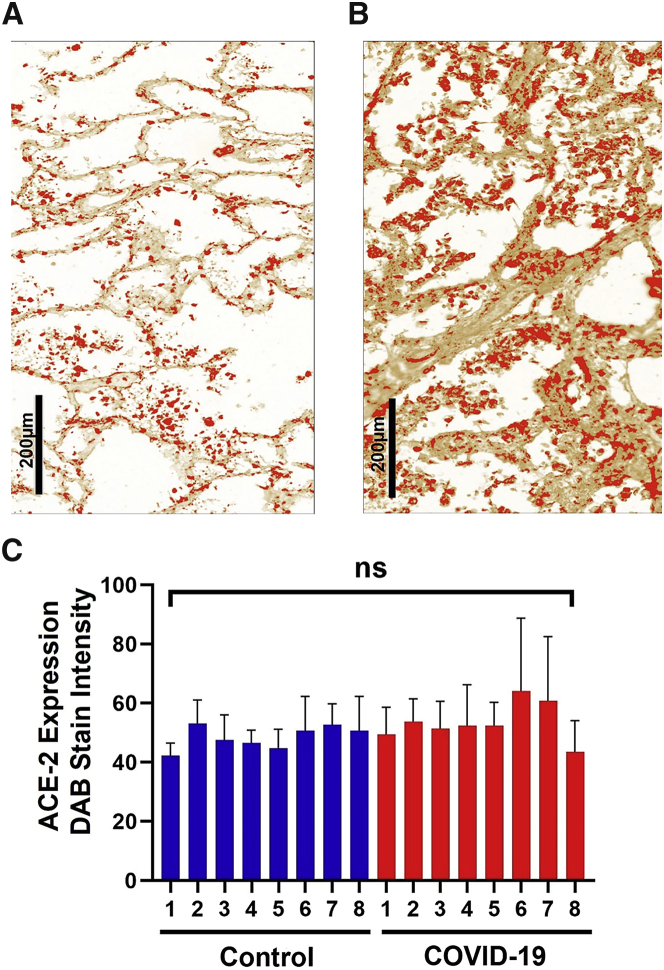
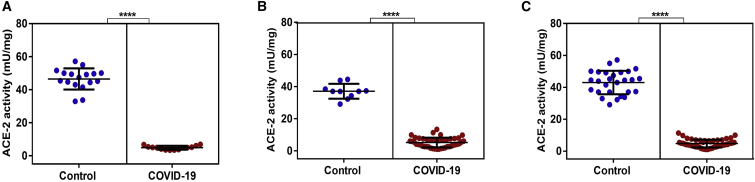
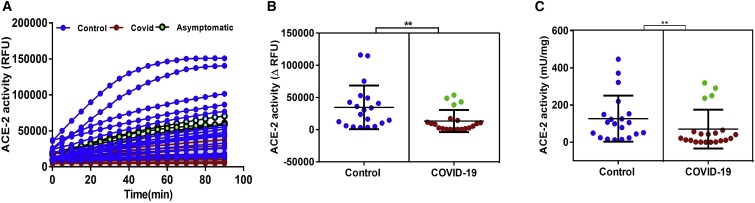
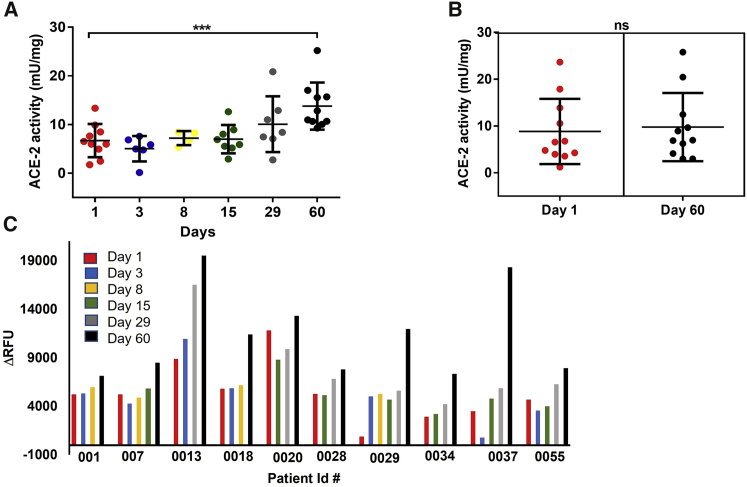
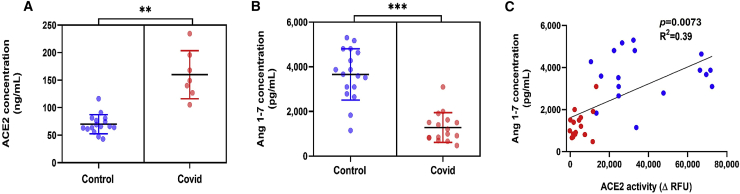
Although several therapeutics are used to treat coronavirus disease 2019 (COVID-19) patients, there is still no definitive metabolic marker to evaluate disease severity and recovery or a quantitative test to end quarantine. Because severe acute respiratory syndrome coronavirus-2 (SARS-CoV-2) infects human cells via the angiotensin-converting-enzyme 2 (ACE2) receptor and COVID-19 is associated with renin-angiotensin system dysregulation, we evaluated soluble ACE2 (sACE2) activity in the plasma/saliva of 80 hospitalized COVID-19 patients and 27 non-COVID-19 volunteers, and levels of ACE2/Ang (1-7) in plasma or membrane (mACE2) in lung autopsy samples. sACE2 activity was markedly reduced (p < 0.0001) in COVID-19 plasma (n = 59) compared with controls (n = 27). Nadir sACE2 activity in early hospitalization was restored during disease recovery, irrespective of patient age, demographic variations, or comorbidity; in convalescent plasma-administered patients (n = 45), restoration was statistically higher than matched controls (n = 22, p = 0.0021). ACE2 activity was also substantially reduced in the saliva of COVID-19 patients compared with controls (p = 0.0065). There is a strong inverse correlation between sACE2 concentration and sACE2 activity and Ang (1-7) levels in participant plasmas. However, there were no difference in membrane ACE2 levels in lungs of autopsy tissues of COVID-19 (n = 800) versus other conditions (n = 300). These clinical observations suggest sACE2 activity as a potential biomarker and therapeutic target for COVID-19.
尽管有几种疗法用于治疗2019冠状病毒病(COVID-19)患者,但仍没有确定的代谢标志物来评估疾病的严重程度和恢复情况,也没有定量检测来确定解除隔离的时间。由于严重急性呼吸综合征冠状病毒2(SARS-CoV-2)通过血管紧张素转换酶2(ACE2)受体感染人类细胞,且COVID-19与肾素-血管紧张素系统失调有关,我们评估了80例住院COVID-19患者和27名非COVID-19志愿者血浆/唾液中的可溶性ACE2(sACE2)活性,以及肺尸检样本中血浆或膜(mACE2)中的ACE2/血管紧张素(1-7)水平。与对照组(n = 27)相比,COVID-19血浆(n = 59)中的sACE2活性显著降低(p < 0.0001)。早期住院期间sACE2活性的最低点在疾病恢复过程中恢复,与患者年龄、人口统计学差异或合并症无关;在接受恢复期血浆治疗的患者(n = 45)中,恢复程度在统计学上高于匹配的对照组(n = 22,p = 0.0021)。与对照组相比,COVID-19患者唾液中的ACE2活性也显著降低(p = 0.0065)。参与者血浆中sACE2浓度与sACE2活性及血管紧张素(1-7)水平之间存在很强的负相关。然而,COVID-19(n = 800)尸检组织肺中的膜ACE2水平与其他情况(n = 300)相比没有差异。这些临床观察结果表明,sACE2活性可能是COVID-19潜在的生物标志物和治疗靶点。