Trujillo Antonio J, Gutierrez Jose C, Garcia Morales Emmanuel E, Socal Mariana, Ballreich Jeromie, Anderson Gerard
Department of International Health, Bloomberg School of Public Health, Johns Hopkins University, Baltimore, USA.
Department of Epidemiology, Bloomberg School of Public Health, Johns Hopkins University, Baltimore, USA.
Health Econ Rev. 2022 Jul 11;12(1):37. doi: 10.1186/s13561-022-00384-w.
Well-functioning competitive markets are key to controlling generic drug prices. This is important since over 90% of all drugs sold in the US are generics. Recently, there have been examples of large price increases in the generic market.
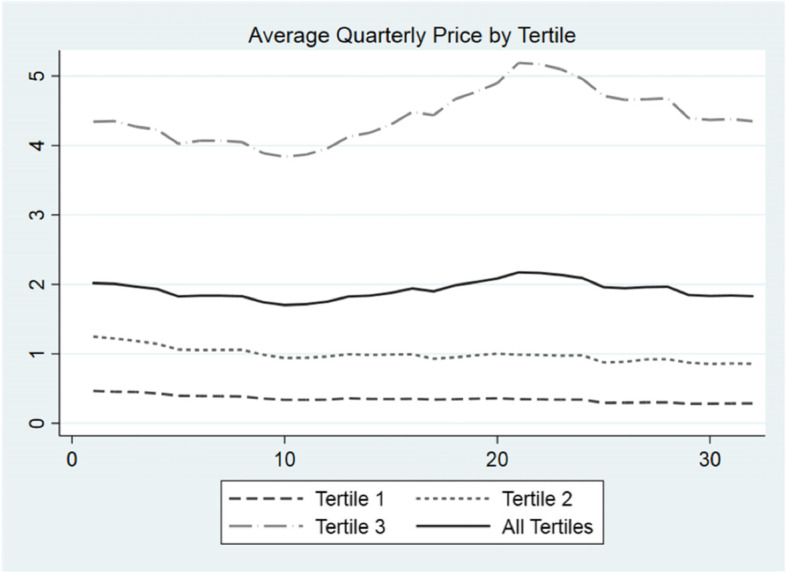
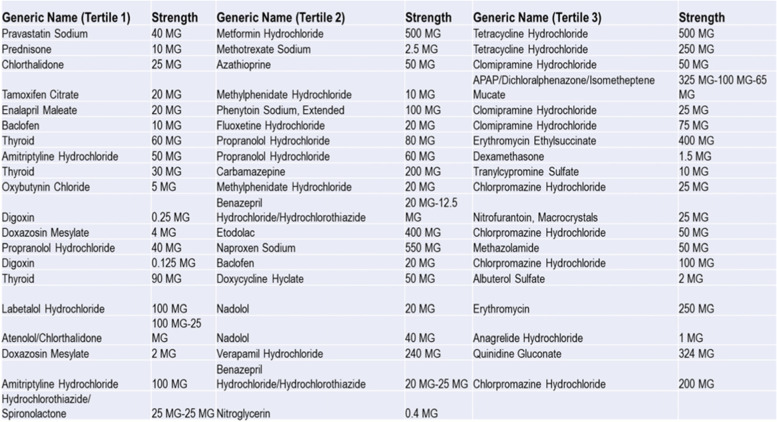
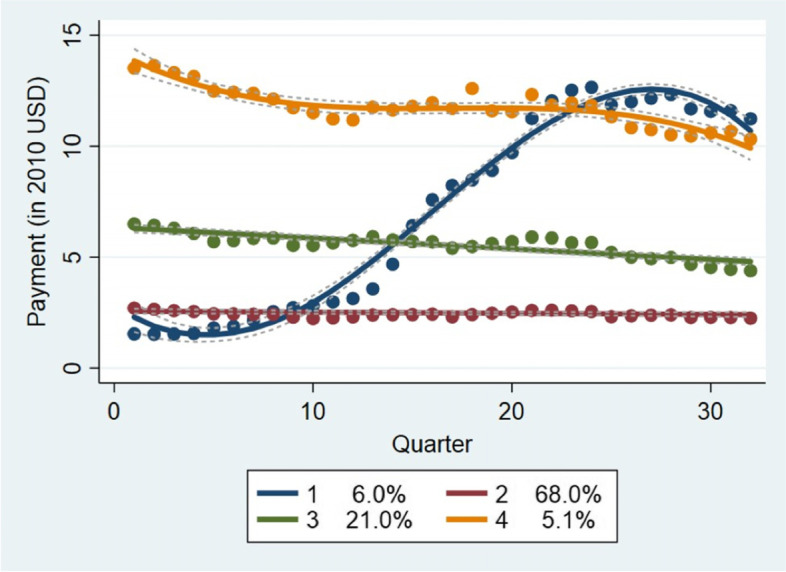
This paper examines price trajectories for generic drugs using a group-based trajectory modelling approach (GBTM). We fit the model using quarterly price information in the IBM MarketScan claims database for the past decade.
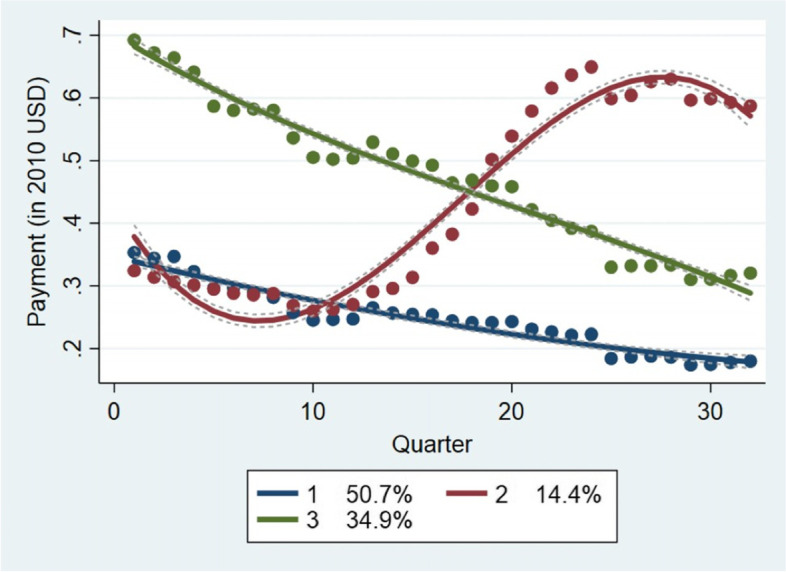
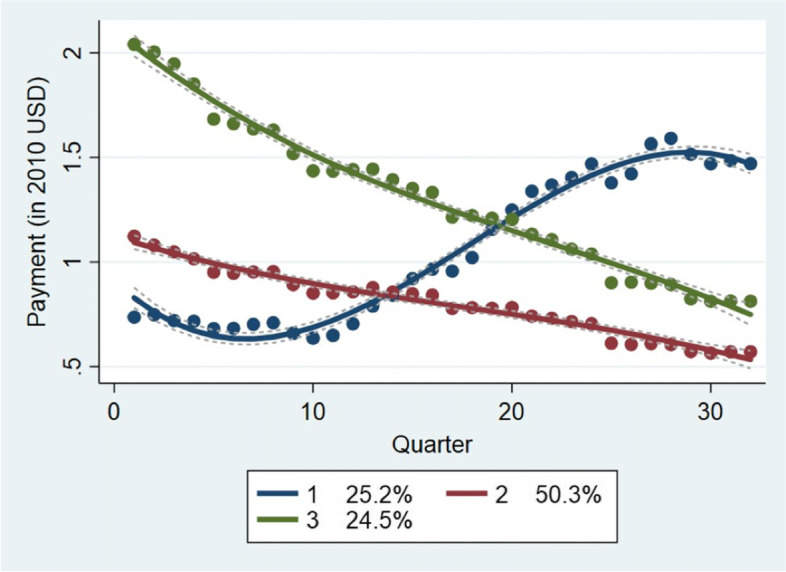
We identify three dominant price trajectories for this period: rapid increase trajectories, slow decline and rapid decline. Most generic drugs show a slow or a rapid decline in price trajectories. However, around 17% of all generic drugs show rapid price increase trajectories.
As Congress is exploring an excise tax on drugs whose list price increases faster than the rate of inflation, we discuss what drugs would be most likely to be affected by this law.
运转良好的竞争市场是控制仿制药价格的关键。这一点很重要,因为在美国销售的所有药品中,超过90%是仿制药。最近,仿制药市场出现了大幅涨价的例子。
本文使用基于群组的轨迹建模方法(GBTM)研究仿制药的价格轨迹。我们利用IBM MarketScan索赔数据库中过去十年的季度价格信息来拟合该模型。
我们确定了这一时期的三种主要价格轨迹:快速上涨轨迹、缓慢下降和快速下降。大多数仿制药的价格轨迹呈缓慢或快速下降趋势。然而,所有仿制药中约有17%呈现快速涨价轨迹。
由于国会正在探讨对标价涨幅超过通货膨胀率的药品征收消费税,我们讨论了哪些药品最有可能受到这项法律的影响。