Anderle Karolina, Machold Klaus, Kiener Hans P, Bormann Daniel, Hoetzenecker Konrad, Geleff Silvana, Prosch Helmut, Laccone Franco, Heil Peter M, Petzelbauer Peter, Aletaha Daniel, Blüml Stephan, Kastrati Kastriot
Division of Rheumatology, Department of Medicine III, Medical University of Vienna, Waehringer Guertel 18-20, 1090, Vienna, Austria.
Department of Clinical Pharmacology, Medical University of Vienna, Waehringer Guertel 18-20, 1090, Vienna, Austria.
BMC Rheumatol. 2022 Jul 13;6(1):42. doi: 10.1186/s41927-022-00271-1.
Autoimmune disease following COVID-19 has been studied intensely since the beginning of the pandemic. Growing evidence indicates that SARS-CoV-2 infection, by virtue of molecular mimicry can lead to an antigen-mediated cross-reaction promoting the development of a plethora of autoimmune spectrum diseases involving lungs and extrapulmonary tissues alike. In both COVID-19 and autoimmune disease, the immune self-tolerance breaks, leading to an overreaction of the immune system with production of a variety of autoantibodies, sharing similarities in clinical manifestation, laboratory, imaging, and pathology findings. Anti-Melanoma Differentiation-Associated gene 5 dermatomyositis (anti-MDA5 DM) comprises a rare subtype of systemic inflammatory myopathies associated with characteristic cutaneous features and life-threatening rapidly progressive interstitial lung disease (RP-ILD). The production of anti-MDA5 autoantibodies was proposed to be triggered by viral infections.
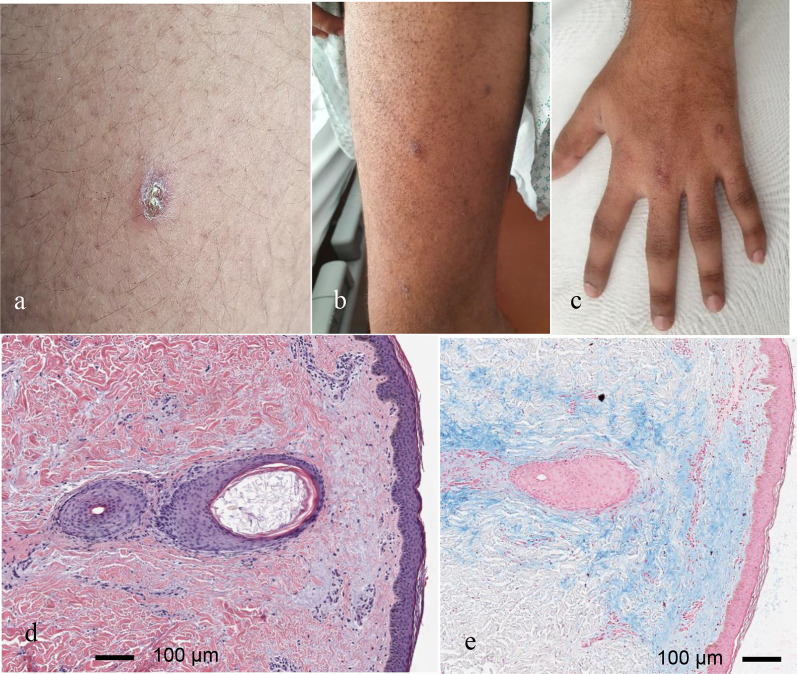
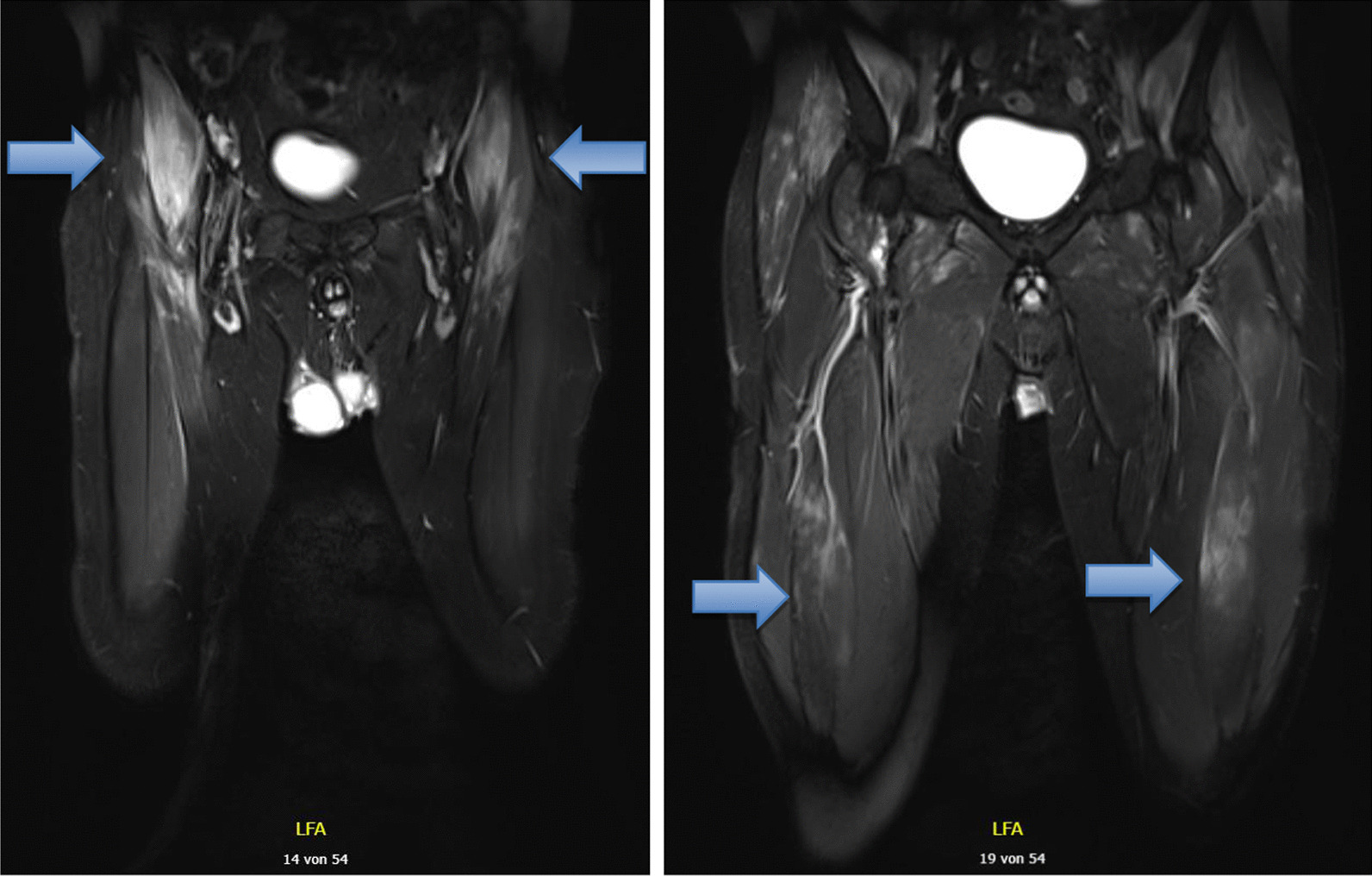
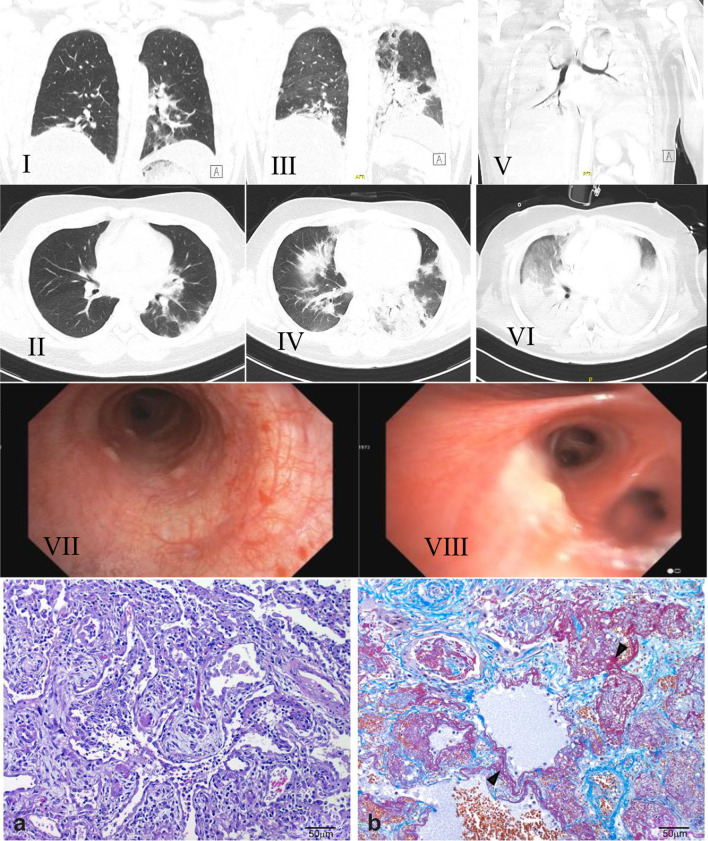
A 20-year-old male patient with polyarthritis, fatigue and exertional dyspnea was referred to our department. An elevated anti-MDA5 autoantibody titer, myositis on MRI, ground glass opacifications on lung CT and histological features of Wong-type dermatomyositis were confirmed, suggesting the diagnosis of an anti-MDA5 DM. Amid further diagnostic procedures, a serologic proof of a recent SARS-CoV-2 infection emerged. Subsequently, the patient deteriorated into a fulminant respiratory failure and an urgent lung transplantation was performed, leading to remission ever since (i.e. 12 months as of now).
We report a unique case of a patient with a new-onset anti-MDA5 DM with fulminant ARDS emerging in a post-infectious stage of COVID-19, who underwent a successful lung transplantation and achieved remission. Given the high mortality of anti-MDA5 DM associated RP-ILD, we would like to highlight that the timely recognition of this condition and urgent therapy initiation are of utmost importance.
自新冠疫情开始以来,新冠病毒感染后引发的自身免疫性疾病一直受到深入研究。越来越多的证据表明,严重急性呼吸综合征冠状病毒2(SARS-CoV-2)感染通过分子模拟可导致抗原介导的交叉反应,促使多种累及肺部和肺外组织的自身免疫性疾病谱的发展。在新冠病毒感染和自身免疫性疾病中,免疫自身耐受性均会破坏,导致免疫系统过度反应,产生多种自身抗体,在临床表现、实验室检查、影像学和病理学检查结果方面存在相似之处。抗黑色素瘤分化相关基因5皮肌炎(抗MDA5 DM)是一种罕见的系统性炎性肌病亚型,伴有特征性皮肤表现和危及生命的快速进展性间质性肺病(RP-ILD)。抗MDA5自身抗体的产生被认为是由病毒感染触发的。
一名20岁男性患者,有多关节炎、疲劳和劳力性呼吸困难,转诊至我科。抗MDA5自身抗体滴度升高、MRI显示肌炎、肺部CT显示磨玻璃影以及符合Wong型皮肌炎的组织学特征均得到证实,提示诊断为抗MDA5 DM。在进一步的诊断过程中,出现了近期感染SARS-CoV-2的血清学证据。随后,患者病情恶化为暴发性呼吸衰竭,紧急进行了肺移植,自那以后病情缓解(截至目前已缓解12个月)。
我们报告了一例独特病例,一名患者在新冠病毒感染后的感染后阶段出现新发抗MDA5 DM并伴有暴发性急性呼吸窘迫综合征(ARDS),该患者成功接受了肺移植并实现缓解。鉴于抗MDA5 DM相关RP-ILD的高死亡率,我们想强调及时识别这种情况并紧急开始治疗至关重要。