He Canxia, Gao Mingfei, Zhang Xiaohong, Lei Peng, Yang Haitao, Qing Yanping, Zhang Lina
The Affiliated Hospital of Medical School, Ningbo University, Ningbo, China.
Institute of Preventative Medicine, School of Medicine, Ningbo University, Ningbo, China.
Front Nutr. 2022 Jun 27;9:893344. doi: 10.3389/fnut.2022.893344. eCollection 2022.
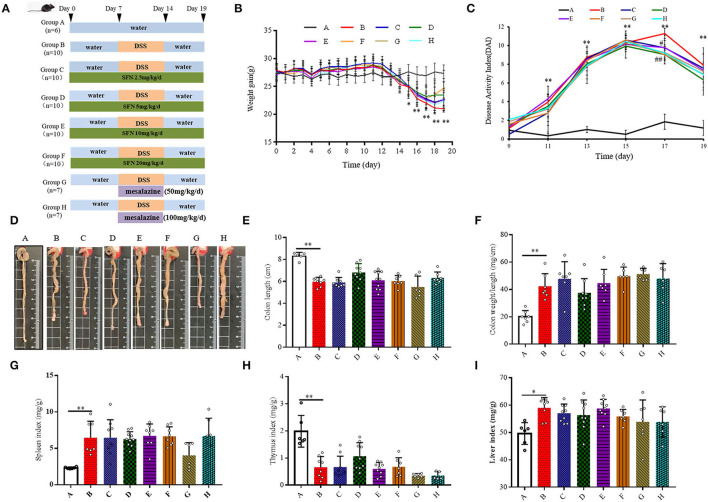
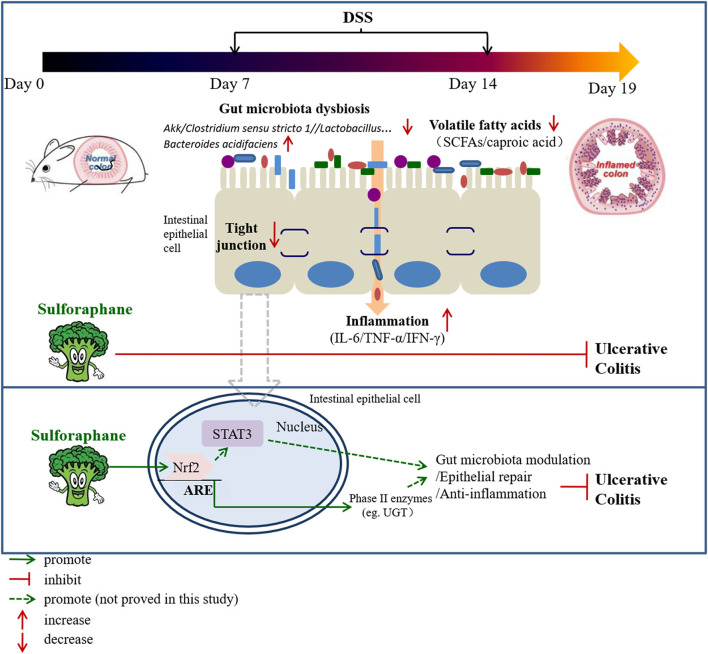
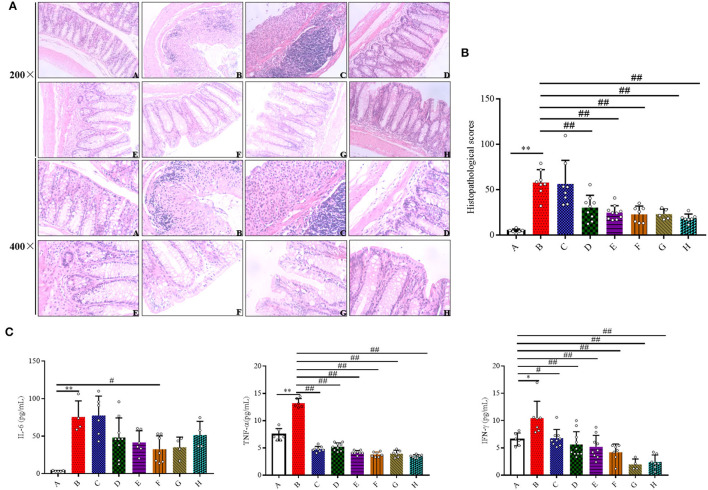
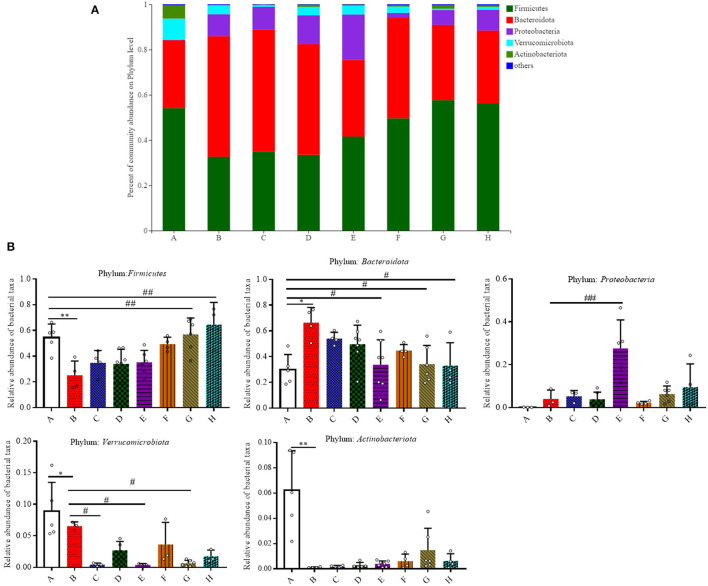
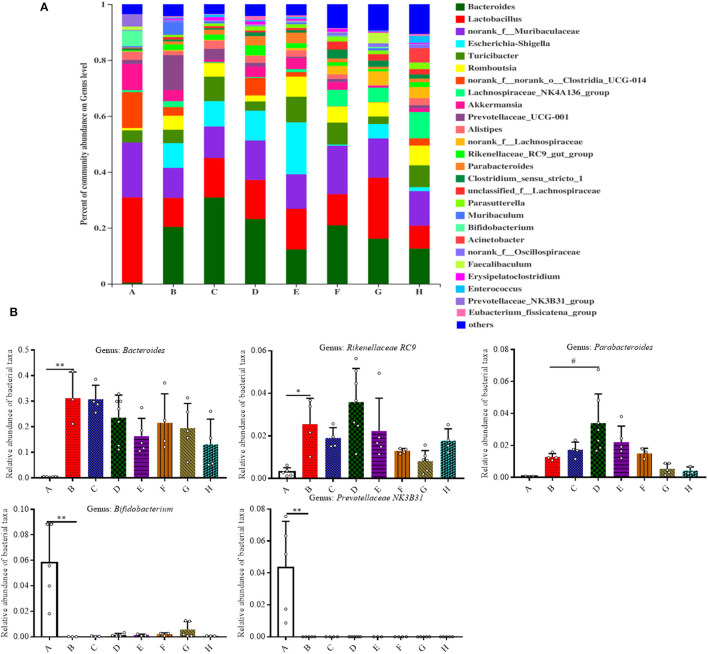
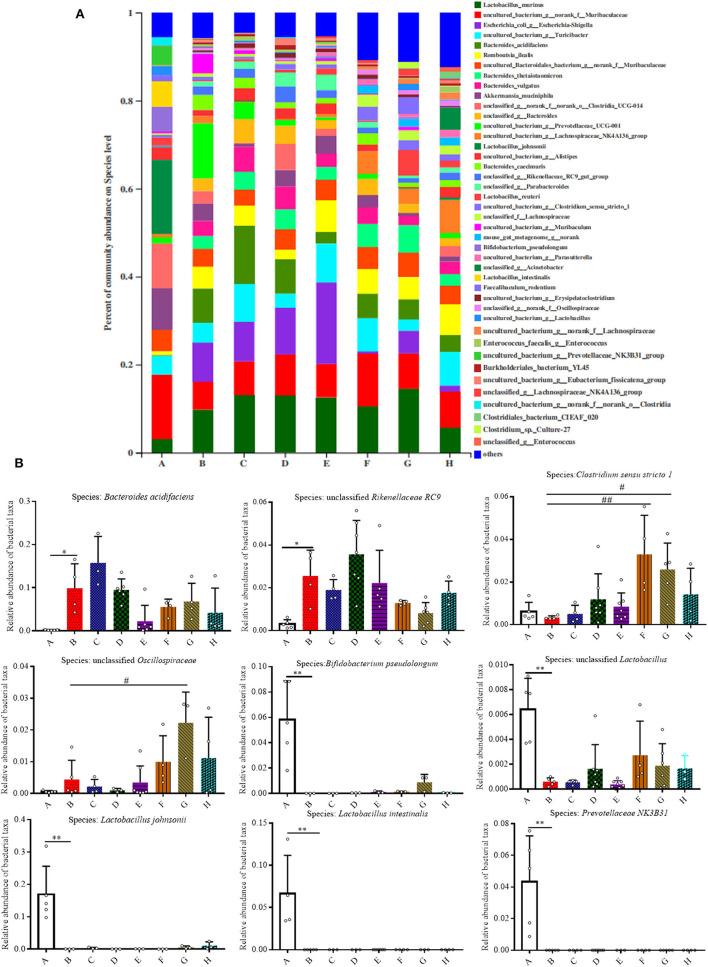
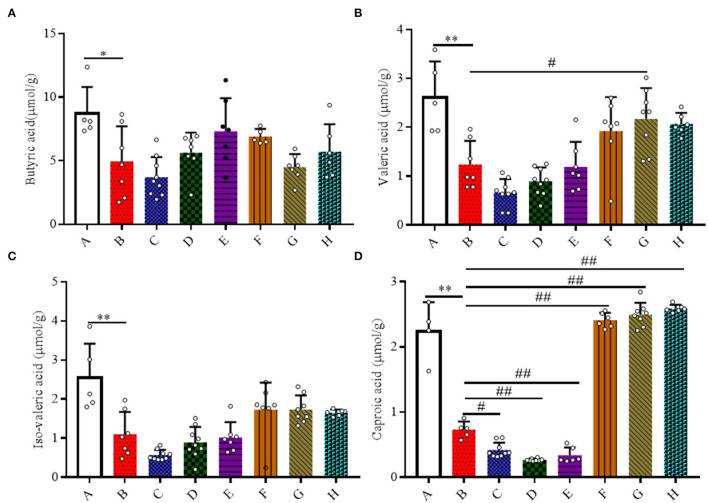
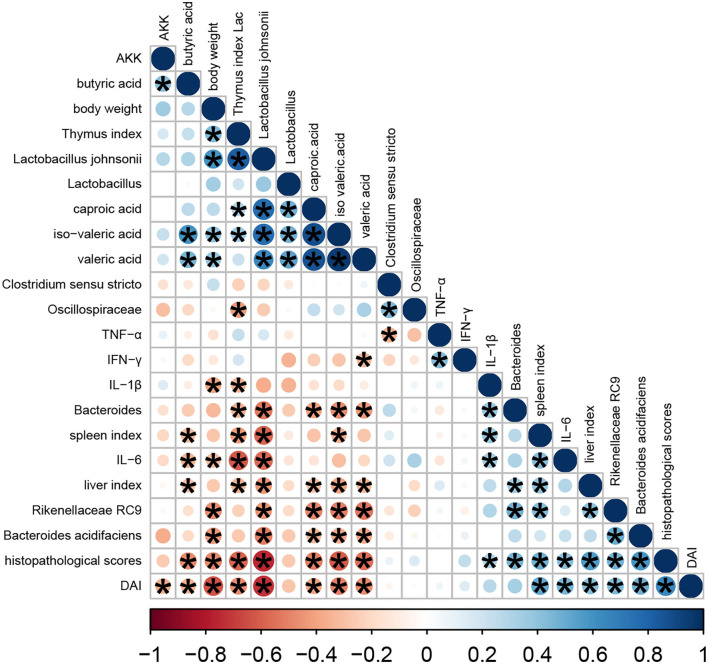
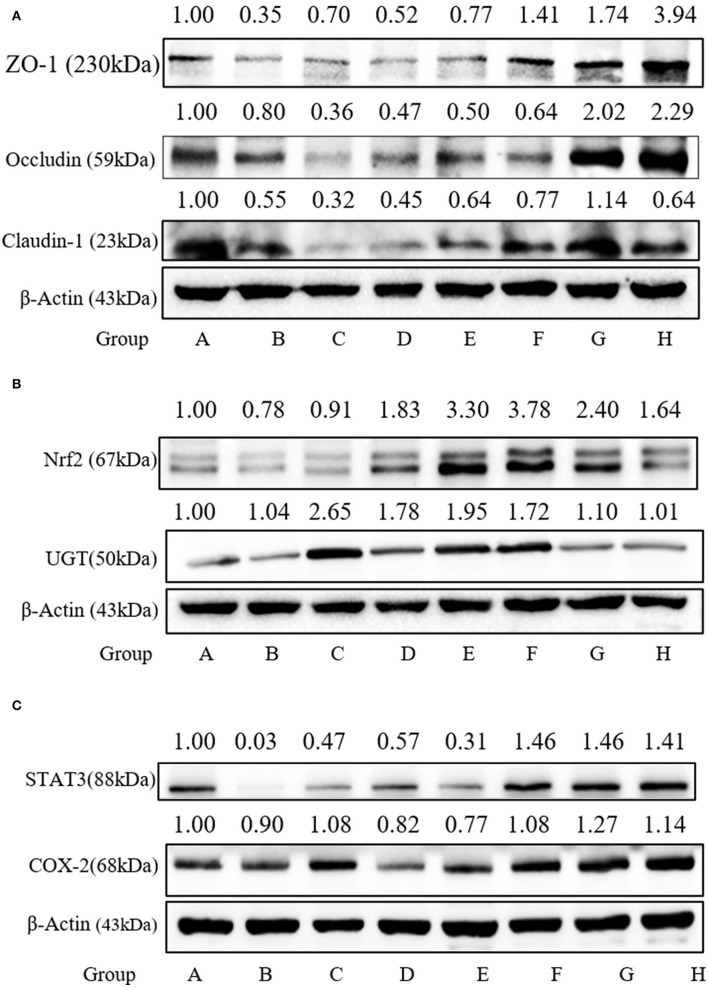
Sulforaphane (SFN), an isothiocyanate present in cruciferous vegetables such as broccoli and brussels sprouts, has a variety of biological functions. This study was undertaken to assess the potential efficacy of SFN in ameliorating dextran sulfate sodium (DSS)-induced ulcerative colitis (UC) in mice and to elucidate the underlying mechanisms. UC was induced in mice with administration of 2% DSS in drinking water for 7 days. Male C57BL/6 mice were treated with Mesalazine (50 and 100 mg/kg body weight) and various doses of SFN (2.5, 5, 10, and 20 mg/kg body weight). In DSS colitis mice, the hallmarks of disease observed as shortened colon lengths, increased disease activity index (DAI) scores and pathological damage, higher proinflammatory cytokines and decreased expression of tight junction proteins, were alleviated by SFN treatment. SFN also partially restored the perturbed gut microbiota composition and increased production of volatile fatty acids (especially caproic acid) induced by DSS administration. The heatmap correlation analysis indicated that , unclassified , and unclassified were significantly correlated with disease severity. Nuclear factor (erythroid-derived 2)-like 2 (Nrf2), Signal Transducer and Activator of Transcription 3 (STAT3), and Phase II enzyme UDP-glucuronosyltransferase (UGT) were involved in the protective effect of SFN against DSS-induced colitis. This study's findings suggest that SFN may serve as a therapeutic agent protecting against UC.
萝卜硫素(SFN)是一种存在于西兰花和抱子甘蓝等十字花科蔬菜中的异硫氰酸盐,具有多种生物学功能。本研究旨在评估SFN改善葡聚糖硫酸钠(DSS)诱导的小鼠溃疡性结肠炎(UC)的潜在疗效,并阐明其潜在机制。通过在饮用水中给予2% DSS 7天诱导小鼠发生UC。雄性C57BL/6小鼠分别用美沙拉嗪(50和100 mg/kg体重)和不同剂量的SFN(2.5、5、10和20 mg/kg体重)进行治疗。在DSS结肠炎小鼠中,观察到的疾病特征,如结肠长度缩短、疾病活动指数(DAI)评分增加和病理损伤、促炎细胞因子水平升高以及紧密连接蛋白表达降低,均通过SFN治疗得到缓解。SFN还部分恢复了DSS给药引起的肠道微生物群组成紊乱,并增加了挥发性脂肪酸(尤其是己酸)的产生。热图相关性分析表明,未分类的 和未分类的 与疾病严重程度显著相关。核因子(红系衍生2)样2(Nrf2)、信号转导和转录激活因子3(STAT3)以及II期酶尿苷二磷酸葡萄糖醛酸转移酶(UGT)参与了SFN对DSS诱导的结肠炎的保护作用。本研究结果表明,SFN可能作为一种预防UC的治疗药物。