Yang Zhijian, Xie Chao, Ou Songwen, Zhao Minning, Lin Zhaowei
Department of Joint Surgery, First Affiliated Hospital of Sun Yat-sen University, Guangzhou, Guangdong, China.
Department of Orthopaedics, Zhujiang Hospital, Southern Medical University, Guangzhou, Guangdong, China.
Arch Med Sci. 2021 Aug 2;18(4):1004-1015. doi: 10.5114/aoms/140714. eCollection 2022.
The histopathology grading system is the gold standard post-operative method to evaluate cartilage degeneration in knee osteoarthritis (OA). Magnetic resonance imaging (MRI) T1 rho/T2 mapping imaging can be used for preoperative detection. An association between histopathology and T1 rho/T2 mapping relaxation times was suggested in previous research. However, the cutoff point was not determined among different histopathology grades. Our study aimed to determine the cutoff point of T1 rho/T2 mapping.
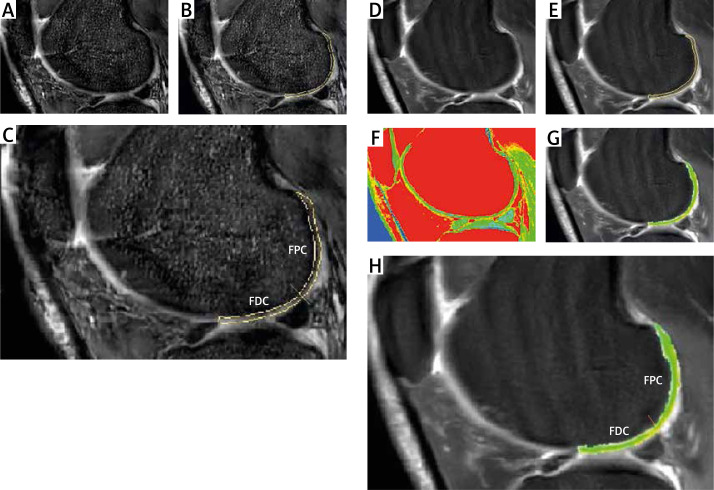
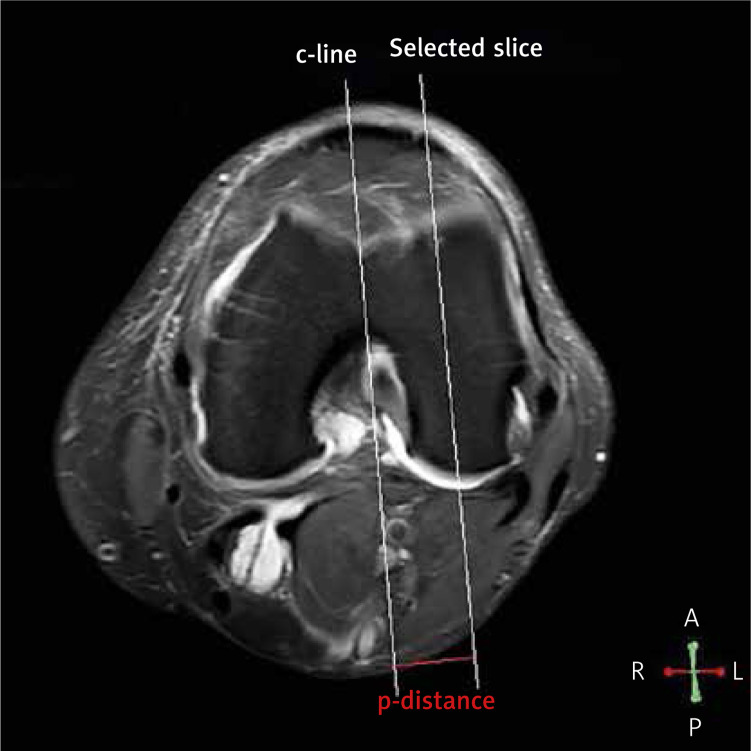
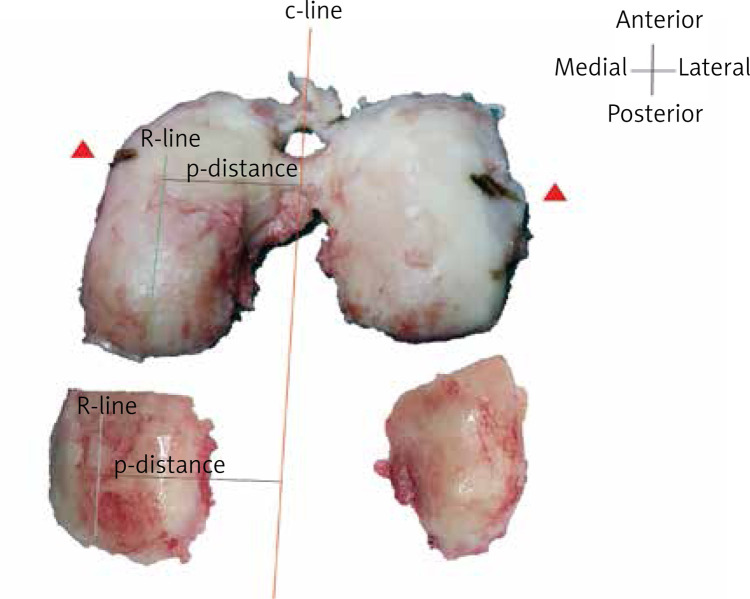
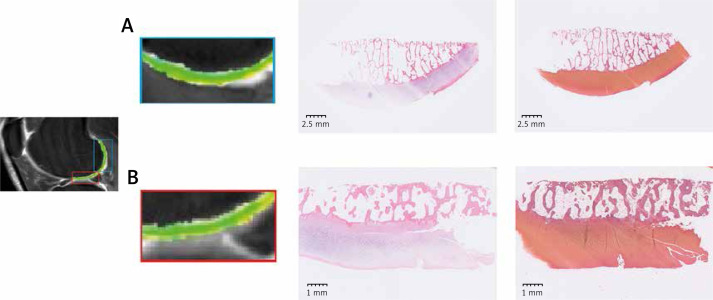
T1 rho/T2 mapping images were acquired from 80 samples before total knee replacements. Then the histopathology grading system was applied.
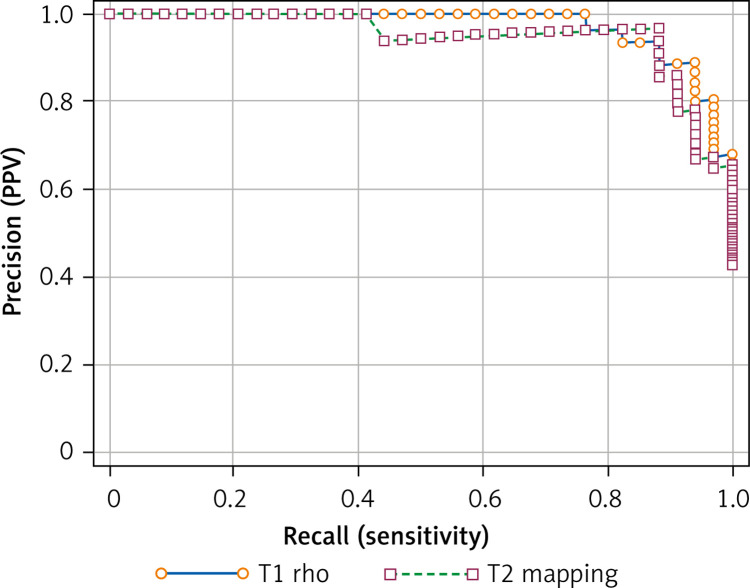
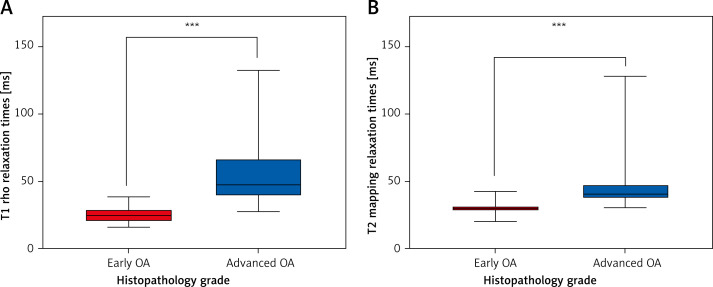
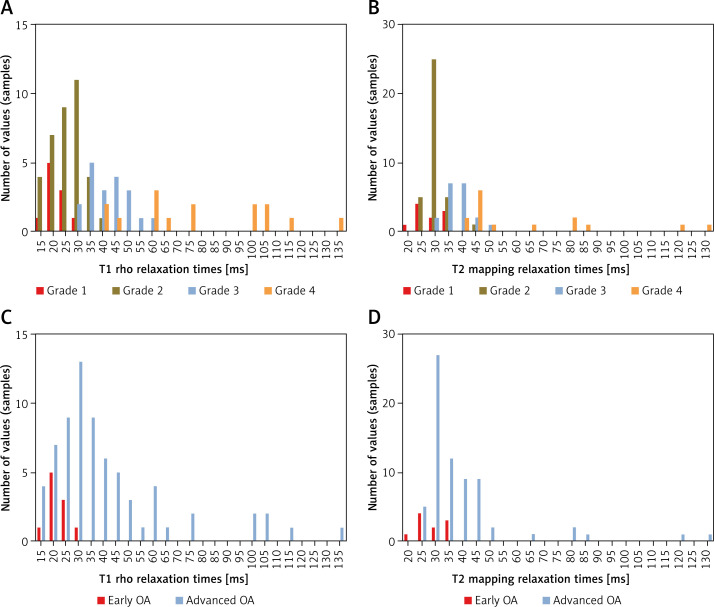
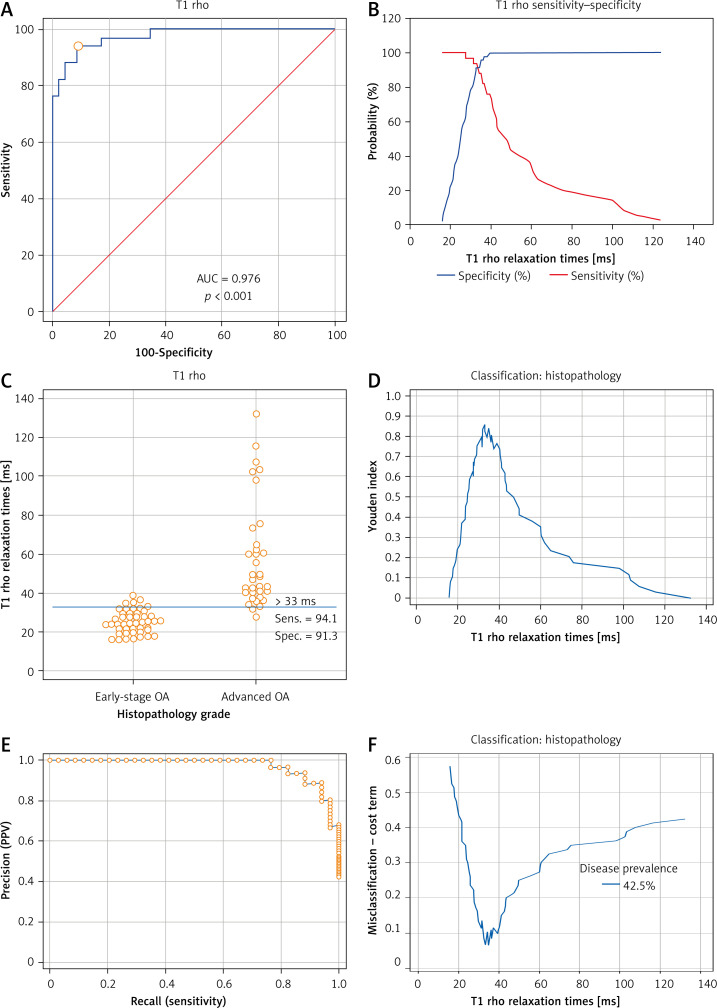
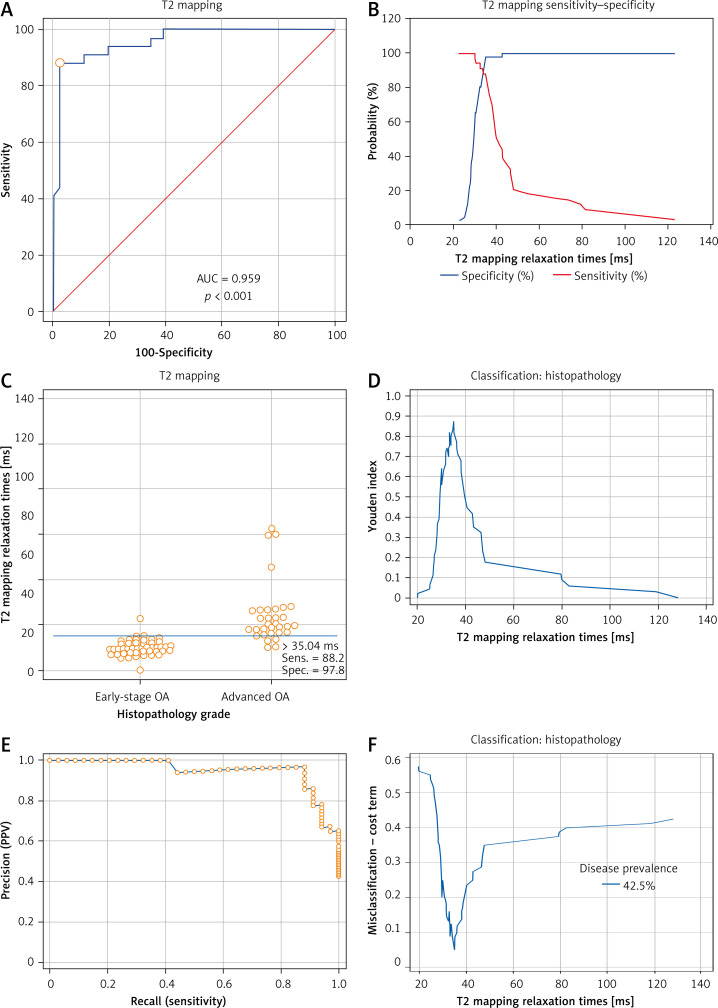
The mean T1 rho/T2 mapping relaxation times of 80 samples were 39.17 ms and 37.98 ms respectively. Significant differences were found in T1 rho/T2 mapping values between early-stage and advanced OA ( < 0.001). The cutoff point for T1 rho was 33 ms with a sensitivity of 94.12 (95% CI: 80-99.3) and a specificity of 91.30 (95% CI: 79.2-97.6). The cutoff point for T2 mapping was suggested as 35.04 ms with a sensitivity of 88.24 (95% CI: 72.5-96.7) and specificity of 97.83 (95% CI: 88.5-99.9). After bootstrap simulation, the 95% CI of the T1 rho/T2 mapping cutoff point was estimated as 29.36 to 36.32 ms and 34.8 to 35.04 ms respectively. The area under the PR curve of T1 rho/T2 mapping was 0.972 (95% CI: 0.925-0.992) and 0.949 (95% CI: 0.877-0.989) respectively.
The cutoff point of T1 rho relaxation times, which was suggested as 33 ms, could be used to distinguish early-stage and advanced OA.
组织病理学分级系统是评估膝关节骨关节炎(OA)软骨退变的术后金标准方法。磁共振成像(MRI)T1ρ/T2映射成像可用于术前检测。先前的研究表明组织病理学与T1ρ/T2映射弛豫时间之间存在关联。然而,不同组织病理学分级之间的截断点尚未确定。我们的研究旨在确定T1ρ/T2映射的截断点。
在全膝关节置换术前从80个样本中获取T1ρ/T2映射图像。然后应用组织病理学分级系统。
80个样本的平均T1ρ/T2映射弛豫时间分别为39.17毫秒和37.98毫秒。早期OA和晚期OA之间的T1ρ/T2映射值存在显著差异(<0.001)。T1ρ的截断点为33毫秒,灵敏度为94.12(95%CI:80-99.3),特异性为91.30(95%CI:79.2-97.6)。T2映射的截断点建议为35.04毫秒,灵敏度为88.24(95%CI:72.5-96.7),特异性为97.83(95%CI:88.5-99.9)。经过自助模拟,T1ρ/T2映射截断点的95%CI分别估计为29.36至36.32毫秒和34.8至35.04毫秒。T1ρ/T2映射的PR曲线下面积分别为0.972(95%CI:0.925-0.992)和0.949(95%CI:0.877-0.989)。
T1ρ弛豫时间的截断点建议为33毫秒,可用于区分早期OA和晚期OA。