Department of Biotechnology, University of Rijeka, Rijeka, Croatia.
Genos Glycoscience Research Laboratory, Zagreb, Croatia.
Front Immunol. 2022 Jun 27;13:893365. doi: 10.3389/fimmu.2022.893365. eCollection 2022.
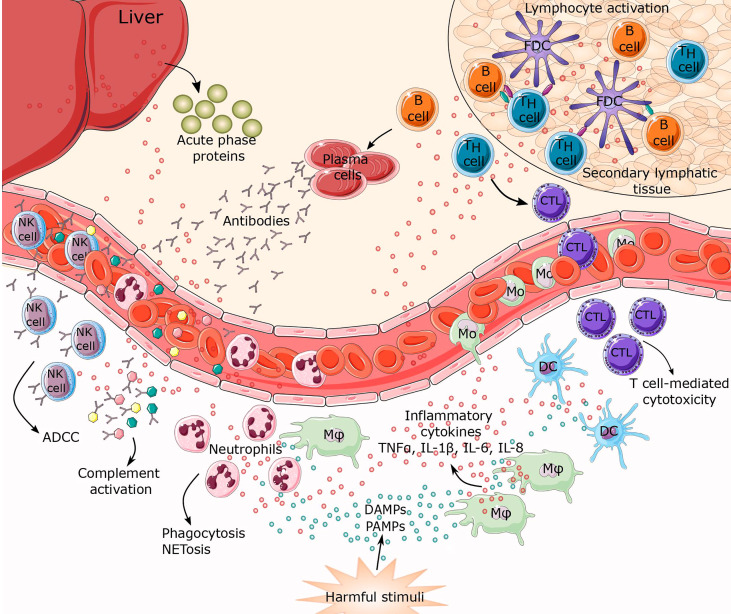
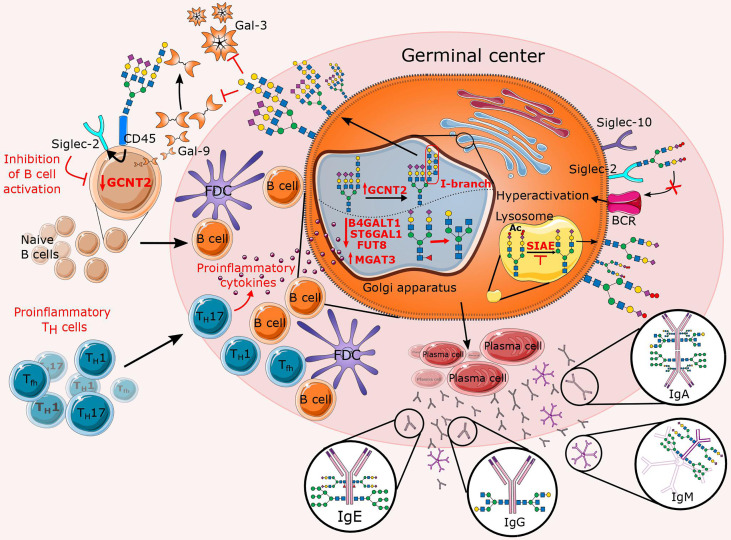
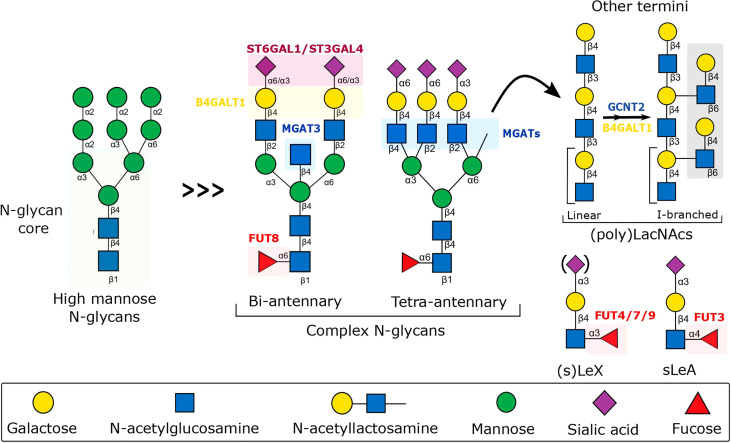
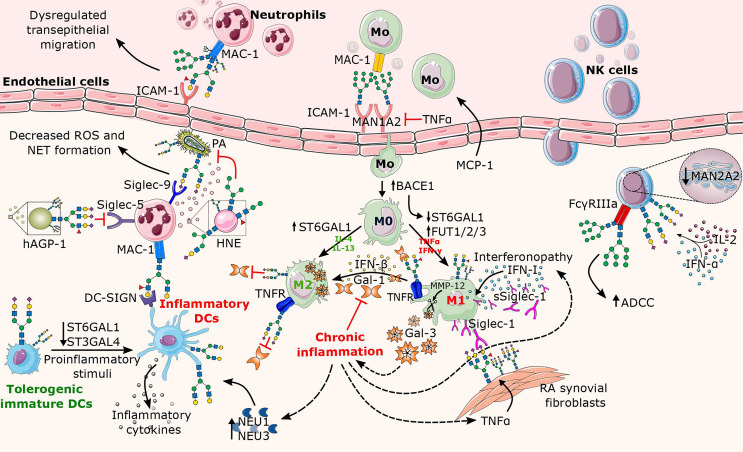
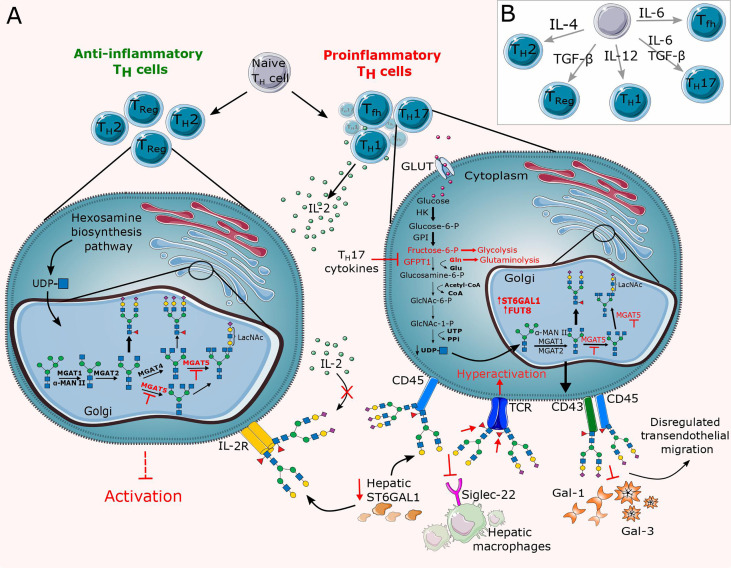
Chronic inflammation is the main feature of many long-term inflammatory diseases such as autoimmune diseases, metabolic disorders, and cancer. There is a growing number of studies in which alterations of N-glycosylation have been observed in many pathophysiological conditions, yet studies of the underlying mechanisms that precede N-glycome changes are still sparse. Proinflammatory cytokines have been shown to alter the substrate synthesis pathways as well as the expression of glycosyltransferases required for the biosynthesis of N-glycans. The resulting N-glycosylation changes can further contribute to disease pathogenesis through modulation of various aspects of immune cell processes, including those relevant to pathogen recognition and fine-tuning the inflammatory response. This review summarizes our current knowledge of inflammation-induced N-glycosylation changes, with a particular focus on specific subsets of immune cells of innate and adaptive immunity and how these changes affect their effector functions, cell interactions, and signal transduction.
慢性炎症是许多长期炎症性疾病的主要特征,如自身免疫性疾病、代谢紊乱和癌症。越来越多的研究表明,在许多病理生理条件下,N-糖基化发生了改变,但对糖组学改变之前的潜在机制的研究仍然很少。促炎细胞因子已被证明可以改变底物合成途径以及糖基转移酶的表达,这些酶是 N-聚糖生物合成所必需的。由此产生的 N-糖基化改变可以通过调节免疫细胞过程的各个方面,包括与病原体识别相关的方面以及精细调节炎症反应,从而进一步促进疾病的发病机制。这篇综述总结了我们目前对炎症诱导的 N-糖基化改变的认识,特别关注先天和适应性免疫的特定免疫细胞亚群,以及这些改变如何影响它们的效应功能、细胞相互作用和信号转导。