Klinik für Innere Medizin III (Kardiologie, Angiologie und Internistische Intensivmedizin), Universitätsklinikum des Saarlandes und Medizinische Fakultät der Universität des Saarlandes, Kirrbergerstr. 100, Geb. 41.1 (IMED), 66421, Homburg/Saar, Germany.
Klinik für Innere Medizin IV (Nephrologie und Hochdruckkrankheiten), Universitätsklinikum des Saarlandes und Medizinische Fakultät der Universität des Saarlandes, Homburg/Saar, Germany.
Basic Res Cardiol. 2022 Jul 14;117(1):36. doi: 10.1007/s00395-022-00943-6.
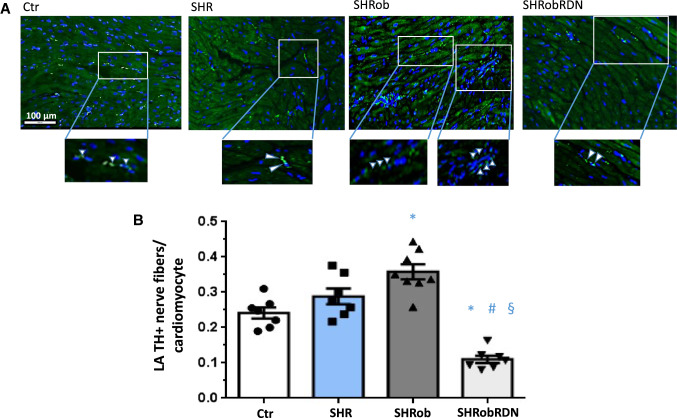
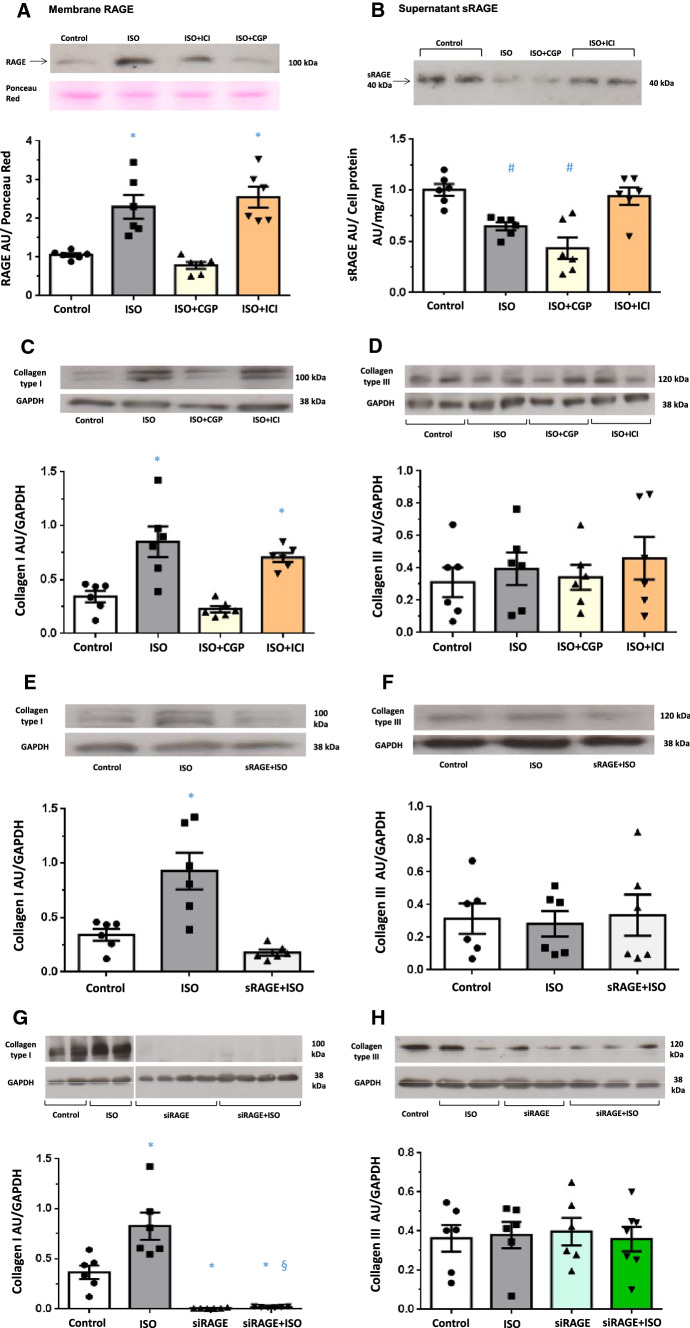
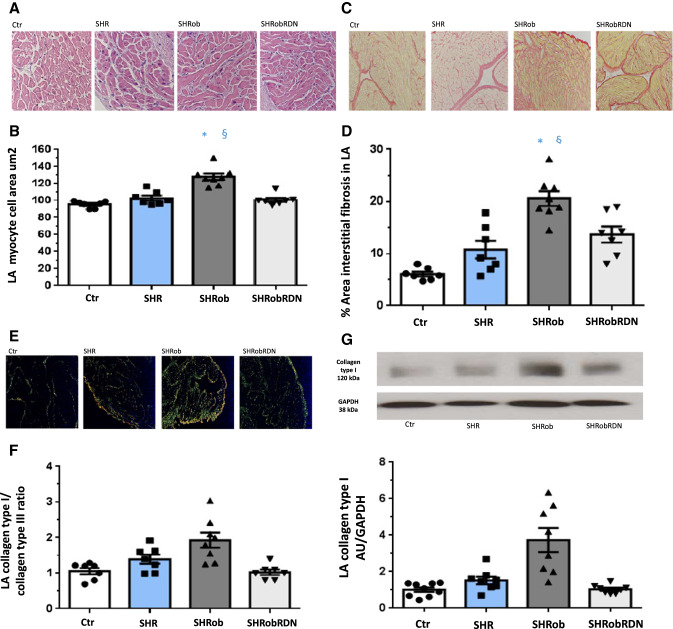
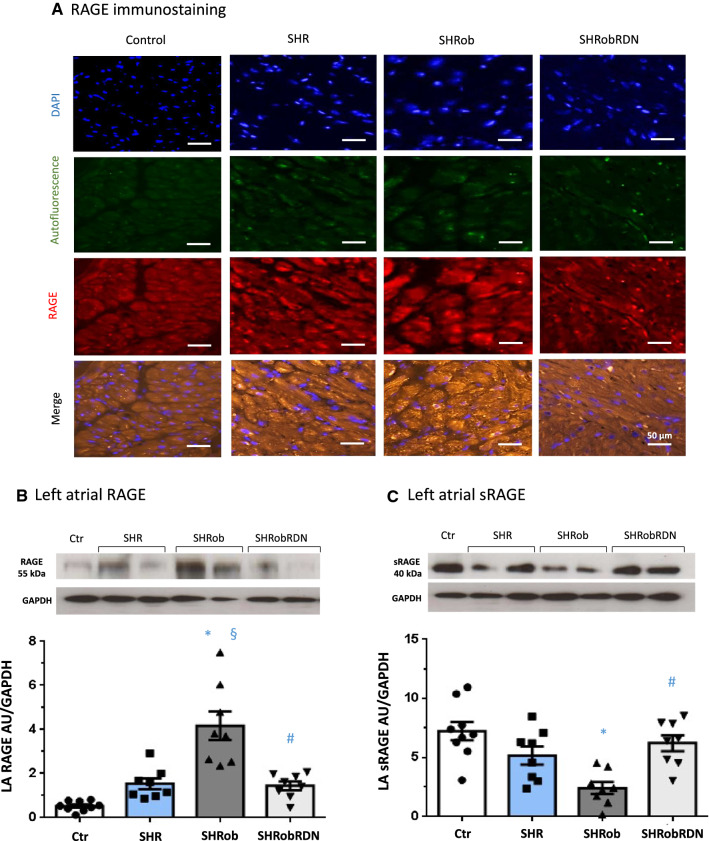
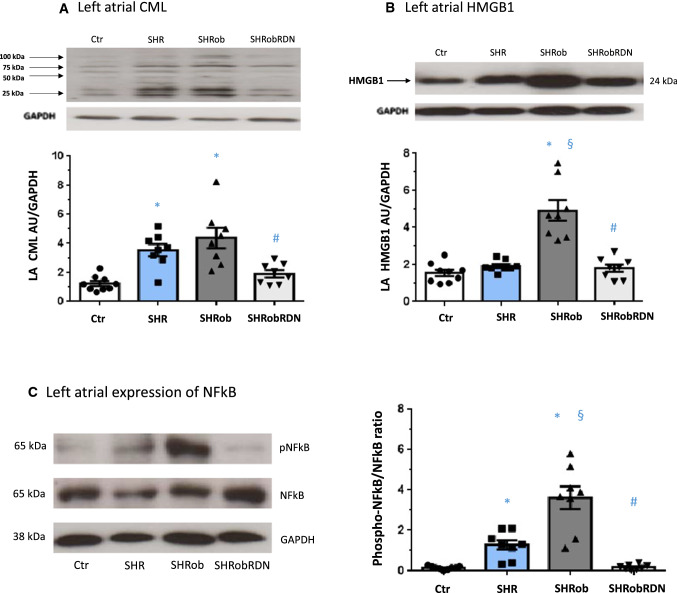
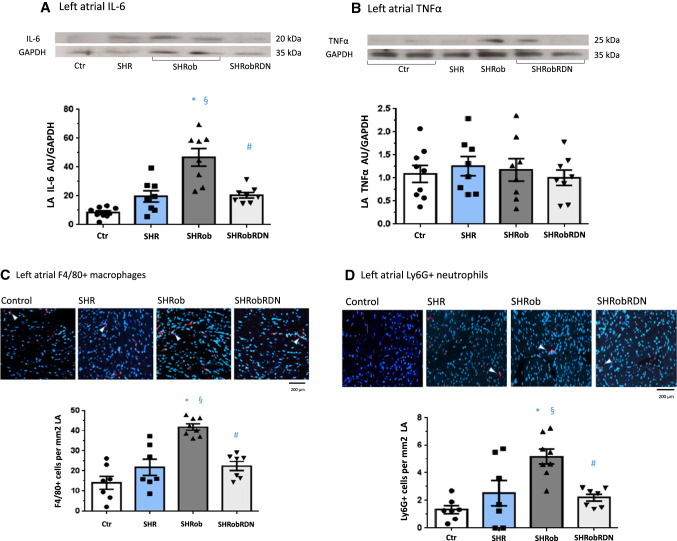
Atrial fibrillation (AF) is highly prevalent in hypertensive patients with metabolic syndrome and is related to inflammation and activation of the sympathoadrenergic system. The multi-ligand Receptor-for-Advanced-Glycation-End-products (RAGE) activates inflammation-associated tissue remodeling and is regulated by the sympathetic nervous system. Its counterpart, soluble RAGE (sRAGE), serves as anti-inflammatory decoy receptor with protective properties. We investigated the effect of sympathetic modulation by renal denervation (RDN) on atrial remodeling, RAGE/sRAGE and RAGE ligands in metabolic syndrome. RDN was performed in spontaneously hypertensive obese rats (SHRob) with metabolic syndrome compared with lean spontaneously hypertensive rats (SHR) and with normotensive non-obese control rats. Blood pressure and heart rate were measured by telemetry. The animals were killed 12 weeks after RDN. Left atrial (LA) and right atrial (RA) remodeling was assessed by histological analysis and collagen types. Sympathetic innervation was measured by tyrosine hydroxylase staining of atrial nerve fibers, RAGE/sRAGE, RAGE ligands, cytokine expressions and inflammatory infiltrates were analyzed by Western blot and immunofluorescence staining. LA sympathetic nerve fiber density was higher in SHRob (+44%) versus controls and reduced after RDN (-64% versus SHRob). RAGE was increased (+718%) and sRAGE decreased (- 62%) in SHRob as compared with controls. RDN reduced RAGE expression (- 61% versus SHRob), significantly increased sRAGE levels (+162%) and induced a significant decrease in RAGE ligand levels in SHRob (- 57% CML and - 51% HMGB1) with reduced pro-inflammatory NFkB activation (- 96%), IL-6 production (- 55%) and reduced inflammatory infiltrates. This led to a reduction in atrial fibrosis (- 33%), collagen type I content (- 72%), accompanied by reduced LA myocyte hypertrophy (- 21%). Transfection experiments on H9C2 cardiomyoblasts demonstrated that RAGE is directly involved in fibrosis formation by influencing cellular production of collagen type I. In conclusion, suppression of renal sympathetic nerve activity by RDN prevents atrial remodeling in metabolic syndrome by reducing atrial sympathetic innervation and by modulating RAGE/sRAGE balance and reducing pro-inflammatory and pro-fibrotic RAGE ligands, which provides a potential therapeutic mechanism to reduce the development of AF.
心房颤动(AF)在患有代谢综合征的高血压患者中非常普遍,与炎症和交感神经激活有关。多配体晚期糖基化终产物受体(RAGE)激活与炎症相关的组织重塑,并受交感神经系统调节。其对应物可溶性 RAGE(sRAGE)作为具有保护作用的抗炎诱饵受体。我们研究了肾去神经支配(RDN)对代谢综合征中心房重塑、RAGE/sRAGE 和 RAGE 配体的影响。与瘦自发性高血压大鼠(SHR)和非肥胖正常血压对照大鼠相比,在患有代谢综合征的自发性高血压肥胖大鼠(SHRob)中进行了 RDN。通过遥测测量血压和心率。在 RDN 后 12 周处死动物。通过组织学分析和胶原类型评估左心房(LA)和右心房(RA)重塑。通过心房神经纤维酪氨酸羟化酶染色测量交感神经支配,通过 Western blot 和免疫荧光染色分析 RAGE/sRAGE、RAGE 配体、细胞因子表达和炎症浸润。与对照相比,SHRob 中的 LA 交感神经纤维密度增加(+44%),RDN 后减少(-64% 与 SHRob)。与对照相比,SHRob 中的 RAGE 增加(+718%),sRAGE 减少(-62%)。RDN 降低了 SHRob 中的 RAGE 表达(-61% 与 SHRob),显著增加了 sRAGE 水平(+162%),并降低了 SHRob 中的 RAGE 配体水平(-57% CML 和 -51% HMGB1),同时 NFkB 激活减少(-96%),IL-6 产生减少(-55%),炎症浸润减少。这导致心房纤维化减少(-33%),胶原 I 含量减少(-72%),同时 LA 心肌细胞肥大减少(-21%)。在 H9C2 心肌细胞中的转染实验表明,RAGE 通过影响细胞 I 型胶原的产生直接参与纤维化的形成。总之,通过减少心房交感神经支配和调节 RAGE/sRAGE 平衡以及减少促炎和促纤维化的 RAGE 配体,RDN 抑制肾交感神经活性可防止代谢综合征中的心房重塑,为减少 AF 的发展提供了一种潜在的治疗机制。