Centre for Misfolding Diseases, Yusuf Hamied Department of Chemistry, University of Cambridge, Lensfield Road, Cambridge CB2 1EW, U.K.
Instituto de Medicina Molecular João Lobo Antunes, Faculdade de Medicina, Universidade de Lisboa, Avenida Professor Egas Moniz, 1649-028 Lisboa, Portugal.
J Am Chem Soc. 2022 Jul 27;144(29):13026-13031. doi: 10.1021/jacs.2c04747. Epub 2022 Jul 14.
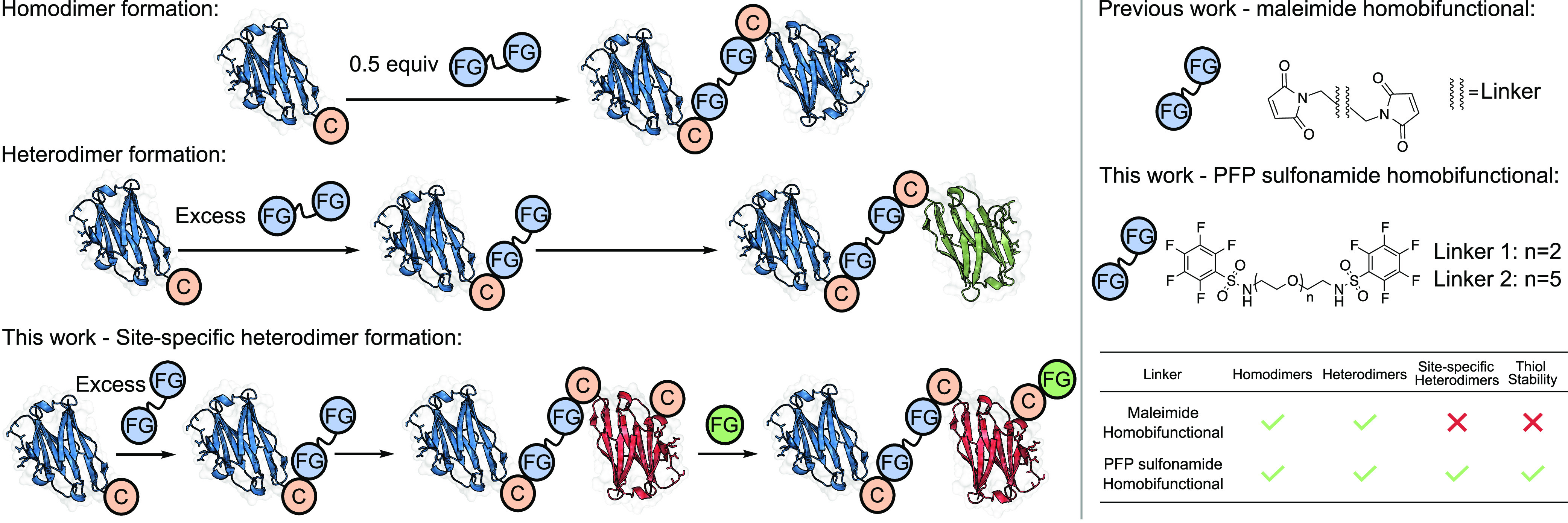
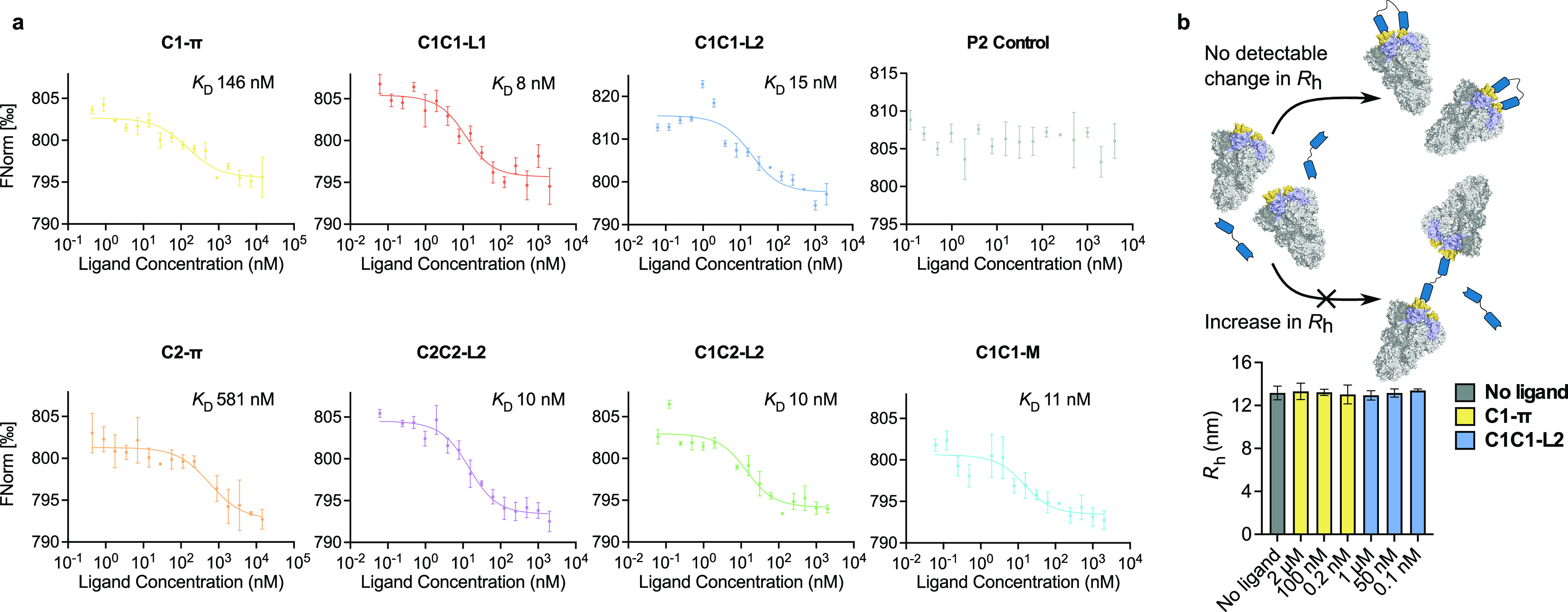
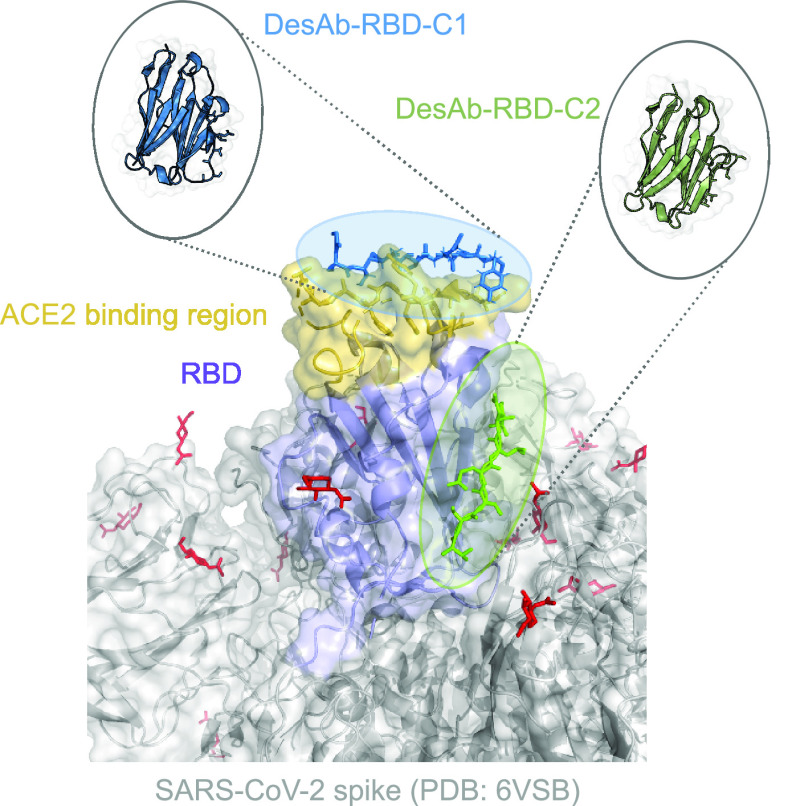
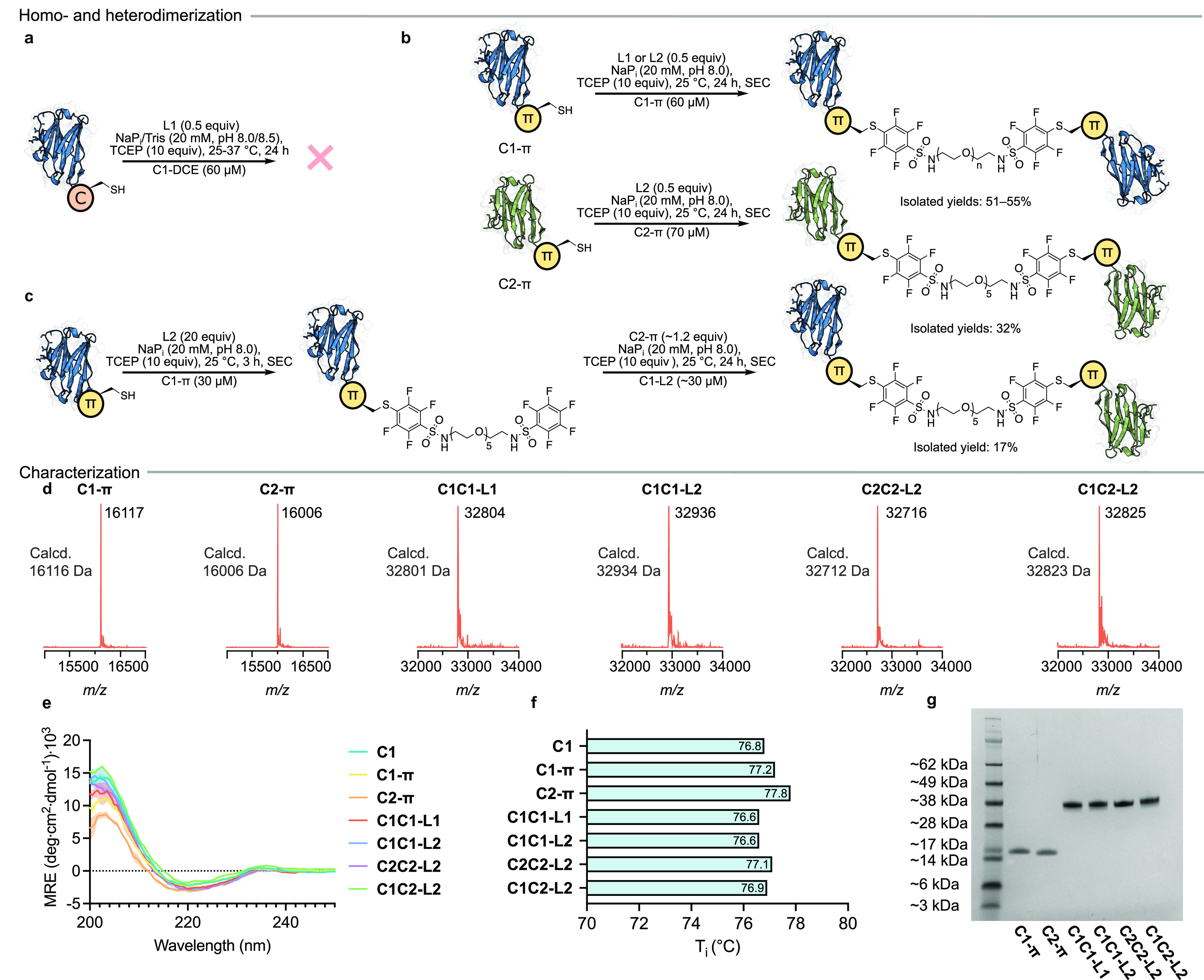
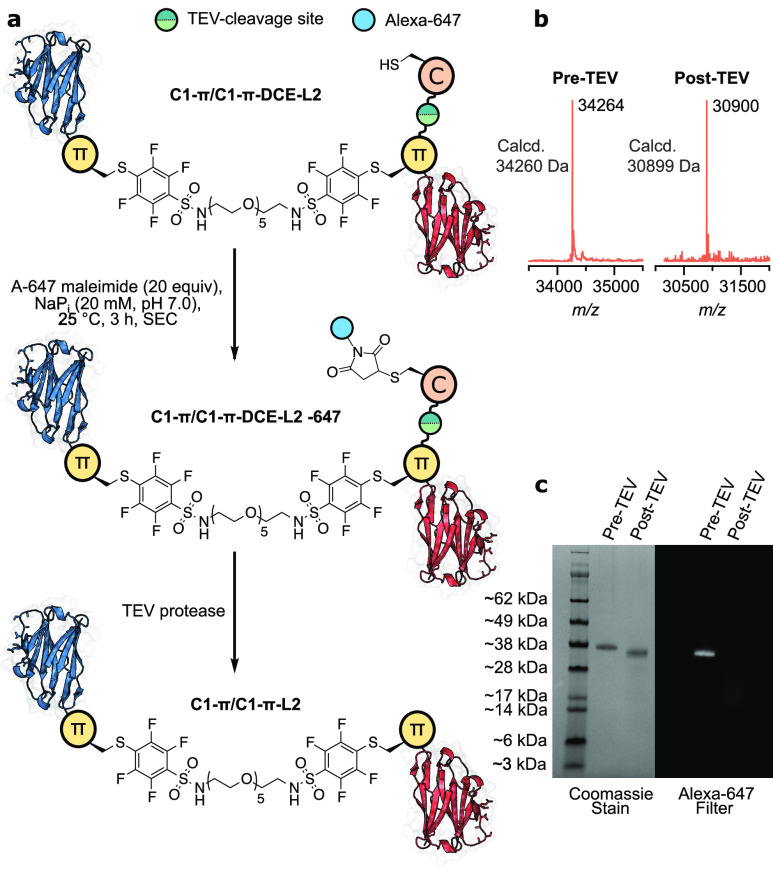
Post-translational protein-protein conjugation produces bioconjugates that are unavailable via genetic fusion approaches. A method for preparing protein-protein conjugates using π-clamp-mediated cysteine arylation with pentafluorophenyl sulfonamide functional groups is described. Two computationally designed antibodies targeting the SARS-CoV-2 receptor binding domain were produced ( = 146, 581 nM) with a π-clamp sequence near the C-terminus and dimerized using this method to provide a 10-60-fold increase in binding ( = 8-15 nM). When two solvent-exposed cysteine residues were present on the second protein domain, the π-clamp cysteine residue was selectively modified over an Asp-Cys-Glu cysteine residue, allowing for subsequent small-molecule conjugation. With this strategy, we build molecule-protein-protein conjugates with complete chemical control over the sites of modification.
翻译后蛋白-蛋白缀合产生了通过遗传融合方法无法获得的生物缀合物。本文描述了一种使用π-夹介导的半胱氨酸芳基化与五氟苯磺酰胺官能团制备蛋白-蛋白缀合物的方法。使用这种方法,通过计算设计的两种针对 SARS-CoV-2 受体结合域的抗体( = 146,581 nM)与 C 末端附近的π-夹序列二聚化,从而使结合增加了 10-60 倍( = 8-15 nM)。当第二个蛋白质结构域上存在两个暴露于溶剂的半胱氨酸残基时,π-夹半胱氨酸残基可选择性地修饰天冬氨酸-半胱氨酸-谷氨酸半胱氨酸残基,从而允许随后进行小分子缀合。通过这种策略,我们构建了分子-蛋白-蛋白缀合物,可完全控制修饰部位的化学性质。