Department of Chemistry, Massachusetts Institute of Technology, Cambridge, Massachusetts, 02139, United States.
Sci Rep. 2017 Aug 11;7(1):7954. doi: 10.1038/s41598-017-08402-2.
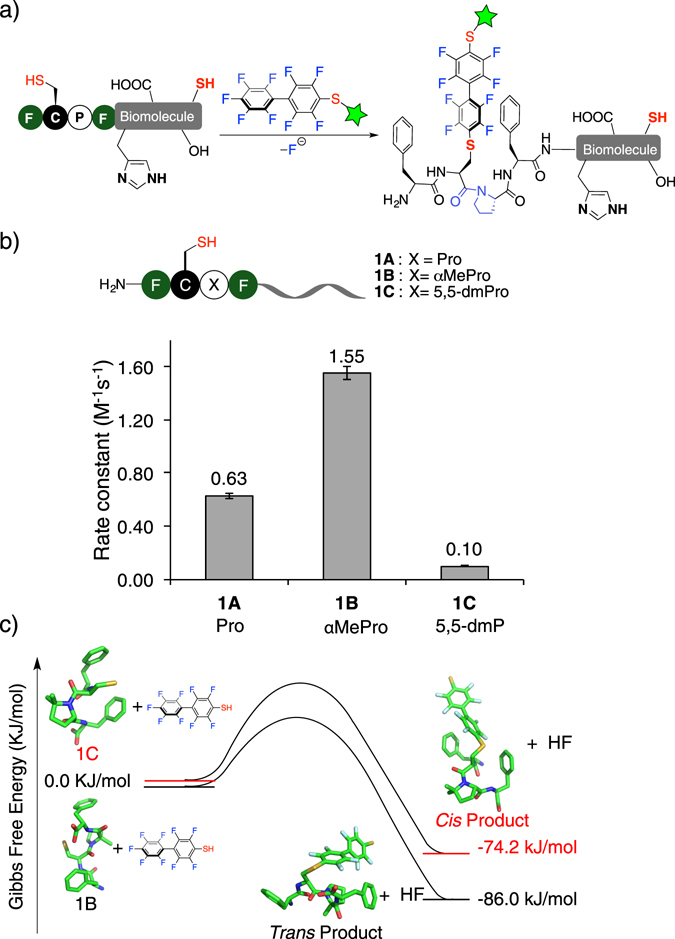
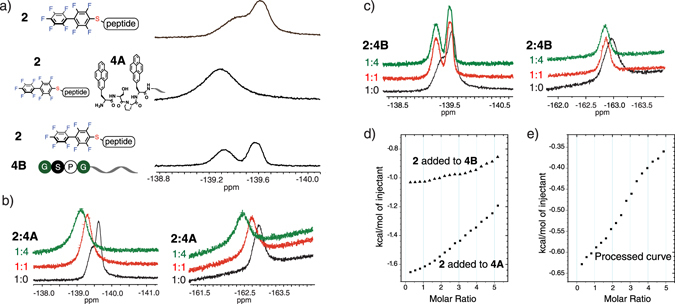
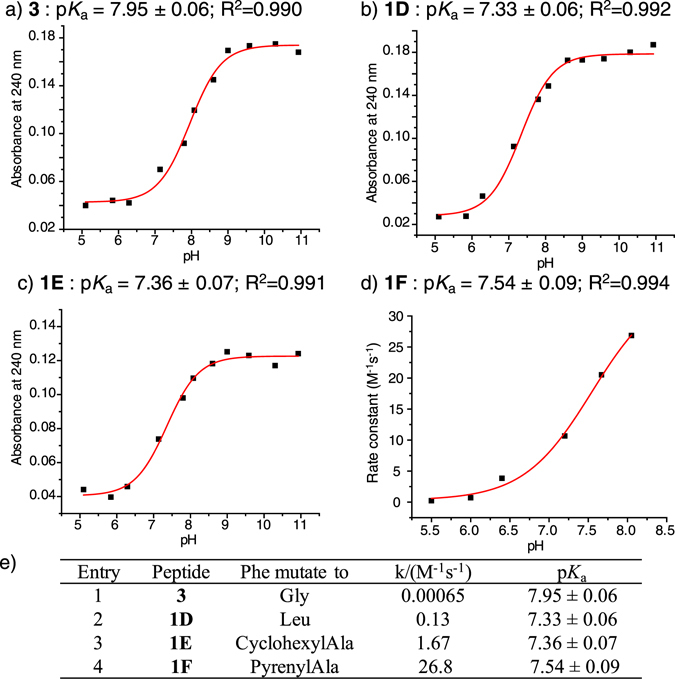
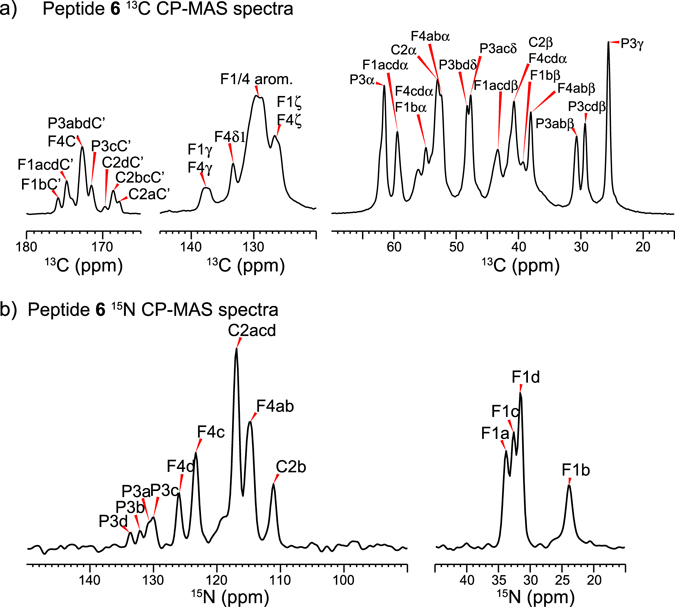
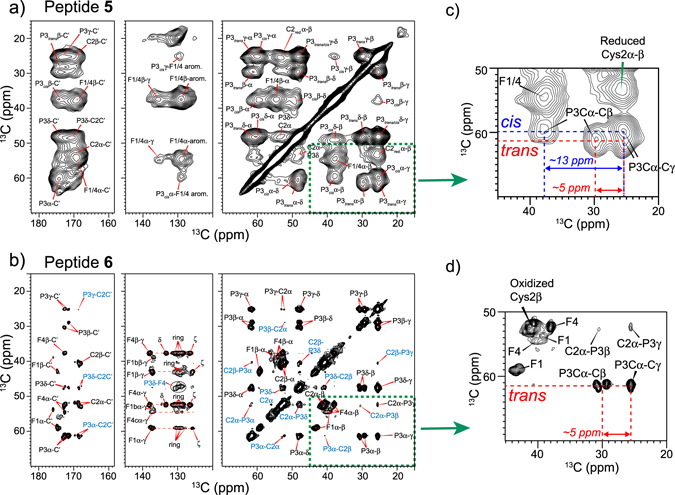
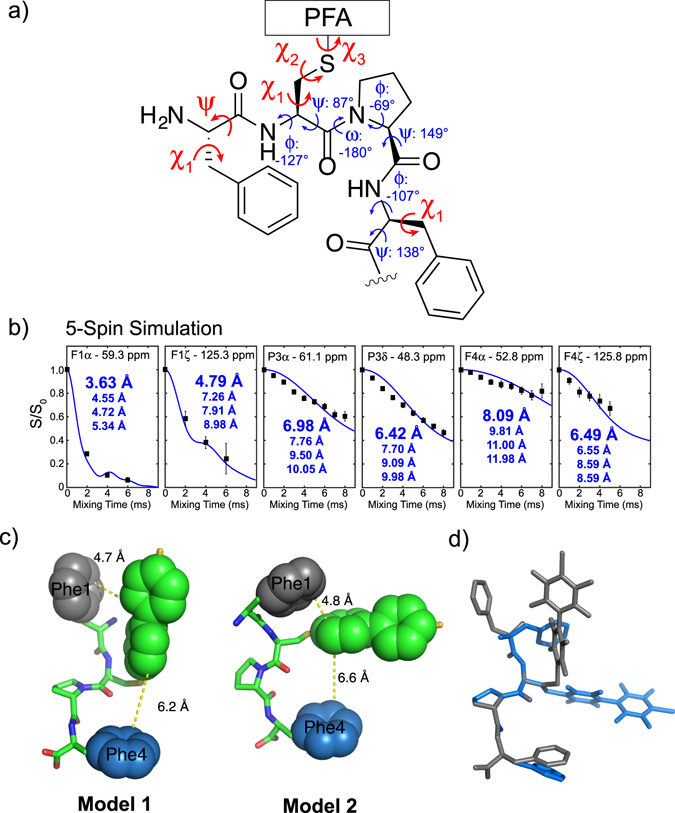
Natural enzymes use local environments to tune the reactivity of amino acid side chains. In searching for small peptides with similar properties, we discovered a four-residue π-clamp motif (Phe-Cys-Pro-Phe) for regio- and chemoselective arylation of cysteine in ribosomally produced proteins. Here we report mutational, computational, and structural findings directed toward elucidating the molecular factors that drive π-clamp-mediated arylation. We show the significance of a trans conformation prolyl amide bond for the π-clamp reactivity. The π-clamp cysteine arylation reaction enthalpy of activation (ΔH) is significantly lower than a non-π-clamp cysteine. Solid-state NMR chemical shifts indicate the prolyl amide bond in the π-clamp motif adopts a 1:1 ratio of the cis and trans conformation, while in the reaction product Pro3 was exclusively in trans. In two structural models of the perfluoroarylated product, distinct interactions at 4.7 Å between Phe1 side chain and perfluoroaryl electrophile moiety are observed. Further, solution F NMR and isothermal titration calorimetry measurements suggest interactions between hydrophobic side chains in a π-clamp mutant and the perfluoroaryl probe. These studies led us to design a π-clamp mutant with an 85-fold rate enhancement. These findings will guide us toward the discovery of small reactive peptides to facilitate abiotic chemistry in water.
天然酶利用局部环境来调节氨基酸侧链的反应性。在寻找具有类似性质的小肽时,我们发现了一个四残基的π夹模式(苯丙氨酸-半胱氨酸-脯氨酸-苯丙氨酸),用于核糖体产生的蛋白质中半胱氨酸的区域和化学选择性芳基化。在这里,我们报告了突变、计算和结构研究结果,旨在阐明驱动π夹介导芳基化的分子因素。我们展示了脯氨酰酰胺键的反式构象对于π夹反应性的重要性。π夹半胱氨酸芳基化反应的活化焓(ΔH)明显低于非π夹半胱氨酸。固态 NMR 化学位移表明,π夹模体中的脯氨酰酰胺键以 1:1 的比例采用顺式和反式构象,而在反应产物中 Pro3 仅为反式。在全氟芳基化产物的两个结构模型中,观察到苯丙氨酸 1 侧链与全氟芳基亲电试剂部分之间存在 4.7 Å 的独特相互作用。此外,溶液 F NMR 和等温滴定量热法测量表明,π夹突变体中的疏水性侧链与全氟芳基探针之间存在相互作用。这些研究促使我们设计了一个 π夹突变体,其速率提高了 85 倍。这些发现将指导我们发现小的反应性肽,以促进水中的非生物化学。