Gladstone Institutes, San Francisco, CA 94158, USA; Biomedical Sciences Graduate Program, University of California, San Francisco, San Francisco, CA 94143, USA; Department of Medicine, University of California, San Francisco, San Francisco, CA, USA; Quantitative Biosciences Institute COVID-19 Research Group (QCRG), University of California, San Francisco, San Francisco, CA 94158, USA.
Quantitative Biosciences Institute COVID-19 Research Group (QCRG), University of California, San Francisco, San Francisco, CA 94158, USA; Quantitative Biosciences Institute (QBI), University of California, San Francisco, San Francisco, CA 94158, USA; Department of Cellular and Molecular Pharmacology, University of California, San Francisco, San Francisco, CA 94158, USA.
Cell Rep. 2022 Jul 19;40(3):111088. doi: 10.1016/j.celrep.2022.111088. Epub 2022 Jun 27.
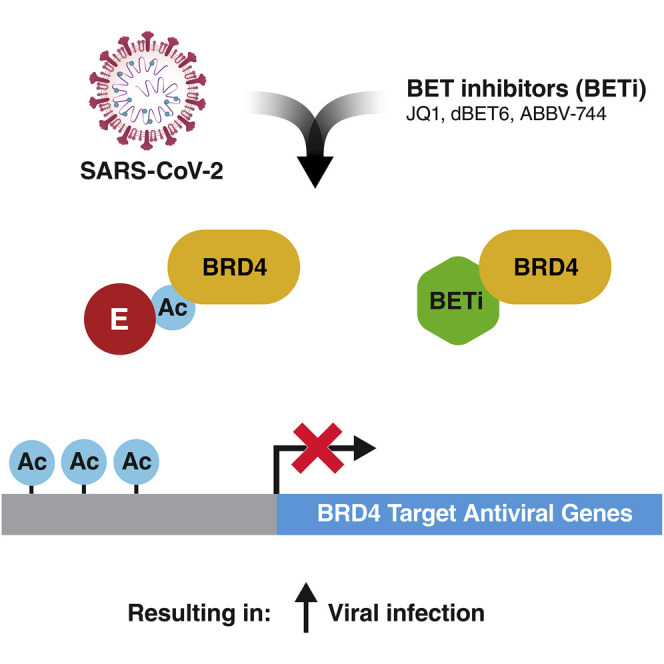
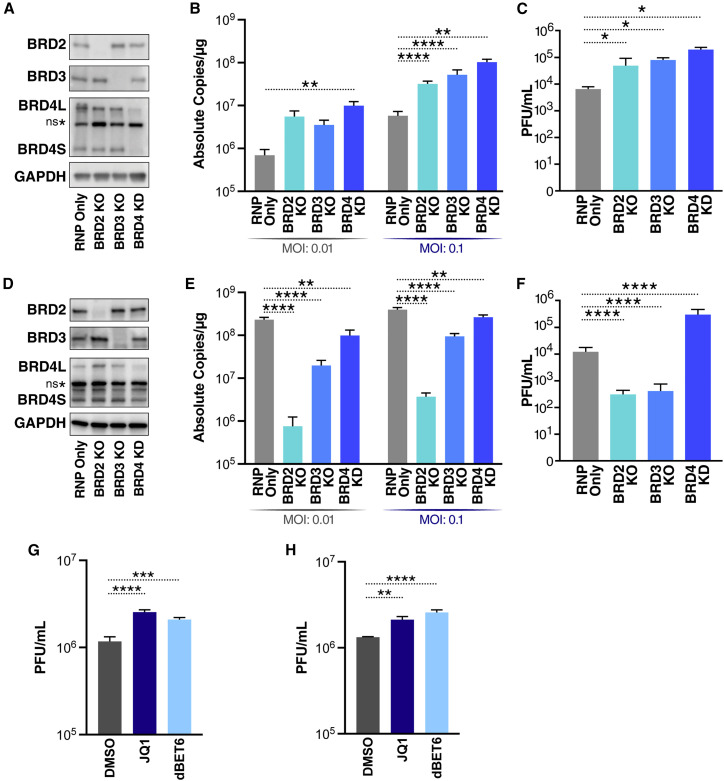
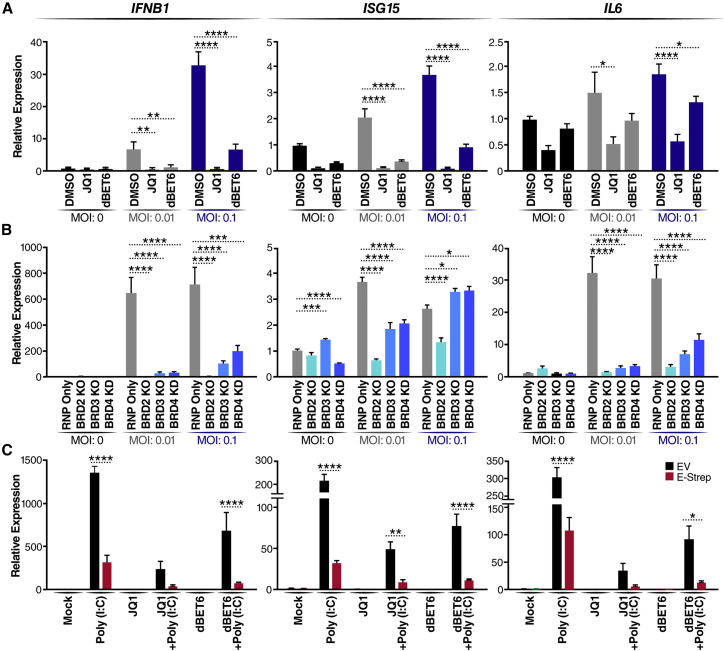
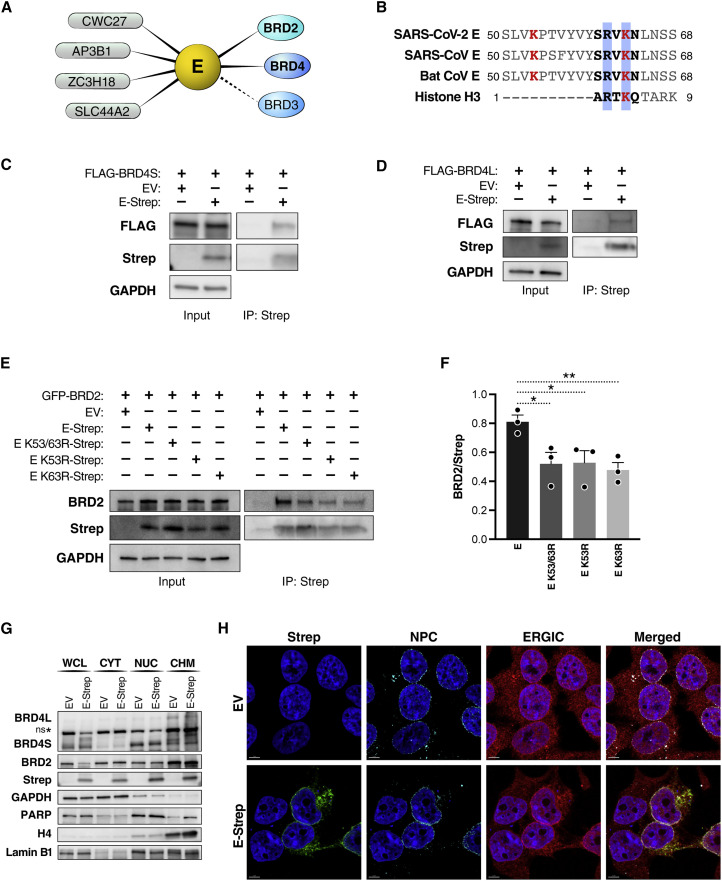
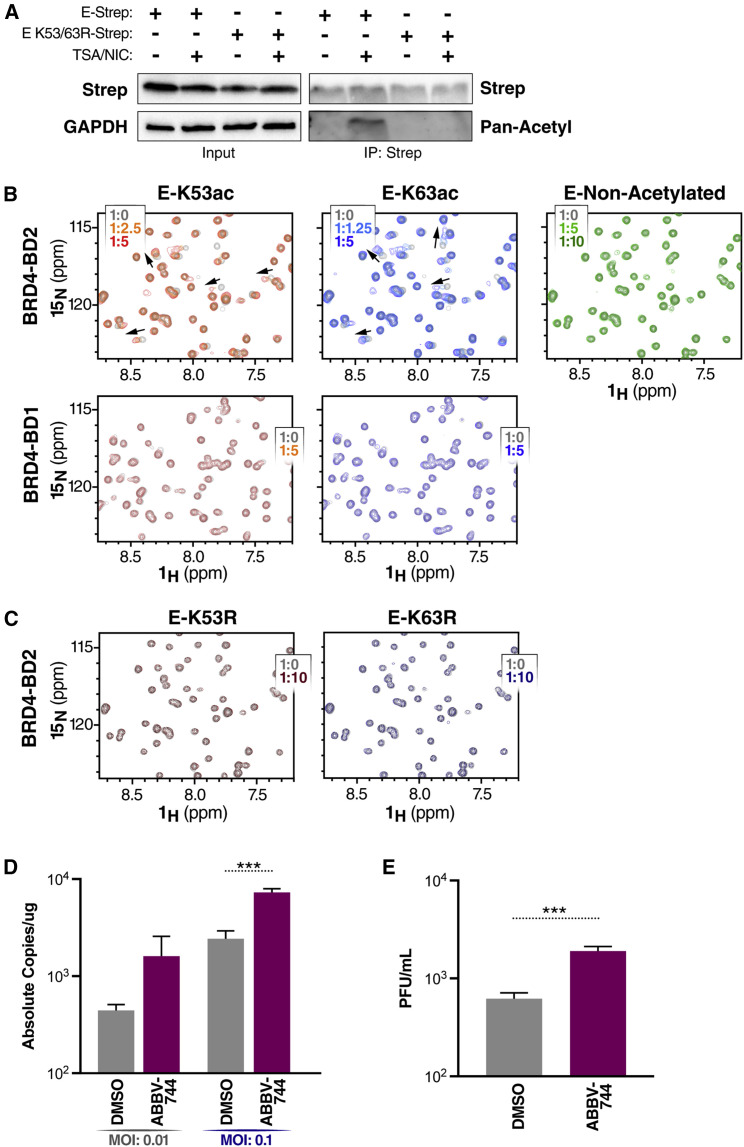
Inhibitors of bromodomain and extraterminal domain (BET) proteins are possible anti-severe acute respiratory syndrome coronavirus 2 (SARS-CoV-2) prophylactics as they downregulate angiotensin-converting enzyme 2 (ACE2). Here we show that BET proteins should not be inactivated therapeutically because they are critical antiviral factors at the post-entry level. Depletion of BRD3 or BRD4 in cells overexpressing ACE2 exacerbates SARS-CoV-2 infection; the same is observed when cells with endogenous ACE2 expression are treated with BET inhibitors during infection and not before. Viral replication and mortality are also enhanced in BET inhibitor-treated mice overexpressing ACE2. BET inactivation suppresses interferon production induced by SARS-CoV-2, a process phenocopied by the envelope (E) protein previously identified as a possible "histone mimetic." E protein, in an acetylated form, directly binds the second bromodomain of BRD4. Our data support a model where SARS-CoV-2 E protein evolved to antagonize interferon responses via BET protein inhibition; this neutralization should not be further enhanced with BET inhibitor treatment.
溴结构域和末端外结构域(BET)蛋白抑制剂可能是抗严重急性呼吸综合征冠状病毒 2(SARS-CoV-2)的预防性药物,因为它们可以下调血管紧张素转化酶 2(ACE2)。在这里,我们表明,不应从治疗的角度使 BET 蛋白失活,因为它们是进入后水平的关键抗病毒因素。在过表达 ACE2 的细胞中耗尽 BRD3 或 BRD4 会加剧 SARS-CoV-2 感染;当用 BET 抑制剂处理具有内源性 ACE2 表达的细胞而不是在感染之前进行处理时,也会观察到相同的情况。在过表达 ACE2 的 BET 抑制剂处理的小鼠中,病毒复制和死亡率也增加了。BET 失活会抑制 SARS-CoV-2 诱导的干扰素产生,该过程可由包膜(E)蛋白模拟,E 蛋白先前被鉴定为可能的“组蛋白模拟物”。E 蛋白以乙酰化形式直接结合 BRD4 的第二个溴结构域。我们的数据支持这样一种模型,即 SARS-CoV-2 E 蛋白通过 BET 蛋白抑制进化为拮抗干扰素反应;不应通过 BET 抑制剂治疗进一步增强这种中和作用。