McGrath Lynn B, Eaton Jessica, Abecassis Isaac Joshua, Maxin Anthony, Kelly Cory, Chesnut Randall M, Levitt Michael R
Department of Neurological Surgery, University of Washington, Seattle, WA, United States.
Department of Orthopedics and Sports Medicine, University of Washington, Seattle, WA, United States.
Front Neurosci. 2022 Jul 1;16:893711. doi: 10.3389/fnins.2022.893711. eCollection 2022.
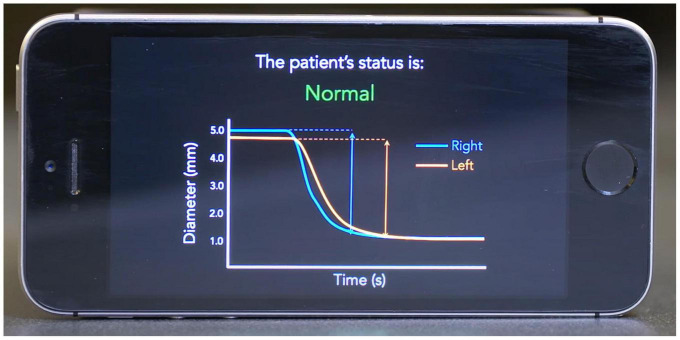
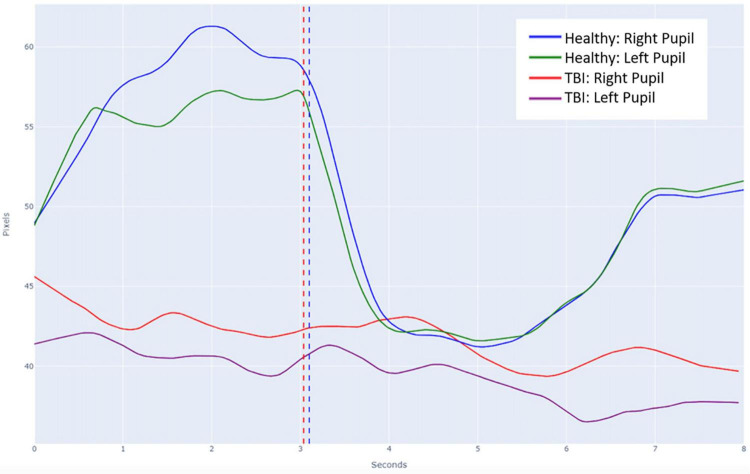
The pupillary light reflex (PLR) and the pupillary diameter over time (the PLR curve) is an important biomarker of neurological disease, especially in the diagnosis of traumatic brain injury (TBI). We investigated whether PLR curves generated by a novel smartphone pupillometer application could be easily and accurately interpreted to aid in the diagnosis of TBI.
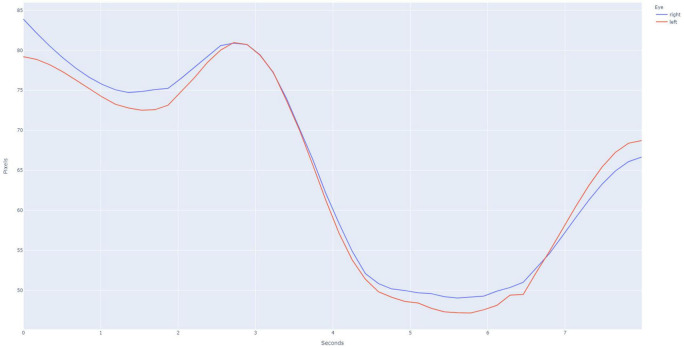
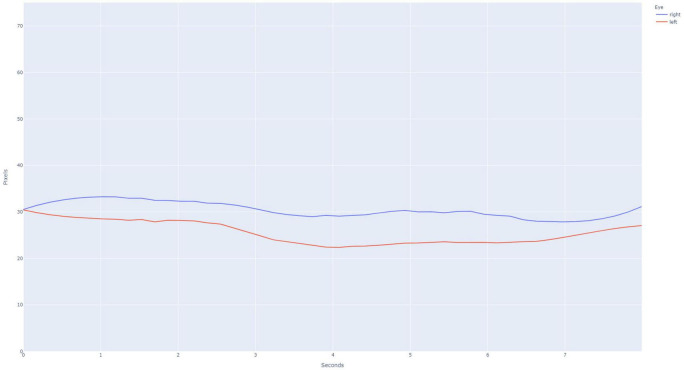
A total of 120 PLR curves from 42 healthy subjects and six patients with TBI were generated by PupilScreen. Eleven clinician raters, including one group of physicians and one group of neurocritical care nurses, classified 48 randomly selected normal and abnormal PLR curves without prior training or instruction. Rater accuracy, sensitivity, specificity, and interrater reliability were calculated.
Clinician raters demonstrated 93% accuracy, 94% sensitivity, 92% specificity, 92% positive predictive value, and 93% negative predictive value in identifying normal and abnormal PLR curves. There was high within-group reliability ( = 0.85) and high interrater reliability ( = 0.75).
The PupilScreen smartphone application-based pupillometer produced PLR curves for clinical provider interpretation that led to accurate classification of normal and abnormal PLR data. Interrater reliability was greater than previous studies of manual pupillometry. This technology may be a good alternative to the use of subjective manual penlight pupillometry or digital pupillometry.
瞳孔对光反射(PLR)及瞳孔直径随时间的变化情况(PLR曲线)是神经疾病的一项重要生物标志物,尤其在创伤性脑损伤(TBI)的诊断中。我们研究了通过一款新型智能手机瞳孔测量应用程序生成的PLR曲线是否能够被轻松、准确地解读,以辅助TBI的诊断。
通过PupilScreen软件,共生成了42名健康受试者和6名TBI患者的120条PLR曲线。11名临床评估者,包括一组医生和一组神经重症护理护士,在没有事先培训或指导的情况下,对随机选择的48条正常和异常PLR曲线进行分类。计算评估者的准确性、敏感性、特异性及评估者间的可靠性。
临床评估者在识别正常和异常PLR曲线时,准确率为93%,敏感性为94%,特异性为92%,阳性预测值为92%,阴性预测值为93%。组内可靠性较高(=0.85),评估者间可靠性也较高(=0.75)。
基于PupilScreen智能手机应用程序的瞳孔测量仪生成的PLR曲线可供临床医生解读,从而对正常和异常PLR数据进行准确分类。评估者间的可靠性高于以往手动瞳孔测量的研究。这项技术可能是主观手动笔式瞳孔测量或数字瞳孔测量的良好替代方法。