Center for Immunology and Inflammation, The Feinstein Institutes for Medical Research, Manhasset, NY, United States.
Department of Surgery, Zucker School of Medicine at Hofstra/Northwell, Manhasset, NY, United States.
Front Immunol. 2022 Jun 29;13:903859. doi: 10.3389/fimmu.2022.903859. eCollection 2022.
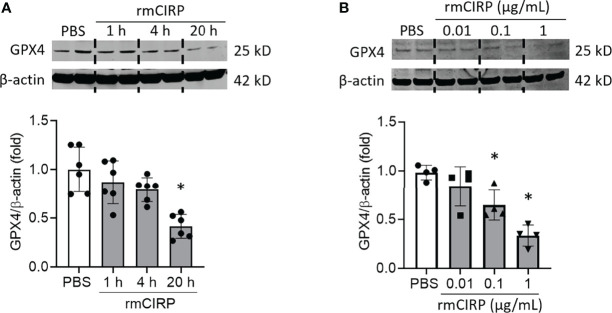
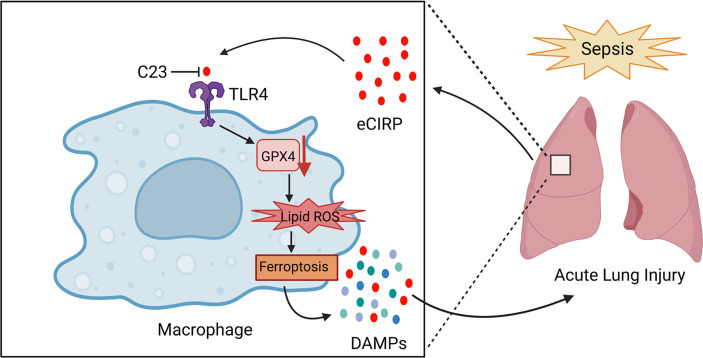
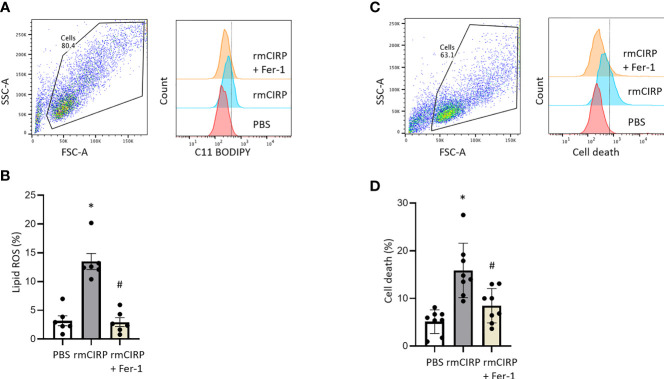
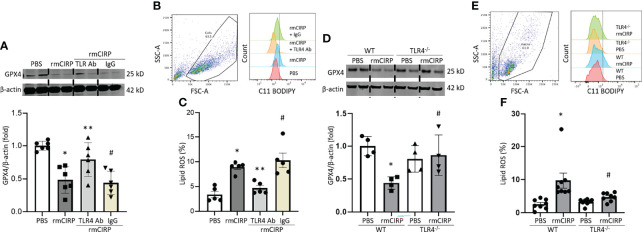
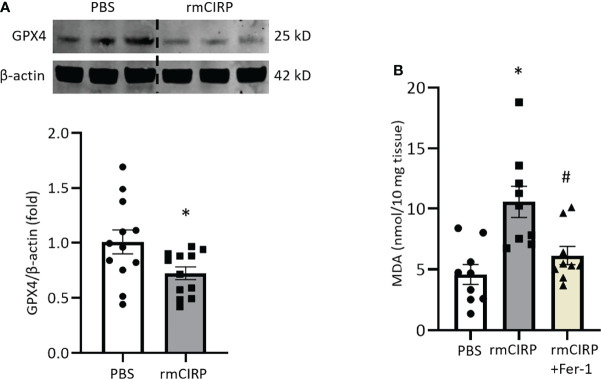
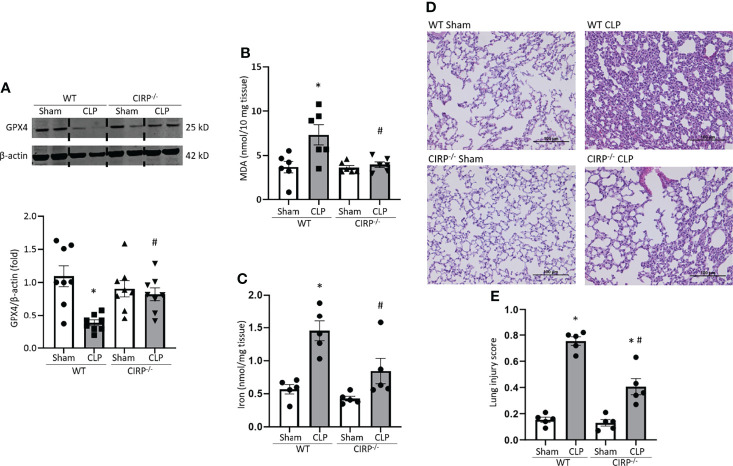
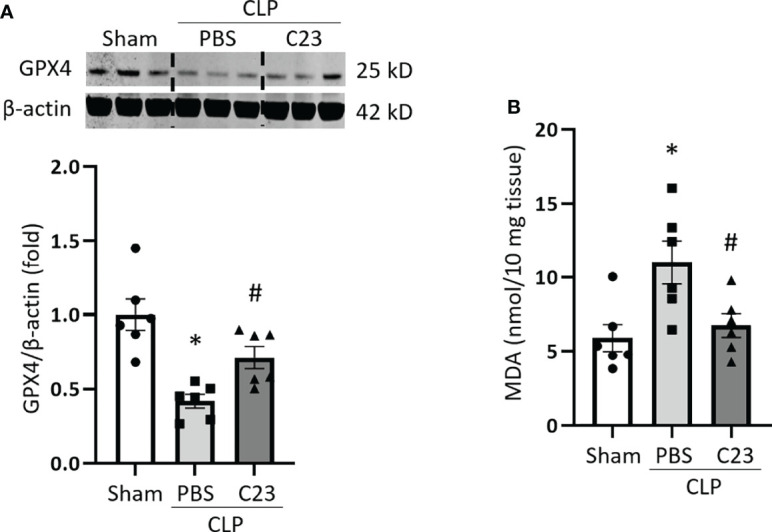
Sepsis is characterized by life-threatening organ dysfunction caused by a dysregulated host response to infection. Extracellular cold-inducible RNA-binding protein (eCIRP) is a damage-associated molecular pattern (DAMP) that promotes inflammation and induces cell death apoptosis, NETosis, and/or pyroptosis. Ferroptosis is a form of regulated cell death characterized by the accumulation of lipid peroxide on cellular membranes. We hypothesize that eCIRP induces ferroptosis in macrophages and lung tissue during sepsis. RAW 264.7 cells stimulated with recombinant murine (rm) CIRP significantly decreased the expression of glutathione peroxidase 4 (GPX4), a negative regulator of ferroptosis, and increased lipid reactive oxygen species (ROS) in a TLR4 dependent manner. In TLR4 peritoneal macrophages, depression of GPX4 expression and increase in lipid ROS levels were attenuated after rmCIRP-treatment compared to WT macrophages. rmCIRP also induced cell death in RAW 264.7 cells which was corrected by the ferroptosis inhibitor, ferrostatin-1 (Fer-1). Intraperitoneal injection of rmCIRP decreased GPX4 expression and increased lipid ROS in lung tissue, whereas the increase of lipid ROS was reduced by Fer-1 treatment. GPX4 expression was significantly decreased, while malondialdehyde (MDA), iron levels, and injury scores were significantly increased in lungs of WT mice after cecal ligation and puncture (CLP)-induced sepsis compared to CIRP mice. Treatment with C23, a specific eCIRP inhibitor, in CLP mice alleviated the decrease in GPX4 and increase in MDA levels of lung tissue. These findings suggest that eCIRP induces ferroptosis in septic lungs by decreasing GPX4 and increasing lipid ROS. Therefore, regulation of ferroptosis by targeting eCIRP may provide a new therapeutic approach in sepsis and other inflammatory diseases.
脓毒症的特征是感染导致宿主反应失调而引起危及生命的器官功能障碍。细胞外冷诱导 RNA 结合蛋白(eCIRP)是一种损伤相关分子模式(DAMP),可促进炎症并诱导细胞死亡(细胞凋亡、NETosis 和/或细胞焦亡)。铁死亡是一种受调控的细胞死亡形式,其特征是细胞膜上脂质过氧化物的积累。我们假设 eCIRP 在脓毒症期间诱导巨噬细胞和肺组织中的铁死亡。用重组鼠(rm)CIRP 刺激 RAW 264.7 细胞显著降低了铁死亡负调节剂谷胱甘肽过氧化物酶 4(GPX4)的表达,并以 TLR4 依赖性方式增加了脂质活性氧物种(ROS)。在 TLR4 腹膜巨噬细胞中,与 WT 巨噬细胞相比,rmCIRP 处理后 GPX4 表达的下调和脂质 ROS 水平的增加得到了减轻。rmCIRP 还诱导 RAW 264.7 细胞死亡,而铁死亡抑制剂 ferrostatin-1(Fer-1)可纠正这种细胞死亡。腹腔注射 rmCIRP 降低了肺组织中 GPX4 的表达并增加了脂质 ROS,而 Fer-1 治疗则降低了脂质 ROS 的增加。与 CIRP 小鼠相比,CLP 诱导的脓毒症后 WT 小鼠的肺组织中 GPX4 表达显著降低,而丙二醛(MDA)、铁水平和损伤评分显著升高。在 CLP 小鼠中用 C23(一种特异性 eCIRP 抑制剂)治疗可减轻肺组织中 GPX4 的减少和 MDA 水平的升高。这些发现表明,eCIRP 通过降低 GPX4 和增加脂质 ROS 来诱导脓毒症肺部的铁死亡。因此,通过靶向 eCIRP 调节铁死亡可能为脓毒症和其他炎症性疾病提供新的治疗方法。