Arjmand Mohammad-Hassan, Moradi Ali, Rahimi Hamid-Reza, Es-Haghi Ali, Akbari Abolfazl, Hadipanah Mohammad Reza, Afshar Jalil, Mehrad-Majd Hassan
Clinical Biochemistry Research Center, Basic Health Sciences Institute, Shahrekord University of Medical Sciences, Shahrekord, Iran.
Orthopedic Research Center, Mashhad University of Medical Sciences, Mashhad, Iran.
Gastroenterol Hepatol Bed Bench. 2022 Spring;15(2):108-119.
This meta-analysis aimed to evaluate the association of HIF-1α expression with clinicopathological features and overall survival (OS) of patients with digestive system malignancies.
Numerous studies have demonstrated that hypoxia-inducible factor-1α (HIF-1α) is abnormally expressed in various solid tumors. However, the clinicopathological features and prognostic value of HIF-1α expression in patients with digestive system malignancies remain controversial.
A literature search in PubMed, Web of Science, and Scopus databases was performed to identify all relevant studies published in English until 15 October 2020. The pooled effect was calculated to evaluate the association between HIF-1α expression and clinicopathological features and overall survival in cancer patients. Pooled odds ratios (ORs) or hazard ratios (HRs) with a 95% confidence interval (CI) were calculated using fixed- or random-effects model based on between-study heterogeneity.
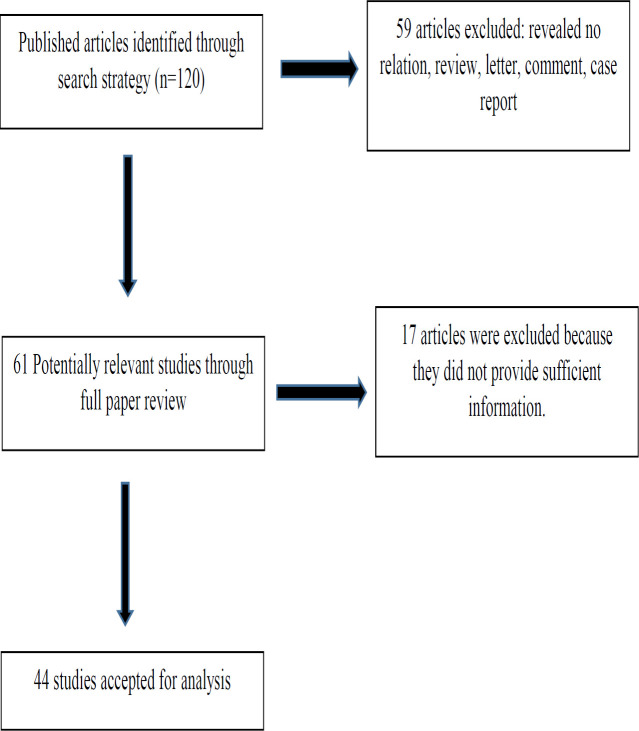
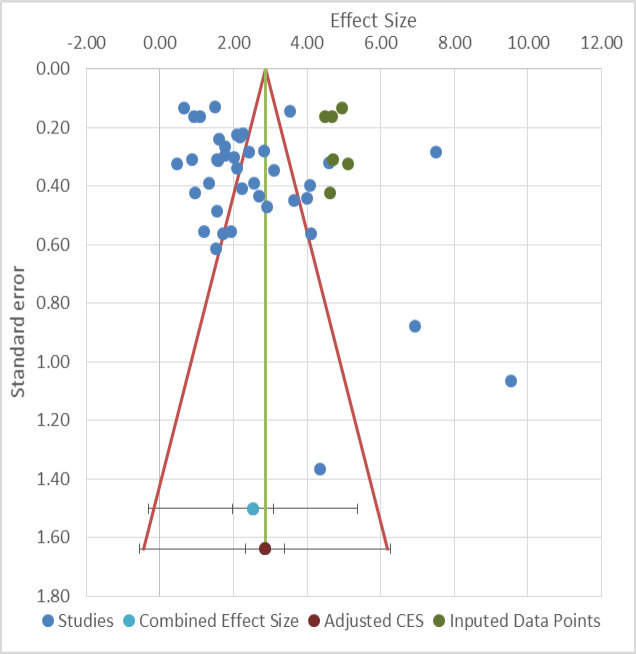
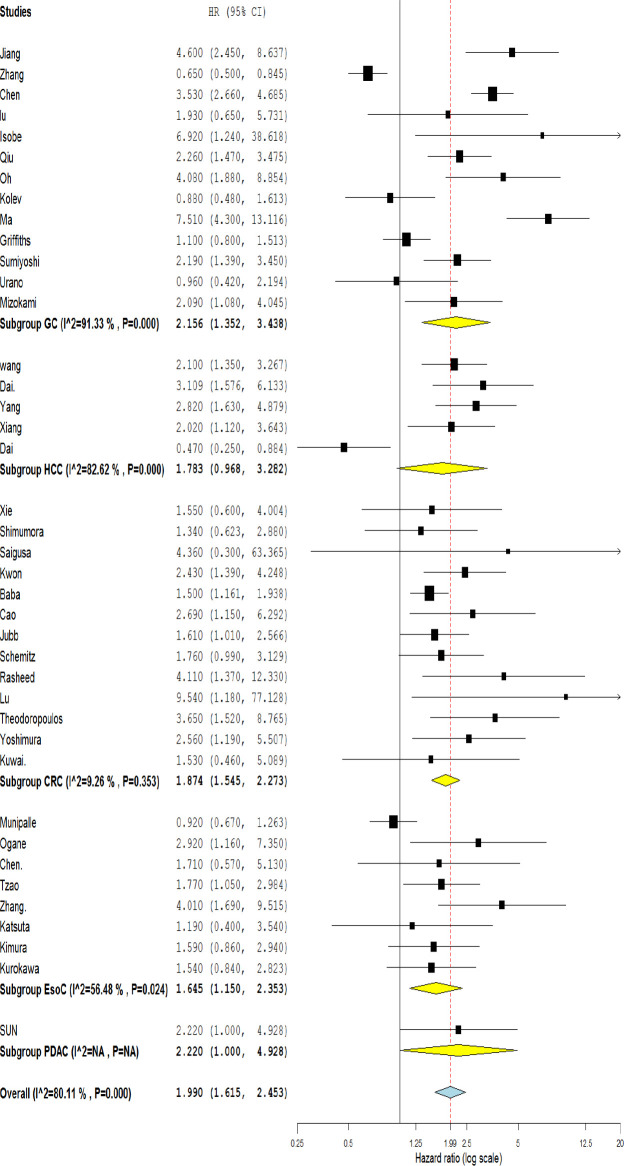
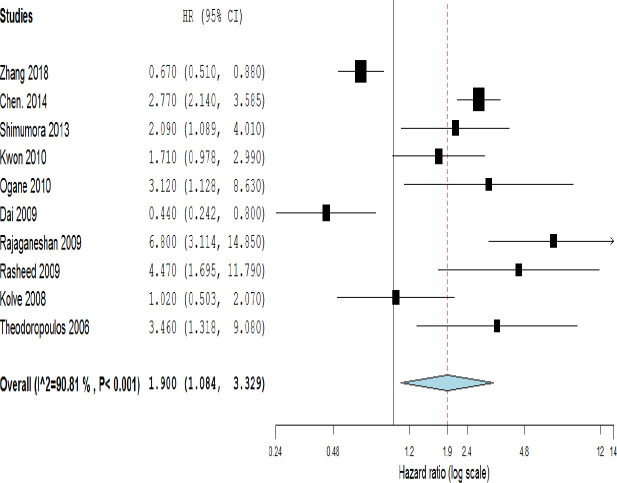
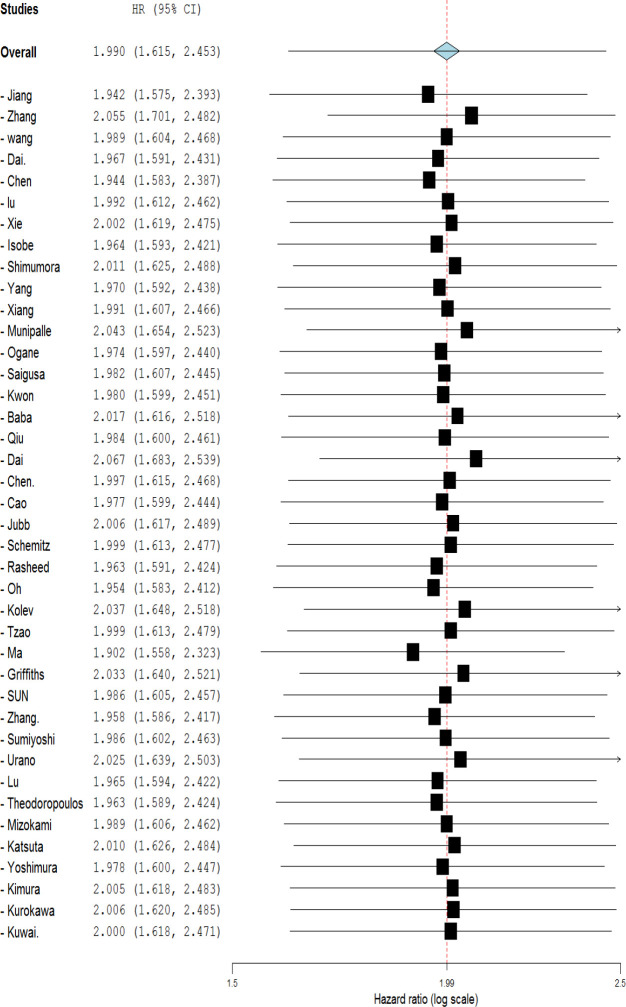
A total of 44 eligible studies with 5,964 patients were included. The pooled results indicated a positive association of HIF-1α overexpression with poor overall survival (OS) (HR=1.990, 95% CI: 1.615-2.453, <0.001) and disease-free survival (DFS) (HR=1.90, 95% CI: 1.084-3.329, =0.043). Meta-analysis results showed that HIF-1α level expression was significantly associated with positive lymph node metastasis (OR=1.869, 95% CI: 1.488-2.248, <0.001), distance metastasis (OR=2.604, 95% CI: 1.500-4.519, <0.001), tumor stage (OR=1.801, 95% CI: 1.437-2.257, <0.001) and tumor size (OR=1.392. 95% CI: 1.068-1.815, =0.014).
This meta-data suggest that HIF-1α expression might serve as an independent prognostic marker and a promising therapeutic target in patients with digestive system malignancies.
本荟萃分析旨在评估缺氧诱导因子-1α(HIF-1α)表达与消化系统恶性肿瘤患者临床病理特征及总生存期(OS)之间的关联。
众多研究表明,缺氧诱导因子-1α(HIF-1α)在各种实体瘤中异常表达。然而,HIF-1α表达在消化系统恶性肿瘤患者中的临床病理特征及预后价值仍存在争议。
在PubMed、Web of Science和Scopus数据库中进行文献检索,以识别截至2020年10月15日发表的所有英文相关研究。计算合并效应以评估HIF-1α表达与癌症患者临床病理特征及总生存期之间的关联。根据研究间异质性,使用固定效应或随机效应模型计算合并比值比(OR)或风险比(HR)及95%置信区间(CI)。
共纳入44项符合条件的研究,涉及5964例患者。合并结果表明,HIF-1α过表达与总生存期(OS)较差(HR=1.990,95%CI:1.615-2.453,P<0.001)和无病生存期(DFS)较差(HR=1.90,95%CI:1.084-3.329,P=0.043)呈正相关。荟萃分析结果显示,HIF-1α水平表达与阳性淋巴结转移(OR=1.869,95%CI:1.488-2.248,P<0.001)、远处转移(OR=2.604,95%CI:1.500-4.519,P<0.001)、肿瘤分期(OR=1.801,95%CI:1.437-2.257,P<0.001)和肿瘤大小(OR=1.392,95%CI:1.068-1.815,P=0.014)显著相关。
该荟萃分析数据表明,HIF-1α表达可能是消化系统恶性肿瘤患者的独立预后标志物和有前景的治疗靶点。