Rasheed Adnan, Jie Yucheng, Nawaz Muhammad, Jie Hongdong, Ma Yushen, Shah Adnan Noor, Hassan Muhammad Umair, Gillani Syed Faheem Anjum, Batool Maria, Aslam Muhammad Talha, Naseem Ahmad Raza, Qari Sameer H
College of Agronomy, Hunan Agricultural University, Changsha, China.
Department of Agricultural Engineering, Khwaja Fareed University of Engineering and Information Technology, Rahim Yar Khan, Pakistan.
Front Plant Sci. 2022 Jun 30;13:911610. doi: 10.3389/fpls.2022.911610. eCollection 2022.
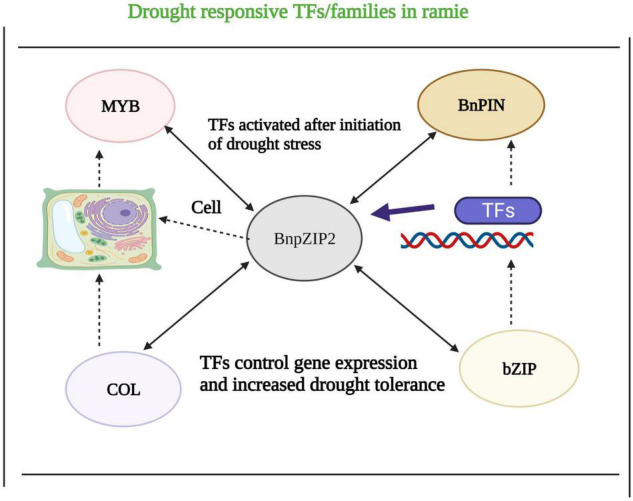
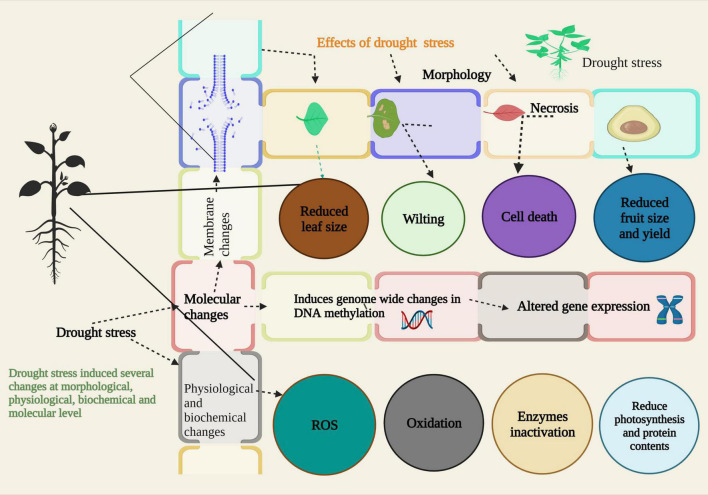
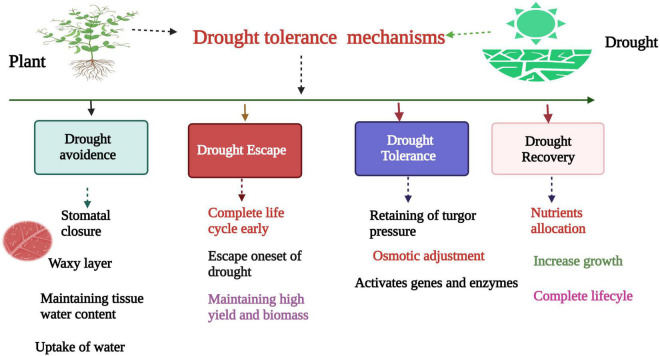
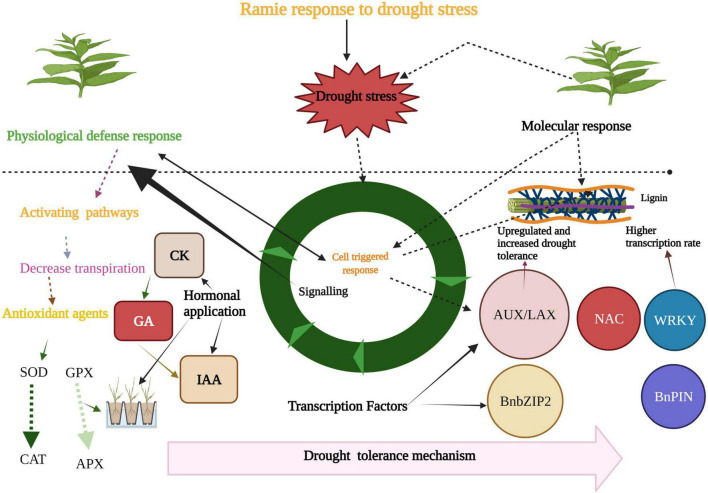
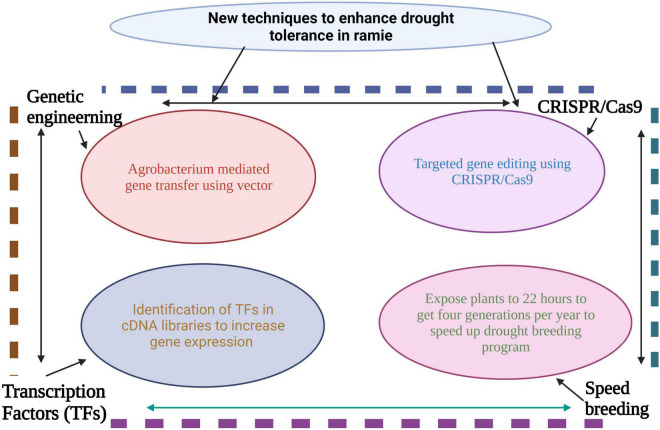
Ramie is one of the most significant fiber crops and contributes to good quality fiber. Drought stress (DS) is one of the most devastating abiotic factors which is accountable for a substantial loss in crop growth and production and disturbing sustainable crop production. DS impairs growth, plant water relation, and nutrient uptake. Ramie has evolved a series of defense responses to cope with DS. There are numerous genes regulating the drought tolerance (DT) mechanism in ramie. The morphological and physiological mechanism of DT is well-studied; however, modified methods would be more effective. The use of novel genome editing tools like clustered regularly interspaced short palindromic repeats (CRISPR) is being used to edit the recessive genes in crops to modify their function. The transgenic approaches are used to develop several drought-tolerant varieties in ramie, and further identification of tolerant genes is needed for an effective breeding plan. Quantitative trait loci (QTLs) mapping, transcription factors (TFs) and speed breeding are highly studied techniques, and these would lead to the development of drought-resilient ramie cultivars. The use of hormones in enhancing crop growth and development under water scarcity circumstances is critical; however, using different concentrations and testing genotypes in changing environments would be helpful to sort the tolerant genotypes. Since plants use various ways to counter DS, investigating mechanisms of DT in plants will lead to improved DT in ramie. This critical review summarized the recent advancements on DT in ramie using novel molecular techniques. This information would help ramie breeders to conduct research studies and develop drought tolerant ramie cultivars.
苎麻是最重要的纤维作物之一,其纤维品质优良。干旱胁迫是最具破坏性的非生物因素之一,会导致作物生长和产量大幅损失,扰乱作物的可持续生产。干旱胁迫会损害生长、植物水分关系和养分吸收。苎麻已经进化出一系列防御反应来应对干旱胁迫。苎麻中有许多基因调控耐旱机制。耐旱的形态和生理机制已得到充分研究;然而,改良方法可能会更有效。像成簇规律间隔短回文重复序列(CRISPR)这样的新型基因组编辑工具正被用于编辑作物中的隐性基因以改变其功能。转基因方法被用于培育几种耐旱苎麻品种,为了制定有效的育种计划,还需要进一步鉴定耐旱基因。数量性状位点(QTL)定位、转录因子(TF)和快速育种是研究较多的技术,这些将有助于培育出耐旱的苎麻品种。在缺水情况下使用激素促进作物生长发育至关重要;然而,在不断变化的环境中使用不同浓度的激素并测试基因型将有助于筛选出耐旱基因型。由于植物采用多种方式应对干旱胁迫,研究植物的耐旱机制将有助于提高苎麻的耐旱性。这篇综述总结了利用新型分子技术在苎麻耐旱方面的最新进展。这些信息将有助于苎麻育种者开展研究并培育出耐旱苎麻品种。