Department of Psychology, Guizhou Minzu University, Guiyang 550025, Guizhou, China.
Comput Intell Neurosci. 2022 Jul 6;2022:7842304. doi: 10.1155/2022/7842304. eCollection 2022.
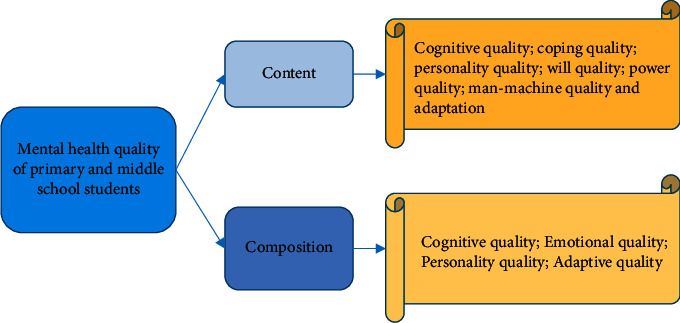
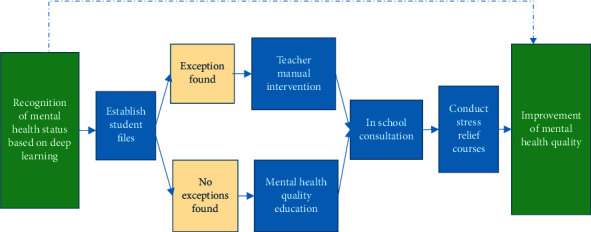
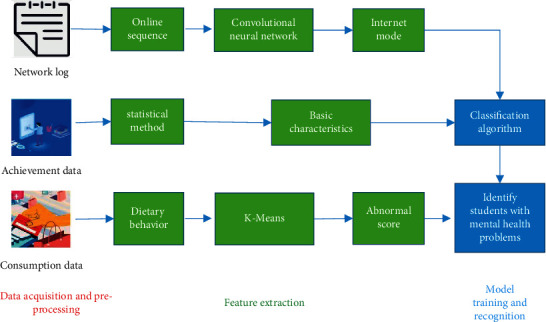
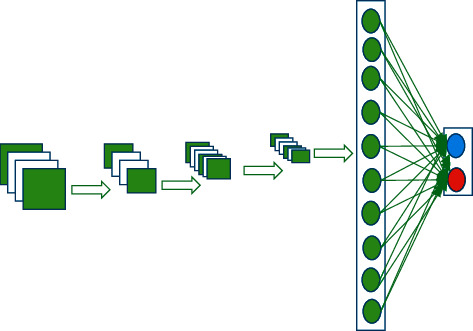
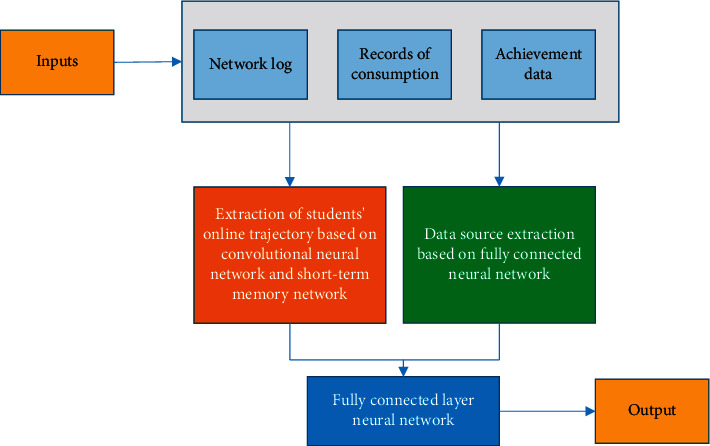
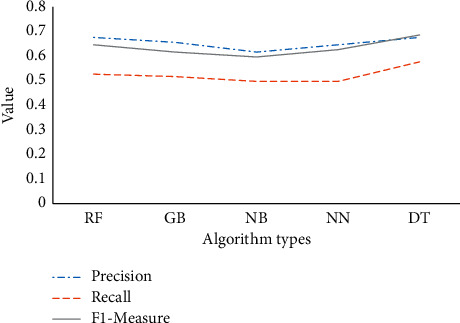
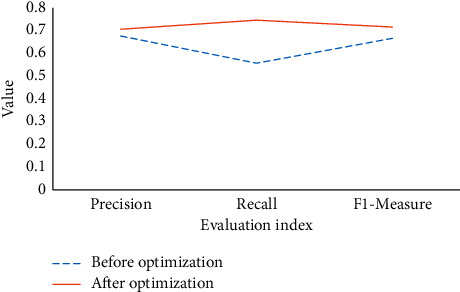
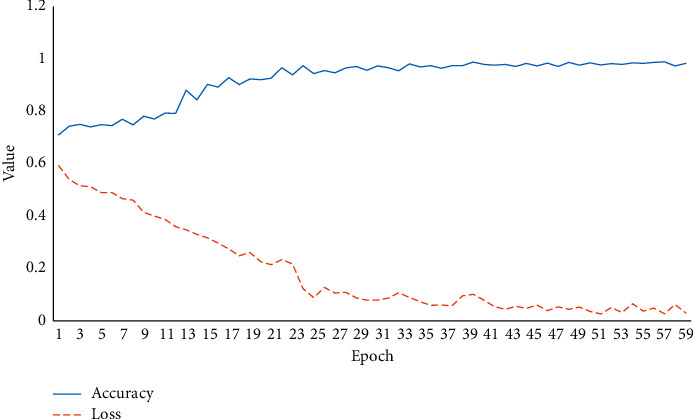
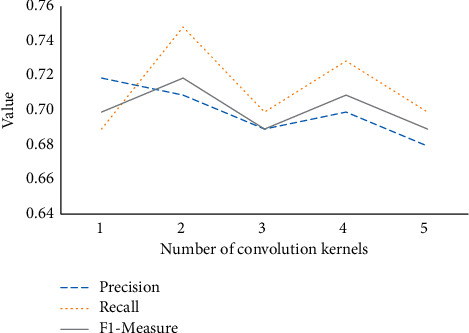
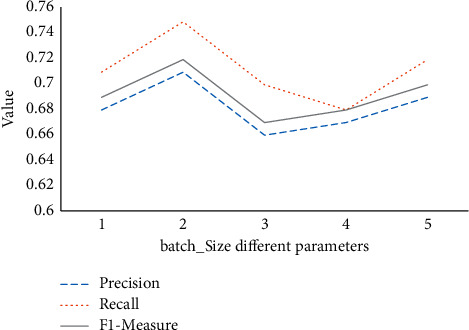
The purpose was to timely identify the mental disorders (MDs) of students receiving primary and secondary education (PSE) (PSE students) and improve their mental quality. Firstly, this work analyzes the research status of the mental health model (MHM) and the main contents of PSE student-oriented mental health quality cultivation under deep learning (DL). Secondly, an MHM is implemented based on big data technology (BDT) and the convolutional neural network (CNN). Simultaneously, the long short-term memory (LSTM) is introduced to optimize the proposed MHM. Finally, the performance of the MHM before and after optimization is evaluated, and the PSE student-oriented mental health quality training strategy based on the proposed MHM is offered. The results show that the accuracy curve is higher than the recall curve in all classification algorithms. The maximum recall rate is 0.58, and the minimum accuracy rate is 0.62. The decision tree (DT) algorithm has the best comprehensive performance among the five different classification algorithms, with accuracy of 0.68, recall rate of 0.58, and 1-measure of 0.69. Thus, the DT algorithm is selected as the classifier. The proposed MHM can identify 56% of students with MDs before optimization. After optimization, the accuracy is improved by 0.03. The recall rate is improved by 0.19, the 1-measure is improved by 0.05, and 75% of students with MDs can be identified. Diverse behavior data can improve the recognition effect of students' MDs. Meanwhile, from the 60th iteration, the mode accuracy and loss tend to be stable. By comparison, batch_size has little influence on the experimental results. The number of convolution kernels of the first convolution layer has little influence. The proposed MHM based on DL and CNN will indirectly improve the mental health quality of PSE students. The research provides a reference for cultivating the mental health quality of PSE students.
目的是及时识别接受中小学教育(PSE)的学生的精神障碍(MDs),提高他们的心理素质。首先,本工作分析了精神健康模型(MHM)的研究现状以及深度学习(DL)下以 PSE 学生为导向的精神健康素质培养的主要内容。其次,基于大数据技术(BDT)和卷积神经网络(CNN)实现了 MHM。同时,引入长短期记忆(LSTM)对所提出的 MHM 进行优化。最后,对优化前后的 MHM 性能进行了评价,并提出了基于所提出的 MHM 的以 PSE 学生为导向的精神健康素质培养策略。结果表明,在所有分类算法中,精度曲线均高于召回曲线。最大召回率为 0.58,最小准确率为 0.62。在五种不同的分类算法中,决策树(DT)算法的综合性能最好,准确率为 0.68,召回率为 0.58,1-度量值为 0.69。因此,选择 DT 算法作为分类器。所提出的 MHM 在优化前可以识别 56%的 MD 学生。优化后,精度提高了 0.03。召回率提高了 0.19,1-度量提高了 0.05,可识别 75%的 MD 学生。多样化的行为数据可以提高学生 MD 识别效果。同时,从第 60 次迭代开始,模式精度和损失趋于稳定。相比之下,批量大小对实验结果影响不大。第一层卷积核的数量对实验结果影响不大。基于 DL 和 CNN 的所提出的 MHM 将间接提高 PSE 学生的精神健康素质。本研究为培养 PSE 学生的精神健康素质提供了参考。