Transitional Artificial Intelligence Research Group, School of Mathematics and Statistics, University of New South Wales, Sydney, Australia.
Department of Electronics and Electrical Engineering, Indian Institute of Technology Guwahati, Assam, India.
PLoS One. 2022 Jan 28;17(1):e0262708. doi: 10.1371/journal.pone.0262708. eCollection 2022.
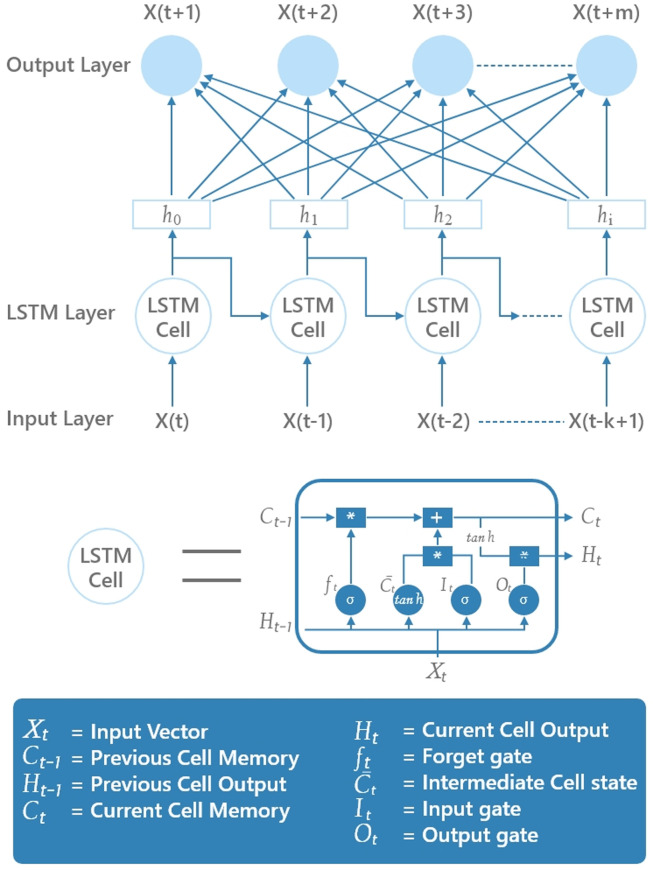
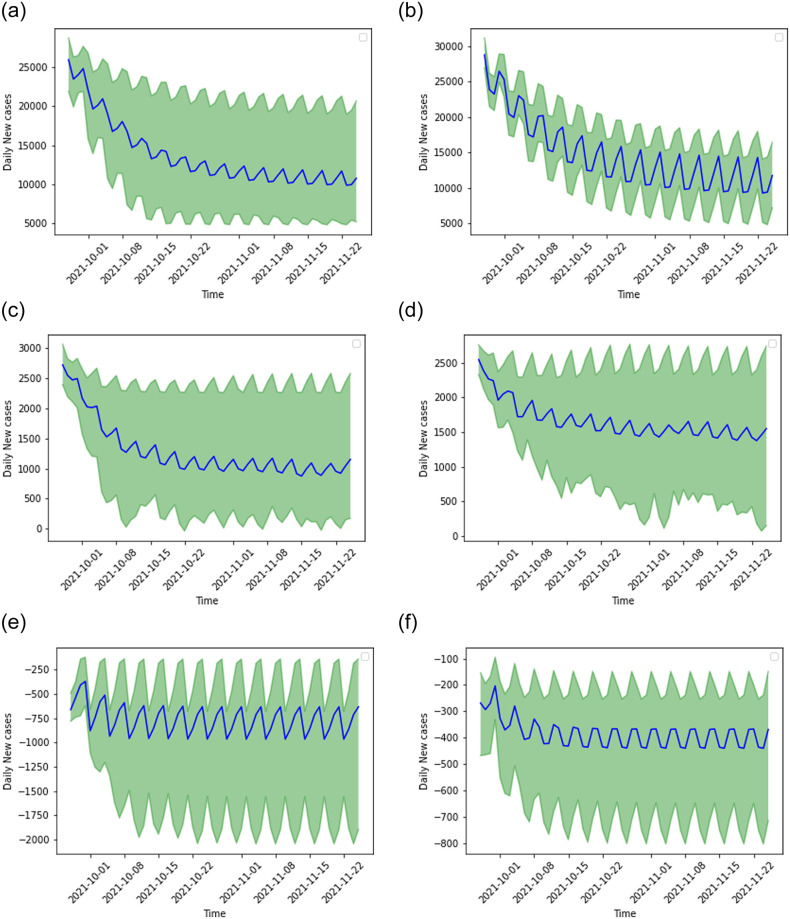
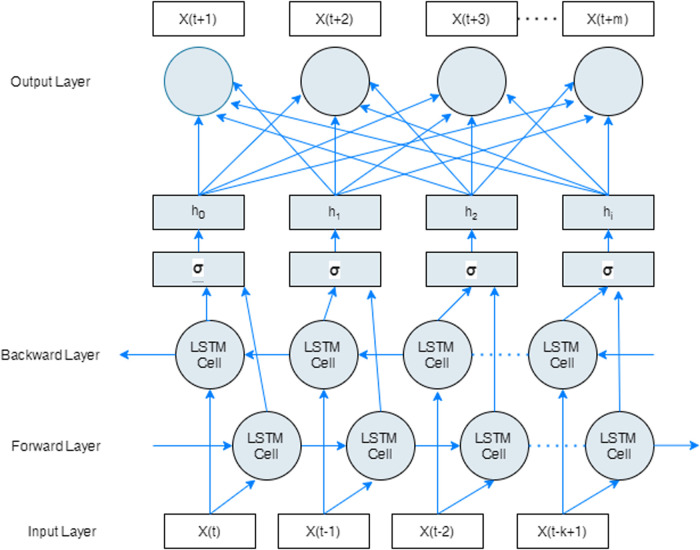
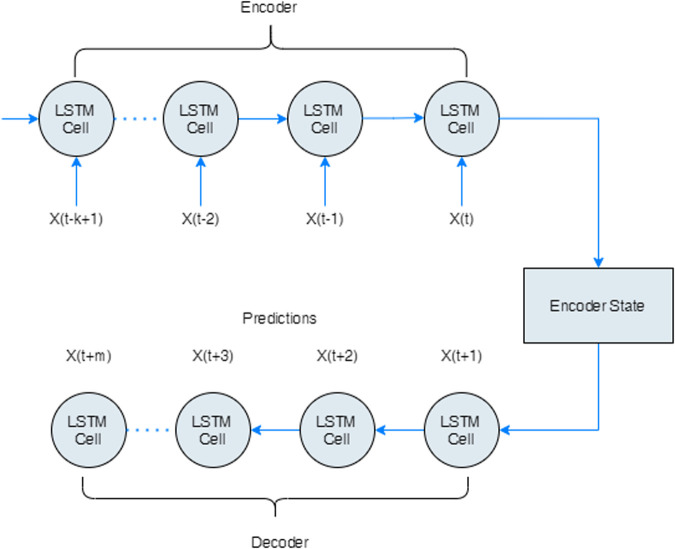
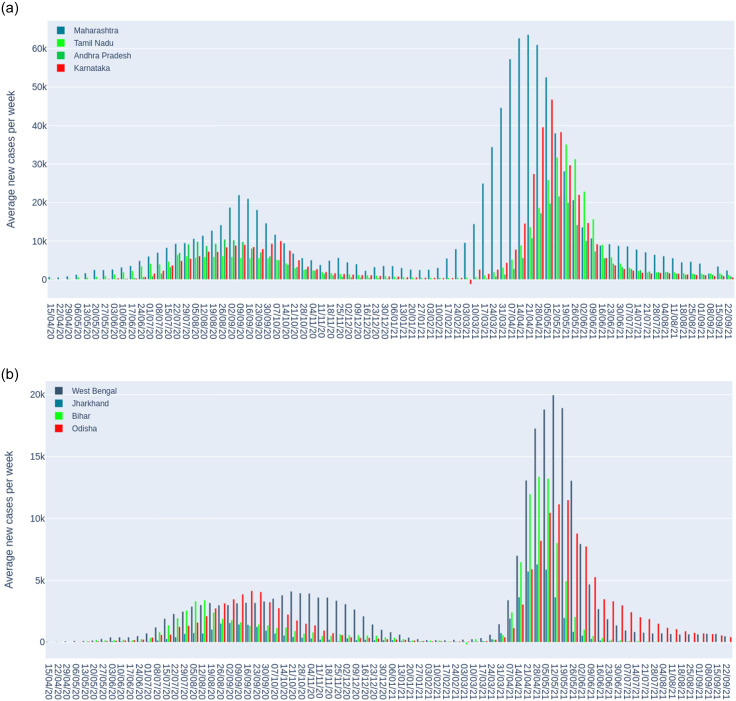
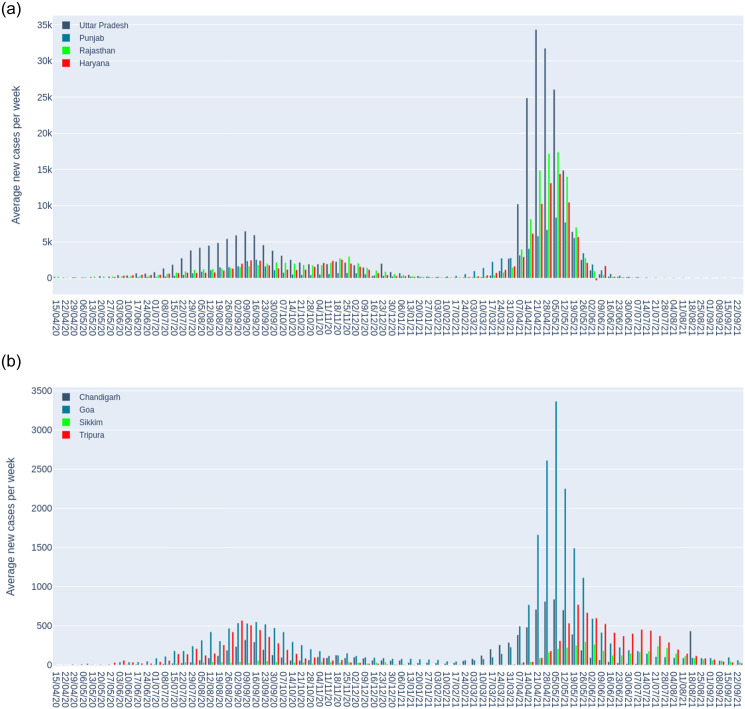
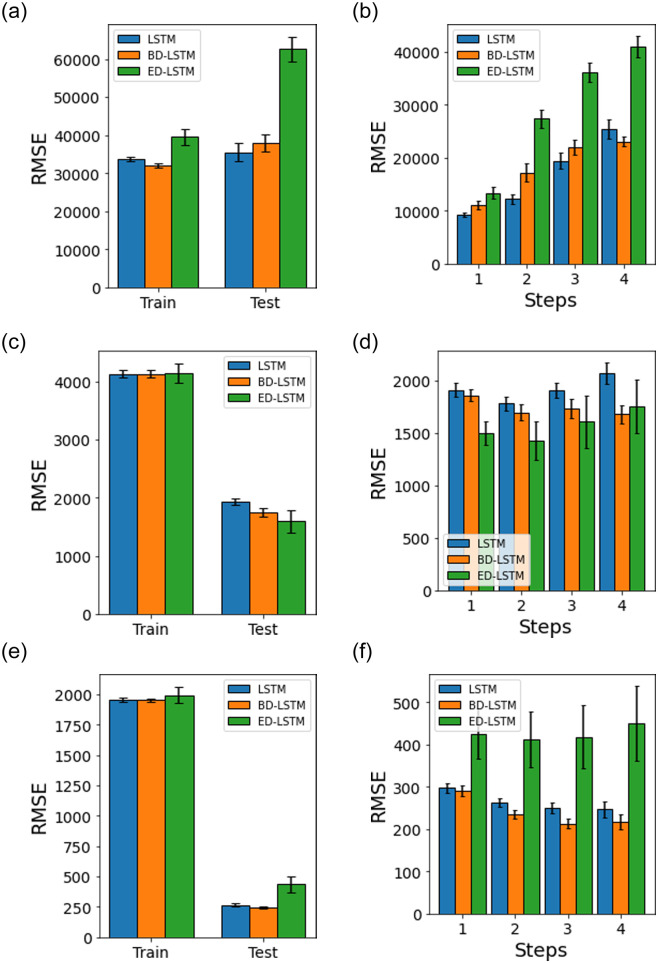
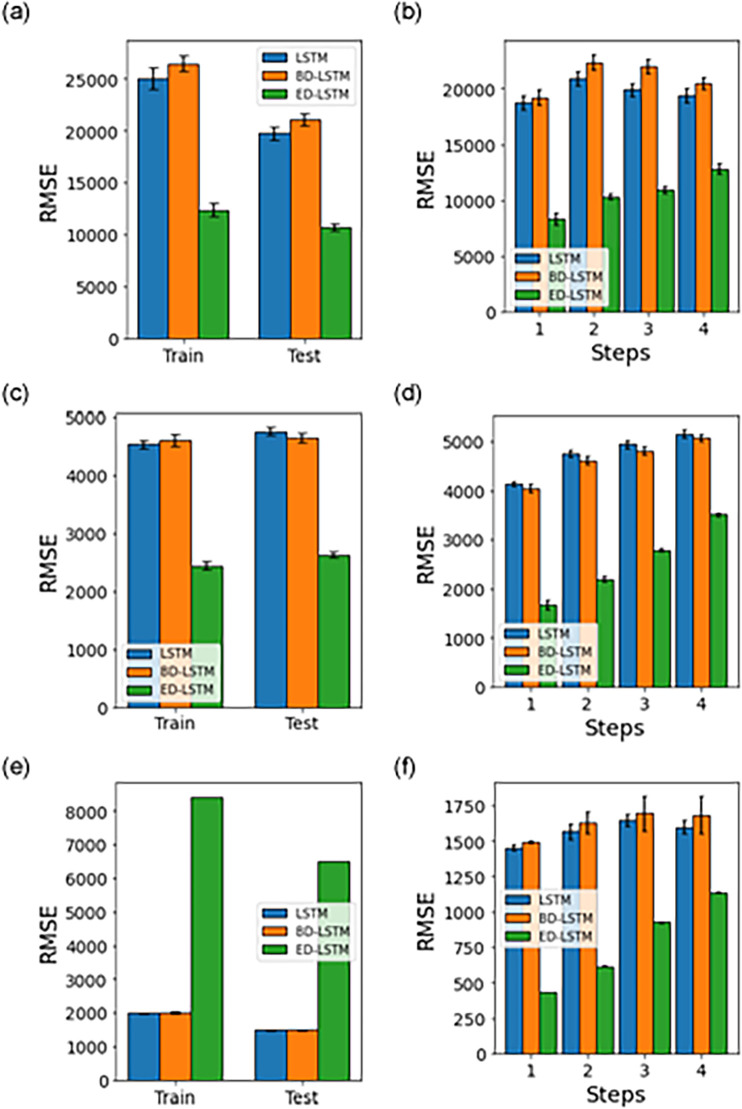
The COVID-19 pandemic continues to have major impact to health and medical infrastructure, economy, and agriculture. Prominent computational and mathematical models have been unreliable due to the complexity of the spread of infections. Moreover, lack of data collection and reporting makes modelling attempts difficult and unreliable. Hence, we need to re-look at the situation with reliable data sources and innovative forecasting models. Deep learning models such as recurrent neural networks are well suited for modelling spatiotemporal sequences. In this paper, we apply recurrent neural networks such as long short term memory (LSTM), bidirectional LSTM, and encoder-decoder LSTM models for multi-step (short-term) COVID-19 infection forecasting. We select Indian states with COVID-19 hotpots and capture the first (2020) and second (2021) wave of infections and provide two months ahead forecast. Our model predicts that the likelihood of another wave of infections in October and November 2021 is low; however, the authorities need to be vigilant given emerging variants of the virus. The accuracy of the predictions motivate the application of the method in other countries and regions. Nevertheless, the challenges in modelling remain due to the reliability of data and difficulties in capturing factors such as population density, logistics, and social aspects such as culture and lifestyle.
新冠疫情继续对卫生和医疗基础设施、经济和农业造成重大影响。由于传染病传播的复杂性,突出的计算和数学模型一直不可靠。此外,缺乏数据收集和报告使得建模尝试变得困难和不可靠。因此,我们需要利用可靠的数据源和创新的预测模型重新审视这一情况。深度学习模型,如递归神经网络,非常适合对时空序列进行建模。在本文中,我们应用递归神经网络,如长短期记忆(LSTM)、双向 LSTM 和编码器-解码器 LSTM 模型,对多步(短期)新冠感染进行预测。我们选择了新冠热点的印度邦,并捕捉了第一波(2020 年)和第二波(2021 年)感染,并提供了两个月的预测。我们的模型预测,2021 年 10 月和 11 月再次爆发感染的可能性较低;然而,鉴于病毒的新变体,当局仍需保持警惕。预测的准确性激发了该方法在其他国家和地区的应用。然而,由于数据的可靠性以及捕捉人口密度、物流和文化、生活方式等社会方面因素的困难,建模仍然存在挑战。