Guangxi Botanical Garden of Medicinal Plants, Nanning 530023, China.
Guangxi Key Laboratory for High-Quality Formation and Utilization of Dao-di Herbs, China.
Biomed Res Int. 2022 Jul 6;2022:9247169. doi: 10.1155/2022/9247169. eCollection 2022.
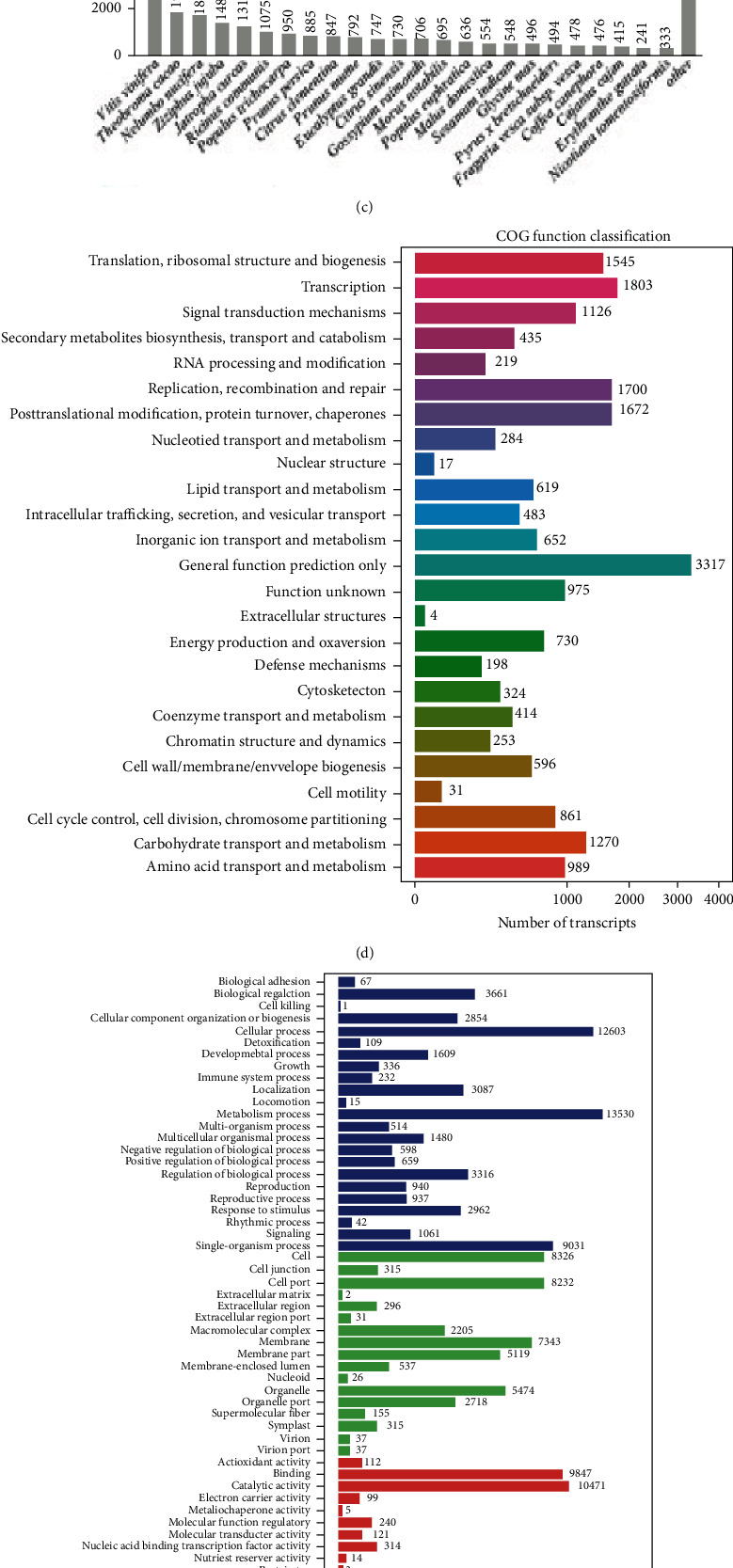
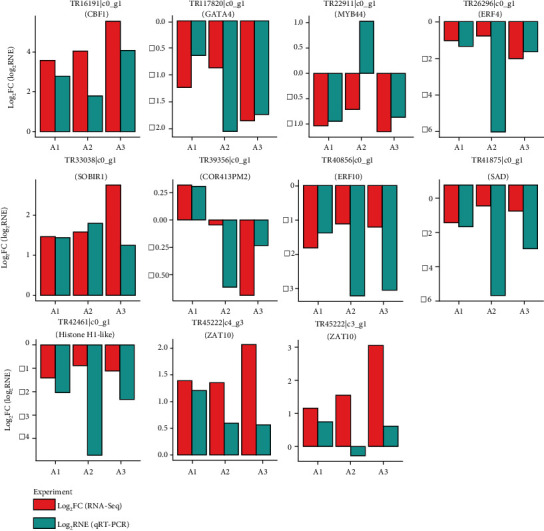
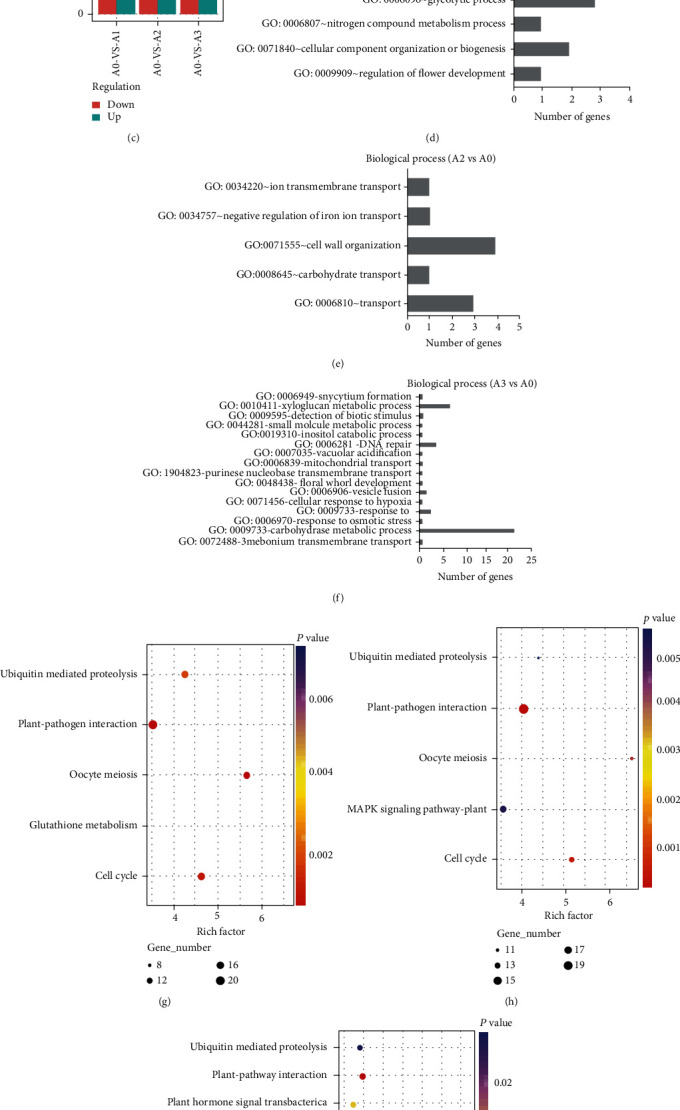
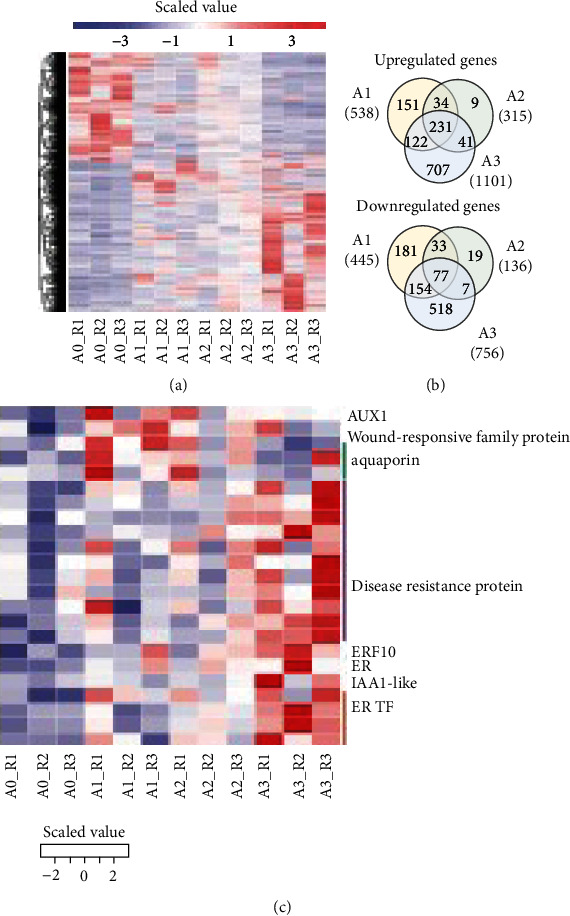
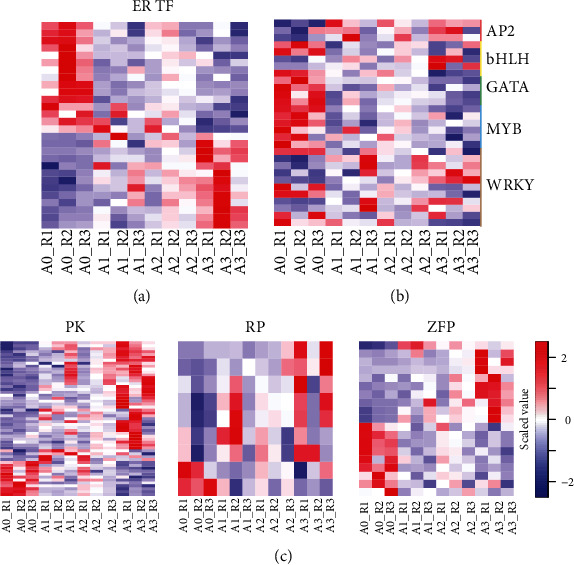
(DC.) Danser, a parasitic plant of the family, grows by attacking other plants. It has a long history of being used in Chinese medicine to treat multiple chronic diseases. We previously observed that seeds are sensitive to cold. In this study, we performed transcriptome sequencing for seeds treated by cold (0°C) for 0 h, 12 h, 24 h, and 36 h. TRINITY assembled 257,870 transcripts from 223,512 genes. The GC content and N50 were calculated as 42.29% and 1,368, respectively. Then, we identified 42,183 CDSs and 35,268 likely proteins in the assembled transcriptome, which contained 1,622 signal peptides and 6,795 transmembrane domains. Next, we identified 17,217 genes (FPKM > 5) and 2,333 differentially expressed genes (DEGs) in seeds under cold stress. The MAPK pathway, as an early cold response, was significantly enriched by the DEGs in the seeds after 24 h of cold treatment. Known cold-responsive genes encoding abscisic acid-associated, aquaporin, C-repeat binding factor (CBF), cold-regulated protein, heat shock protein, protein kinase, ribosomal protein, transcription factor (TF), zinc finger protein, and ubiquitin were deregulated in the seeds under cold stress. Notably, the upregulation of CBF gene might be the consequences of the downregulation of MYB and GATA TFs. Additionally, we identified that genes encoding CDC20, YLS9, EXORDIUM, and AUX1 and wound-responsive family protein might be related to novel mechanisms of seeds exposed to cold. This study is first to report the differential transcriptional induction in seeds under cold stress. It will improve our understanding of parasitic plants in response to cold and provide a valuable resource for future studies.
(DC.)列当是旋花科的一种寄生植物,通过攻击其他植物来生长。它在中国医学中有着悠久的历史,用于治疗多种慢性疾病。我们之前观察到,种子对寒冷敏感。在这项研究中,我们对经过 0°C 冷处理 0、12、24 和 36 小时的 种子进行了转录组测序。TRINITY 从 223512 个基因中组装了 257870 个转录本。GC 含量和 N50 分别为 42.29%和 1368。然后,我们在组装的转录组中鉴定出 42183 个 CDS 和 35268 个可能的蛋白质,其中包含 1622 个信号肽和 6795 个跨膜结构域。接下来,我们在冷胁迫下的 种子中鉴定出 17217 个基因(FPKM > 5)和 2333 个差异表达基因(DEGs)。MAPK 途径作为冷响应的早期途径,在冷处理 24 小时后的 种子中的 DEGs 中显著富集。在冷胁迫下的 种子中,已知的冷响应基因编码与脱落酸相关的、水通道蛋白、C 重复结合因子(CBF)、冷调节蛋白、热休克蛋白、蛋白激酶、核糖体蛋白、转录因子(TF)、锌指蛋白和泛素,这些基因的表达受到调控。值得注意的是,CBF 基因的上调可能是 MYB 和 GATA TF 下调的结果。此外,我们还发现,CDC20、YLS9、EXORDIUM 和 AUX1 基因编码的基因和与伤口反应相关的家族蛋白可能与 种子对冷的新机制有关。这项研究首次报道了冷胁迫下 种子的差异转录诱导。它将提高我们对寄生植物对冷响应的理解,并为未来的研究提供有价值的资源。