Reproductive Centre, Department of Obstetrics and Gynaecology, West China Second University Hospital, Sichuan University, Chengdu, China.
Key Laboratory of Birth Defects and Related Diseases of Women and Children of the Ministry of Education, West China Second University Hospital, Sichuan University, Chengdu, China.
Front Endocrinol (Lausanne). 2022 Jul 1;13:922044. doi: 10.3389/fendo.2022.922044. eCollection 2022.
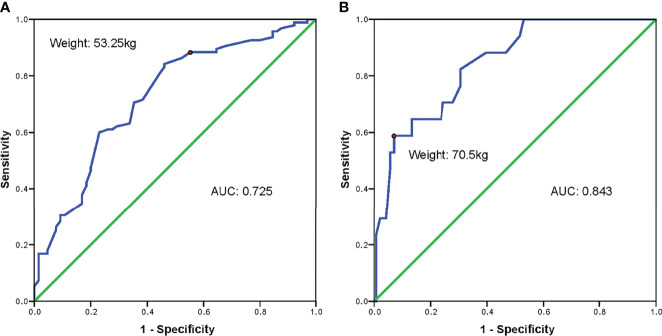
Polycystic ovarian syndrome (PCOS) is the major cause of anovulatory infertility. Since women with PCOS are often accompanied by increased body weight and hyper response to controlled ovarian stimulation, individualized gonadotropin (Gn) dose is required to achieve a therapeutic effect while minimizing the risk of ovarian hyperstimulation simultaneously. We aimed to investigate the essential role of body weight in optimizing initial Gn dosage for PCOS patients during fertilization (IVF). We retrospectively included 409 infertile PCOS patients who used gonadotropin-releasing hormone (GnRH)-antagonist fixed protocol and underwent their first cycle of IVF in West China Second University Hospital from January 2019 to June 2021. Baseline characteristics controlled ovarian stimulation parameters, and reproductive outcomes were compared between patients with different body weights and different ovarian responses. Multivariable linear regression analyses were adopted to investigate the relationship between body weight and initial Gn dosage. Receiver operating characteristic (ROC) curves were drawn to find the optimal cut-off value of body weight in predicting the starting Gn dosage so as to prevent high ovarian response (HOR). We found that luteinizing hormone (LH) level and Anti-Mullerian hormone (AMH) level were lowest in the group with body weight over 70 kg and was highest in the group with body weight less than 50 kg. Increased body weight was significantly correlated to the rise of initial Gn dosage (Beta = 0.399, t = 8.921, p < 0.001). Normal ovarian response (NOR) patients had significantly less fresh cycle cancel rate and ovarian hyperstimulation syndrome (OHSS) rate which outweighed the fewer embryos compared with HOR patients. Using ROC curves, 53.25 kg (sensitivity, 84.2%; specificity, 53.8%) and 70.5 kg (sensitivity, 58.8%; specificity, 93.0%) were identified as the optimal cut-off values to predict the initial Gn dosage of no more than 150 IU and 225 IU, respectively. In conclusion, adjusting the initial Gn dosage based on body weight is crucial to preventing ovarian hyperstimulation while not influencing reproductive outcomes for PCOS patients during IVF.
多囊卵巢综合征(PCOS)是无排卵性不孕的主要原因。由于 PCOS 患者常伴有体重增加和对控制性卵巢刺激的过度反应,因此需要个体化的促性腺激素(Gn)剂量,以在最小化卵巢过度刺激风险的同时达到治疗效果。我们旨在探讨体重在优化 PCOS 患者接受体外受精(IVF)时初始 Gn 剂量中的重要作用。我们回顾性纳入了 2019 年 1 月至 2021 年 6 月在华西第二医院接受 GnRH 拮抗剂固定方案并进行首次 IVF 周期的 409 例不孕 PCOS 患者。比较了不同体重和不同卵巢反应患者的基线特征、控制性卵巢刺激参数和生殖结局。采用多变量线性回归分析来探讨体重与初始 Gn 剂量之间的关系。绘制受试者工作特征(ROC)曲线以确定体重预测起始 Gn 剂量以预防高卵巢反应(HOR)的最佳截断值。我们发现,体重超过 70kg 的患者的黄体生成素(LH)水平和抗苗勒管激素(AMH)水平最低,体重小于 50kg 的患者的 LH 水平和 AMH 水平最高。体重增加与初始 Gn 剂量的升高显著相关(Beta = 0.399,t = 8.921,p < 0.001)。与 HOR 患者相比,正常卵巢反应(NOR)患者的新鲜周期取消率和卵巢过度刺激综合征(OHSS)率明显较低,但胚胎数较少。使用 ROC 曲线,53.25kg(敏感性,84.2%;特异性,53.8%)和 70.5kg(敏感性,58.8%;特异性,93.0%)被确定为预测初始 Gn 剂量不超过 150IU 和 225IU 的最佳截断值。总之,基于体重调整初始 Gn 剂量对于预防 PCOS 患者 IVF 期间的卵巢过度刺激而不影响生殖结局至关重要。