Shaanxi Clinical Research Center for Oral Diseases, National Clinical Research Center for Oral Diseases, State Key Laboratory of Military Stomatology, Department of Oral Medicine, School of Stomatology, The Fourth Military Medical University, Xi'an, China.
Shaanxi International Joint Research Center for Oral Diseases, State Key Laboratory of Military Stomatology, Department of Histology and Pathology, School of Stomatology, The Fourth Military Medical University, Xi'an, China.
Front Cell Infect Microbiol. 2022 Jun 29;12:797749. doi: 10.3389/fcimb.2022.797749. eCollection 2022.
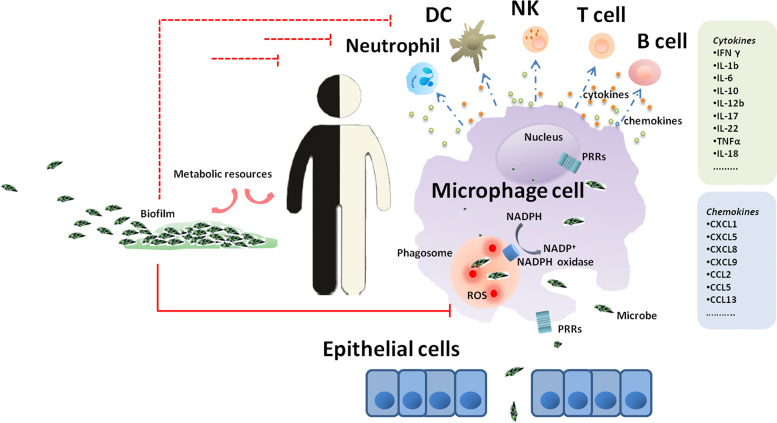
Granulomatous inflammation (GI) diseases are a group of chronic inflammation disorders characterized by focal collections of multinucleated giant cells, epithelioid cells and macrophages, with or without necrosis. GI diseases are closely related to microbes, especially virulent intracellular bacterial infections are important factors in the progression of these diseases. They employ a range of strategies to survive the stresses imposed upon them and persist in host cells, becoming the initiator of the fighting. Microbe-host communication is essential to maintain functions of a healthy host, so defense capacity of hosts is another influence factor, which is thought to combine to determine the result of the fighting. With the development of gene research technology, many human genetic loci were identified to be involved in GI diseases susceptibility, providing more insights into and knowledge about GI diseases. The current review aims to provide an update on the most recent progress in the identification and characterization of bacteria in GI diseases in a variety of organ systems and clinical conditions, and examine the invasion and escape mechanisms of pathogens that have been demonstrated in previous studies, we also review the existing data on the predictive factors of the host, mainly on genetic findings. These strategies may improve our understanding of the mechanisms underlying GI diseases, and open new avenues for the study of the associated conditions in the future.
肉芽肿性炎症(GI)疾病是一组以局灶性聚集的多核巨细胞、上皮样细胞和巨噬细胞为特征的慢性炎症性疾病,可伴有或不伴有坏死。GI 疾病与微生物密切相关,特别是毒力强的细胞内细菌感染是这些疾病进展的重要因素。它们采用多种策略来应对所面临的压力,并在宿主细胞中持续存在,成为战斗的发起者。微生物-宿主的通讯对于维持宿主的正常功能至关重要,因此宿主的防御能力是另一个影响因素,人们认为这两个因素共同决定了战斗的结果。随着基因研究技术的发展,许多人类遗传位点被确定与 GI 疾病的易感性有关,这为 GI 疾病提供了更多的见解和知识。本综述旨在提供 GI 疾病中细菌的最新鉴定和特征方面的最新进展,在各种器官系统和临床条件下,并检查以前研究中证明的病原体的入侵和逃逸机制,我们还回顾了宿主的预测因素的现有数据,主要是遗传发现。这些策略可能有助于我们理解 GI 疾病的发病机制,并为未来相关疾病的研究开辟新的途径。