Xing Jun-Hong, Shi Chun-Wei, Sun Ming-Jie, Gu Wei, Zhang Rong-Rong, Chen Hong-Liang, Li Ying, Wang Dan, Li JunYi, Niu Tian-Ming, Huang Qun-Tao, Qian Jia-Hao, Huang Hai Bin, Jiang Yan-Long, Wang Jian-Zhong, Cao Xin, Wang Nan, Zeng Yan, Yang Gui-Lian, Yang Wen Tao, Wang Chun-Feng
Key Laboratory of Animal Production and Product Quality Safety of Ministry of Education, College of Veterinary Medicine, College of Animal Science and Technology, Jilin Provincial Engineering Research Center of Animal Probiotics, Jilin Agricultural University, Changchun, China.
Shandong BaoLai-LeeLai Bioengineering Co., Ltd., Tai'an, China.
Front Microbiol. 2022 Jun 30;13:820484. doi: 10.3389/fmicb.2022.820484. eCollection 2022.
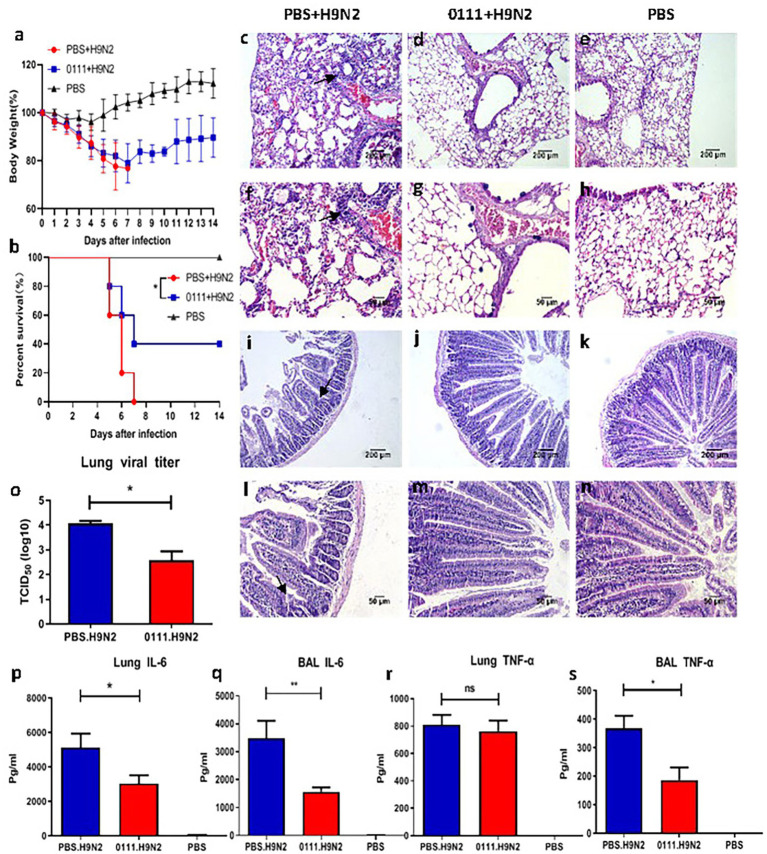
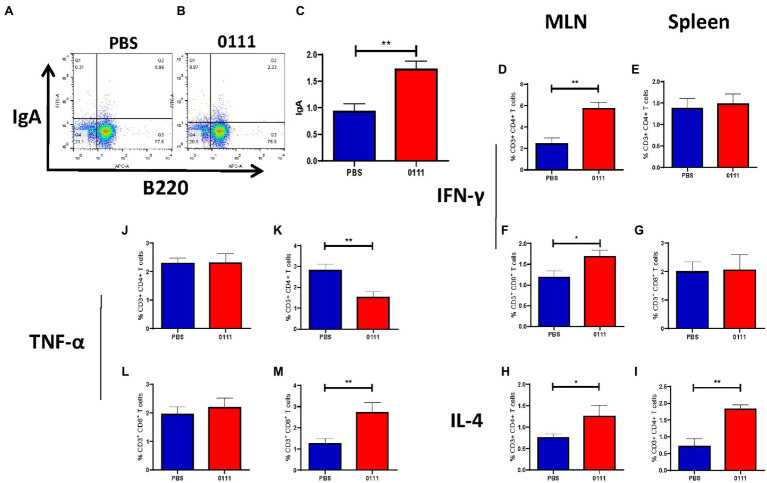
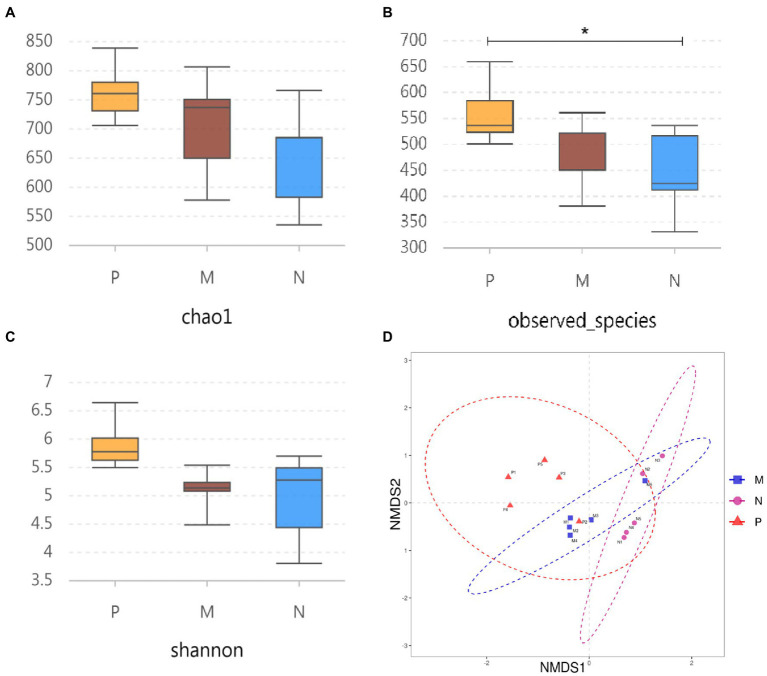
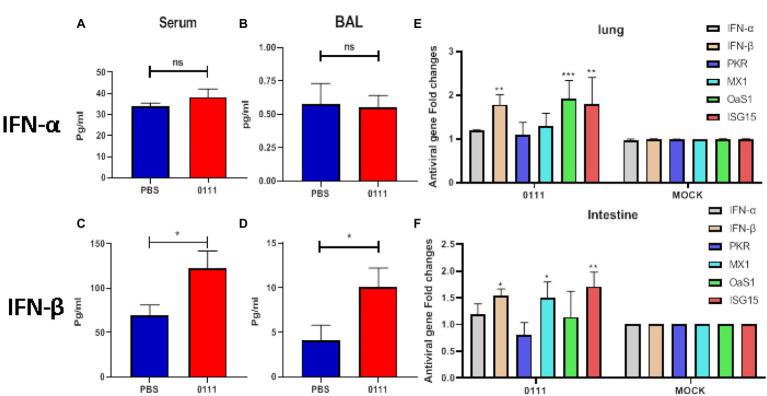
There are some limitations of traditional influenza vaccines concerning novel mutant strains. Therefore, it is particularly important to develop preventive means for antigen-unrelated types of influenza viruses. Recent studies have shown that probiotics can modulate the immune system and reduce the severity of viral infections. In this study, we investigated the potential of 0111 against influenza virus H9N2. Challenge experiments showed that 0111 pretreatments could effectively improve mice's survival rate and weight loss and reduce the inflammatory cytokines IL-6 and TNF-α in the lungs and bronchoalveolar lavage fluid (BALF) along with the degree of lung and intestinal injury. FMT experiment demonstrates that the protective effect produced by 0111 is associated with gut microorganisms. In addition, 16S high-throughput sequencing of the mouse intestinal microbiota showed that 0111 remodeled the intestinal microbiota after H9N2 infection and maintained the gut microbiota balance. In a mouse model, the oral administration of 0111 increased IFN-β expression in the serum and BALF. At the same time, the transcript levels of IFN-β and related ISGs in the intestine and lungs of mice were also increased. In addition, the activation and polarization of T cells in mesenteric lymph nodes (MLNs) and the spleen were detected by flow cytometry, and the results showed that 0111 modulated cytokines in T cells and increased IgA expression in B cells in the MLNs and spleen. Thus, 0111 may improve gut microbiota-mediated immune responses and thus, resist infection by the influenza virus, and it could be used as an effective preventive measure against the influenza virus.
传统流感疫苗在应对新型突变株方面存在一些局限性。因此,开发针对与抗原无关的流感病毒类型的预防手段尤为重要。最近的研究表明,益生菌可以调节免疫系统并减轻病毒感染的严重程度。在本研究中,我们调查了0111对流感病毒H9N2的预防潜力。攻毒实验表明,0111预处理可有效提高小鼠的存活率,减轻体重减轻,并降低肺组织和支气管肺泡灌洗液(BALF)中的炎性细胞因子IL-6和TNF-α,以及肺和肠道损伤程度。粪菌移植实验表明,0111产生的保护作用与肠道微生物群有关。此外,对小鼠肠道微生物群进行的16S高通量测序显示,0111在H9N2感染后重塑了肠道微生物群,并维持了肠道微生物群的平衡。在小鼠模型中,口服0111可增加血清和BALF中IFN-β的表达。同时,小鼠肠道和肺组织中IFN-β及相关ISG的转录水平也有所增加。此外,通过流式细胞术检测肠系膜淋巴结(MLNs)和脾脏中T细胞的活化和极化,结果表明,0111调节T细胞中的细胞因子,并增加MLNs和脾脏中B细胞的IgA表达。因此,0111可能改善肠道微生物群介导的免疫反应,从而抵抗流感病毒感染,它可作为预防流感病毒的有效措施。