Department of Physiotherapy, Human Physiology and Anatomy, Research unit Rehabilitation Research, Vrije Universiteit Brussel, Brussels, Belgium; Department of Gerontology, Vrije Universiteit Brussel, Brussels, Belgium; Frailty in ageing (FRIA) research department, Vrije Universiteit Brussel, Brussels, Belgium; Brussels Human Robotic Research Center (BruBotics), Vrije Universiteit Brussel, Brussels, Belgium.
Department of Physiotherapy, Human Physiology and Anatomy, Research unit Rehabilitation Research, Vrije Universiteit Brussel, Brussels, Belgium; Brussels Human Robotic Research Center (BruBotics), Vrije Universiteit Brussel, Brussels, Belgium; Center for Neurosciences (C4N), Vrije Universiteit Brussel, Brussels, Belgium.
J Rehabil Med. 2022 Oct 4;54:jrm00308. doi: 10.2340/jrm.v54.573.
Rehabilitation is important in the first months after a stroke for recovery of functional ability, but it is also challenging, since distinct recovery trajectories are seen. Therefore, studying the early changes in muscle characteristics over time (e.g. muscle strength, muscle mass and muscle volume), which are known to be associated with functional abilities, may deepen our understanding of underlying recovery mechanisms of stroke survivors.
This systematic review aims to describe the longitudinal changes in skeletal muscles, including muscle strength, muscle mass and muscle volume, during the first 3 months post-stroke.
Electronic searches were conducted in Medline, Scopus and CENTRAL. Longitudinal cohort studies or controlled interventional trials that report data about patients in the first 3 months after stroke were identified. Skeletal muscle characteristics should be measured at least twice within 3 months post-stroke by objective, quantitative assessment methods (e.g. dynamometry, ultrasound, computed tomography). Effect sizes were calculated as Hedges' g using standardized mean differences.
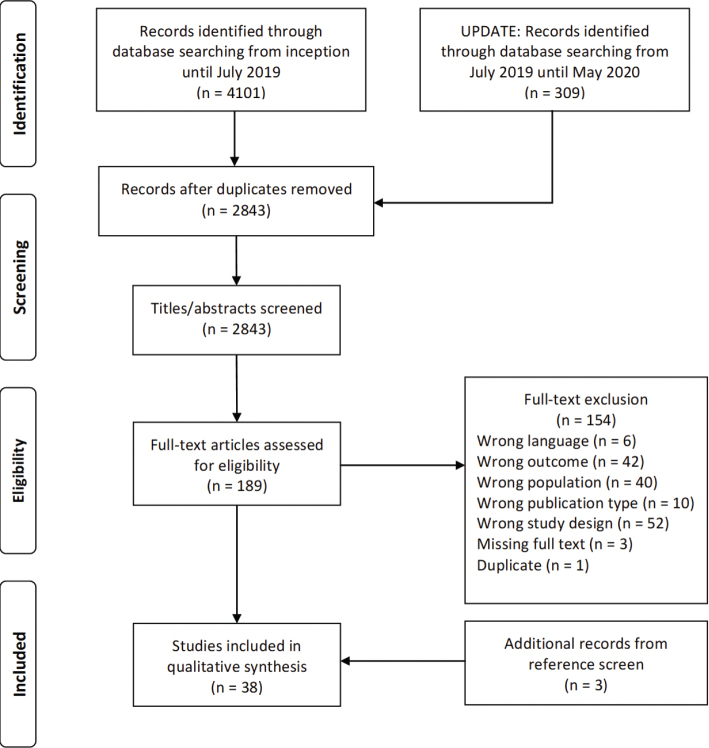
A total of 38 studies (1,097 subjects) were found eligible. Results revealed an mean increase on the paretic side for upper and lower limb muscle strength (small to moderate effect sizes), whereas muscle thickness decreased (moderate to large effect sizes). Similar, but smaller, effects were found on the non-paretic side. There were insufficient data available to draw conclusions about lean muscle mass and muscle cross-sectional area. No studies aimed at investigating distinct trajectories of the muscle changes.
Muscle strength and thickness changes during the first 3 months after stroke in both the paretic and non-paretic side. Future studies should aim to understand "how" the stroke-induced muscle strength changes are achieved. Exploring existing data from longitudinal studies, by using cluster analyses, such as pattern recognition, could add to the current knowledge-base.
脑卒中后最初几个月的康复对于功能能力的恢复很重要,但由于存在不同的恢复轨迹,康复也具有挑战性。因此,研究肌肉特征随时间的早期变化(例如肌肉力量、肌肉质量和肌肉体积)可能会加深我们对脑卒中幸存者潜在恢复机制的理解,这些特征与功能能力有关。
本系统综述旨在描述脑卒中后 3 个月内骨骼肌的纵向变化,包括肌肉力量、肌肉质量和肌肉体积。
在 Medline、Scopus 和 CENTRAL 中进行电子检索。确定了在脑卒中后 3 个月内报告患者数据的纵向队列研究或对照干预试验。骨骼肌特征应通过客观、定量评估方法(例如测力、超声、计算机断层扫描)至少在 3 个月内测量两次。使用标准化均数差计算 Hedge's g 作为效应大小。
共发现 38 项研究(1097 名受试者)符合条件。结果显示,上肢和下肢肌肉力量在患侧出现了均值增加(小到中等效应量),而肌肉厚度减小(中等到较大效应量)。在非患侧也发现了类似但较小的影响。关于瘦肌肉质量和肌肉横截面积,没有足够的数据得出结论。没有研究旨在调查肌肉变化的不同轨迹。
脑卒中后最初 3 个月内患侧和非患侧的肌肉力量和厚度都发生了变化。未来的研究应该旨在了解脑卒中引起的肌肉力量变化是如何实现的。通过使用聚类分析(例如模式识别)探索现有纵向研究的数据,可以为当前的知识库增添新的内容。