'Rui Nabeiro' Biodiversity Chair, CHANGE-MED Institute, University of Évora, Évora, Portugal.
Centro de Estudos Geográficos e Laboratório Associado TERRA, Instituto de Geografia e Ordenamento do Território - IGOT, Universidade de Lisboa, Rua Branca Edmée Marques, Lisbon, Portugal.
Glob Chang Biol. 2022 Oct;28(19):5654-5666. doi: 10.1111/gcb.16310. Epub 2022 Jul 18.
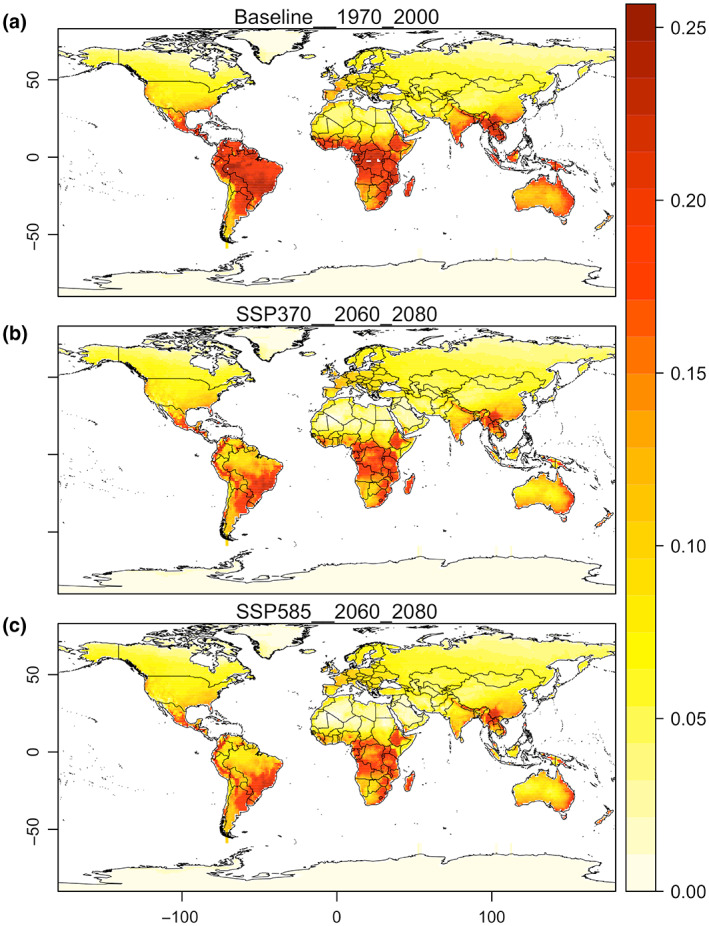
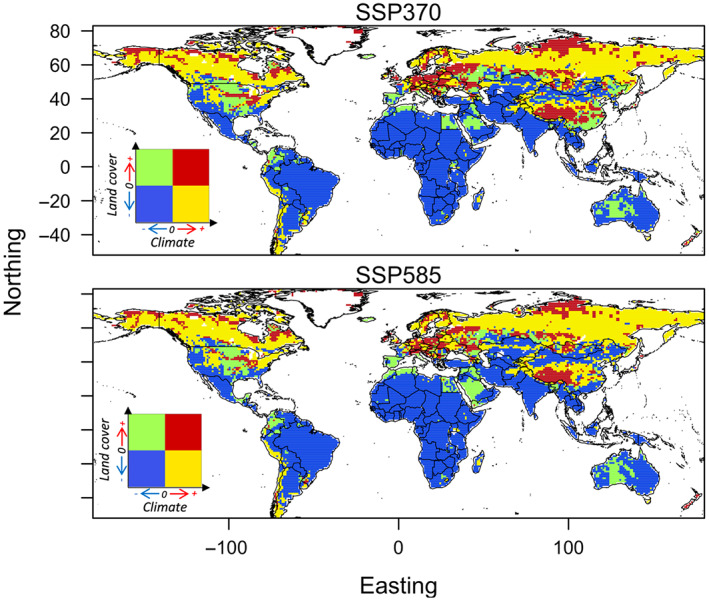
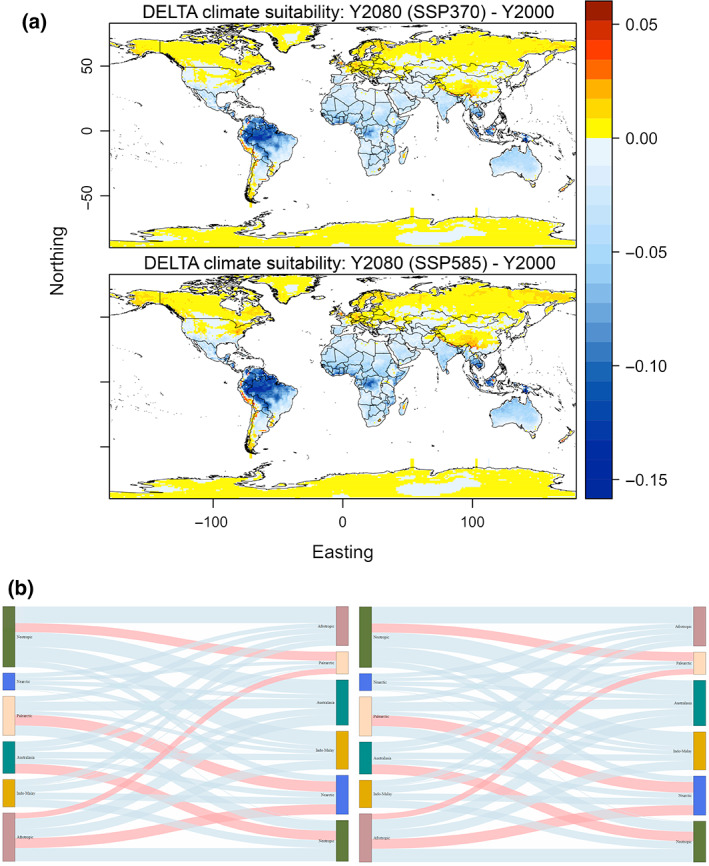
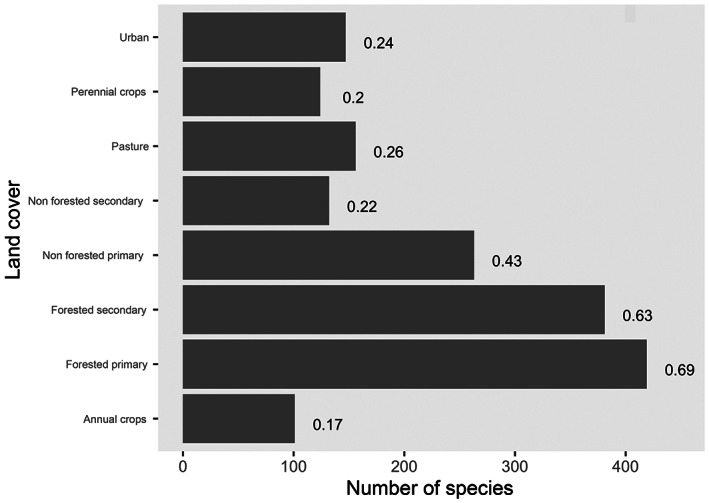
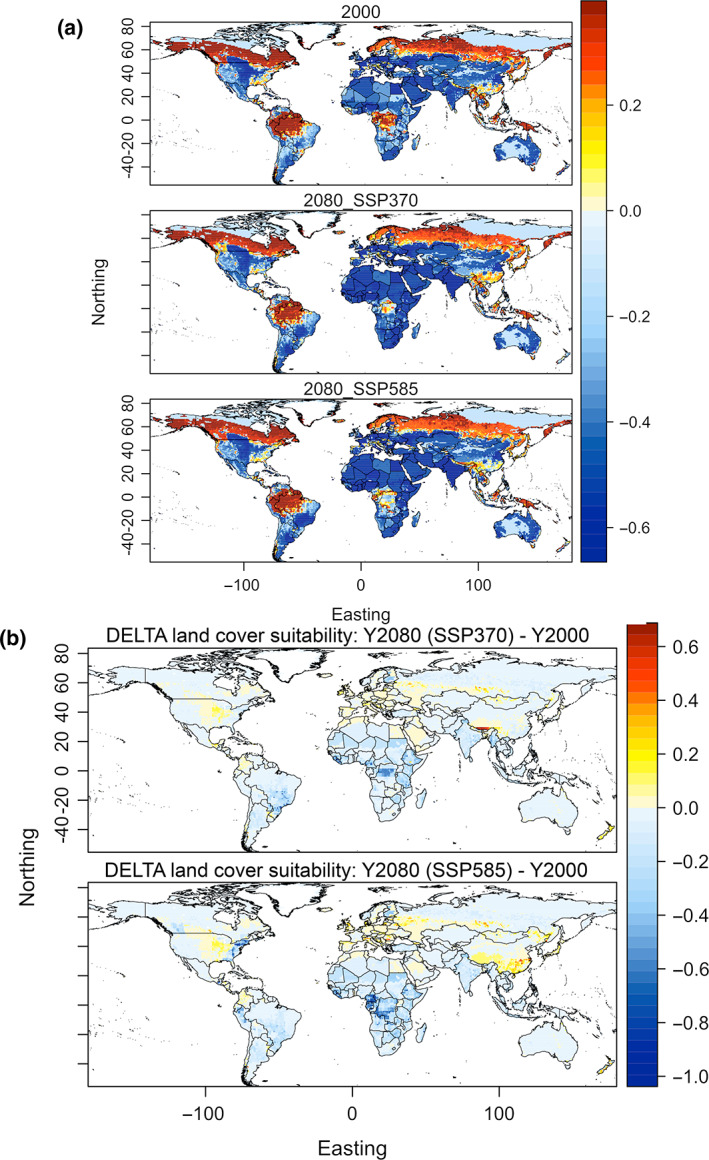
Humans have moved species away from their native ranges since the Neolithic, but globalization accelerated the rate at which species are being moved. We fitted more than half million distribution models for 610 traded bird species on the CITES list to examine the separate and joint effects of global climate and land-cover change on their potential end-of-century distributions. We found that climate-induced suitability for modelled invasive species increases with latitude, because traded birds are mainly of tropical origin and much of the temperate region is 'tropicalizing.' Conversely, the tropics are becoming more arid, thus limiting the potential from cross-continental invasion by tropical species. This trend is compounded by forest loss around the tropics since most traded birds are forest dwellers. In contrast, net gains in forest area across the temperate region could compound climate change effects and increase the potential for colonization of low-latitude birds. Climate change has always led to regional redistributions of species, but the combination of human transportation, climate, and land-cover changes will likely accelerate the redistribution of species globally, increasing chances of alien species successfully invading non-native lands. Such process of biodiversity homogenization can lead to emergence of non-analogue communities with unknown environmental and socioeconomic consequences.
自新石器时代以来,人类就已经将物种从其原生范围迁移出去,但全球化加速了物种迁移的速度。我们为 CITES 名单上的 610 种贸易鸟类中的 50 多万个分布模型进行了拟合,以研究全球气候和土地覆盖变化对它们潜在的世纪末分布的单独和联合影响。我们发现,由于贸易鸟类主要来自热带地区,而大部分温带地区正在“热带化”,因此气候引起的模型入侵物种适宜性随纬度增加而增加。相反,热带地区变得更加干旱,从而限制了热带物种跨大陆入侵的潜力。自热带地区森林减少以来,这种趋势更加严重,因为大多数贸易鸟类都是森林栖息者。相比之下,由于温带地区森林面积净增加,可能会加剧气候变化的影响,并增加低纬度鸟类的殖民潜力。气候变化一直导致物种在区域内重新分布,但人类运输、气候和土地覆盖变化的结合可能会加速物种在全球范围内的重新分布,增加外来物种成功入侵非本地土地的机会。这种生物多样性同质化过程可能导致出现具有未知环境和社会经济后果的非类似群落。