Department of Pharmacy, Uppsala University, SE-75123, Uppsala, Sweden.
Juvabis AG, CH-8001, Zurich, Switzerland.
J Antimicrob Chemother. 2022 Sep 30;77(10):2718-2728. doi: 10.1093/jac/dkac225.
Apramycin is under development for human use as EBL-1003, a crystalline free base of apramycin, in face of increasing incidence of multidrug-resistant bacteria. Both toxicity and cross-resistance, commonly seen for other aminoglycosides, appear relatively low owing to its distinct chemical structure.
To perform a population pharmacokinetic (PPK) analysis and predict an efficacious dose based on data from a first-in-human Phase I trial.
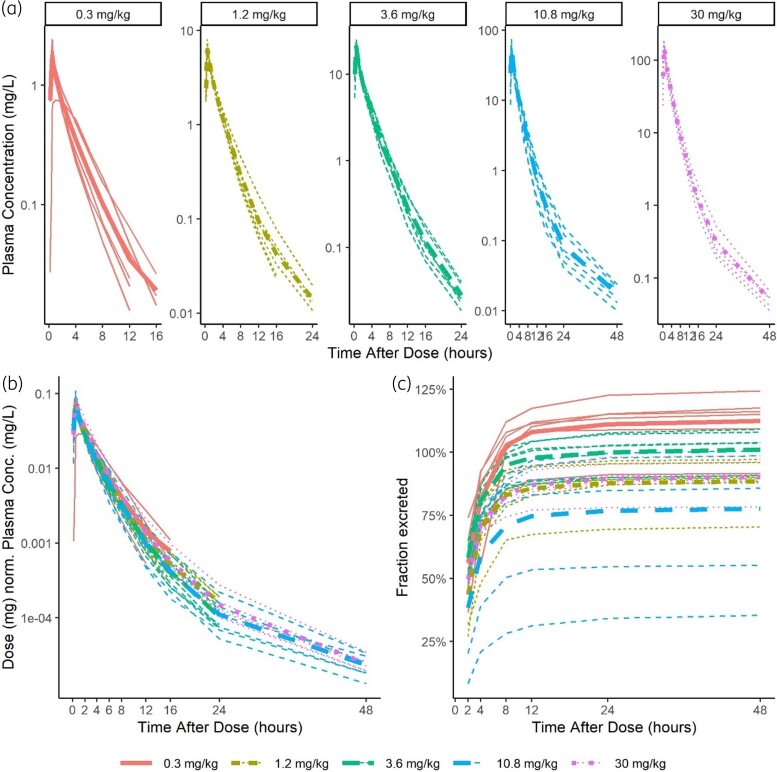
The drug was administered intravenously over 30 min in five ascending-dose groups ranging from 0.3 to 30 mg/kg. Plasma and urine samples were collected from 30 healthy volunteers. PPK model development was performed stepwise and the final model was used for PTA analysis.
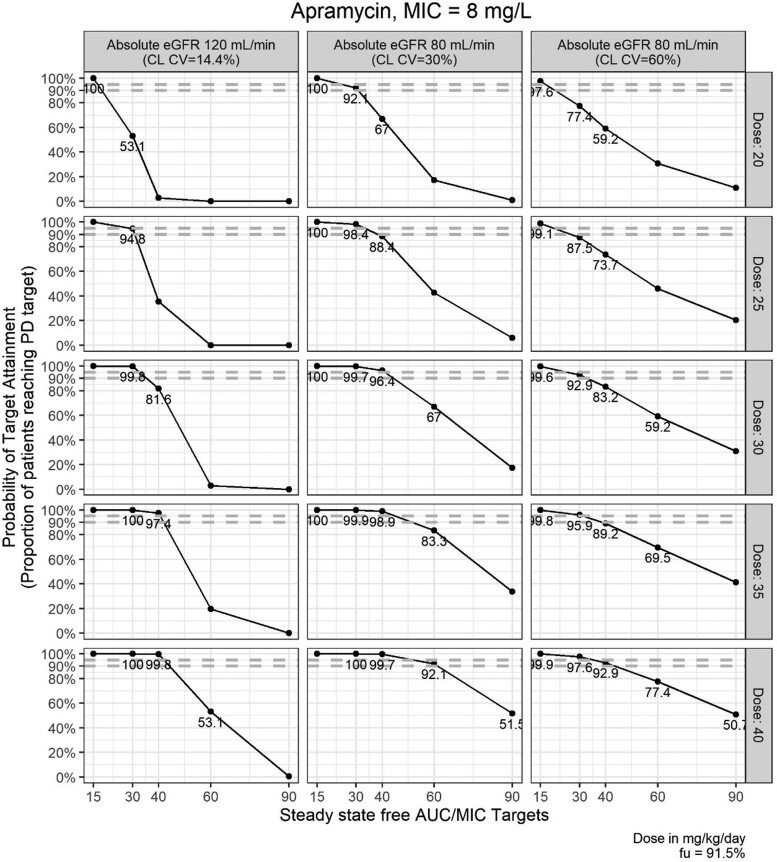
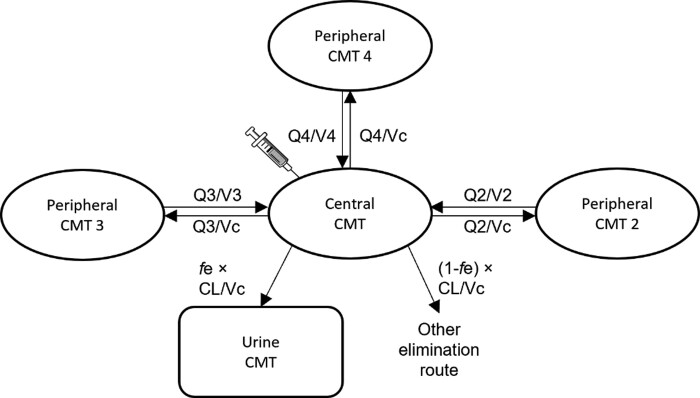
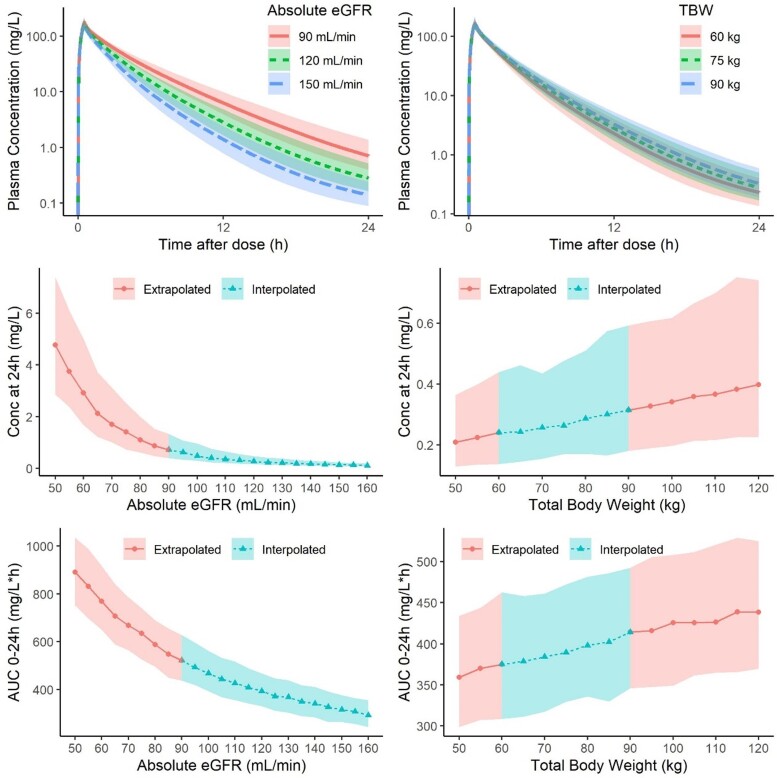
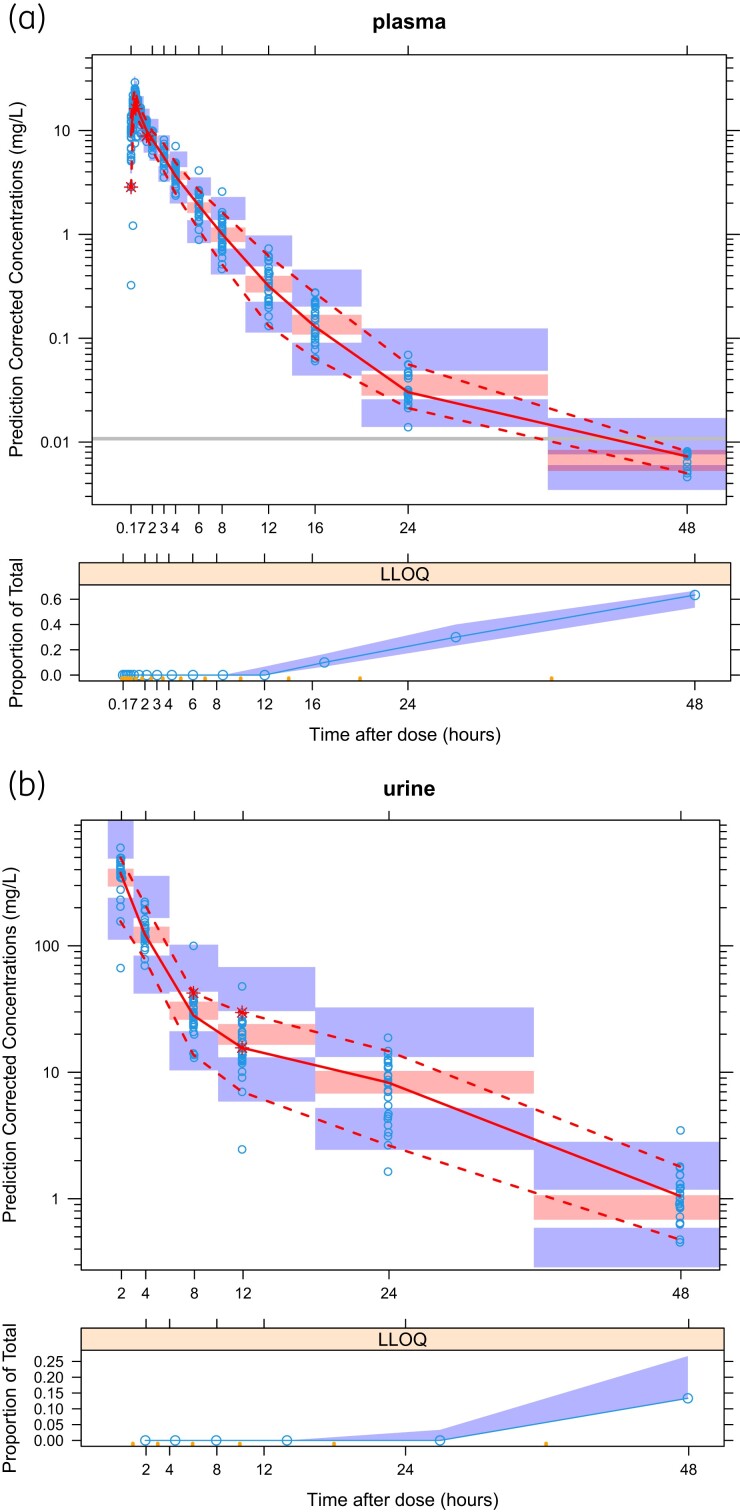
A mammillary four-compartment PPK model, with linear elimination and a renal fractional excretion of 90%, described the data. Apramycin clearance was proportional to the absolute estimated glomerular filtration rate (eGFR). All fixed effect parameters were allometrically scaled to total body weight (TBW). Clearance and steady-state volume of distribution were estimated to 5.5 L/h and 16 L, respectively, for a typical individual with absolute eGFR of 124 mL/min and TBW of 70 kg. PTA analyses demonstrated that the anticipated efficacious dose (30 mg/kg daily, 30 min intravenous infusion) reaches a probability of 96.4% for a free AUC/MIC target of 40, given an MIC of 8 mg/L, in a virtual Phase II patient population with an absolute eGFR extrapolated to 80 mL/min.
The results support further Phase II clinical trials with apramycin at an anticipated efficacious dose of 30 mg/kg once daily.
阿普拉霉素(Apramycin)作为 EBL-1003 正在开发用于人类用途,即 Apramycin 的游离碱结晶,以应对多药耐药菌的发病率不断上升。由于其独特的化学结构,通常见于其他氨基糖苷类药物的毒性和交叉耐药性似乎相对较低。
根据首次人体 I 期试验的数据进行群体药代动力学(PPK)分析并预测有效剂量。
药物在 30 分钟内静脉输注,分 5 个递增剂量组,剂量范围为 0.3 至 30mg/kg。从 30 名健康志愿者中采集血浆和尿液样本。逐步进行 PPK 模型开发,最后使用模型进行 PTA 分析。
描述数据的是具有线性消除和 90%肾分数排泄的乳突四室 PPK 模型。阿普拉霉素清除率与绝对估计肾小球滤过率(eGFR)成正比。所有固定效应参数均按总体重(TBW)进行比例缩放。估计典型个体的清除率和稳态分布容积分别为 5.5L/h 和 16L,对于绝对 eGFR 为 124mL/min 和 TBW 为 70kg 的个体。PTA 分析表明,在虚拟的 II 期患者人群中,对于 MIC 为 8mg/L、预期 AUC/MIC 目标为 40 的情况,预期有效剂量(30mg/kg 每日一次,30 分钟静脉输注)达到 96.4%的概率,在将 eGFR 外推至 80mL/min 的个体中。
结果支持进一步开展 Apramycin 以预期有效剂量 30mg/kg 每日一次的 II 期临床试验。