Kefalew Alemayehu, Soromessa Teshome, Demissew Sebsebe
Department of Plant Biology and Biodiversity Management, the National Herbarium, Addis Ababa University, P. O. Box 3434, Addis Ababa, Ethiopia.
Department of Biology, Debre Markos University (DMU), P. O. Box 269, Debre Markos, Ethiopia.
Bot Stud. 2022 Jul 19;63(1):23. doi: 10.1186/s40529-022-00353-w.
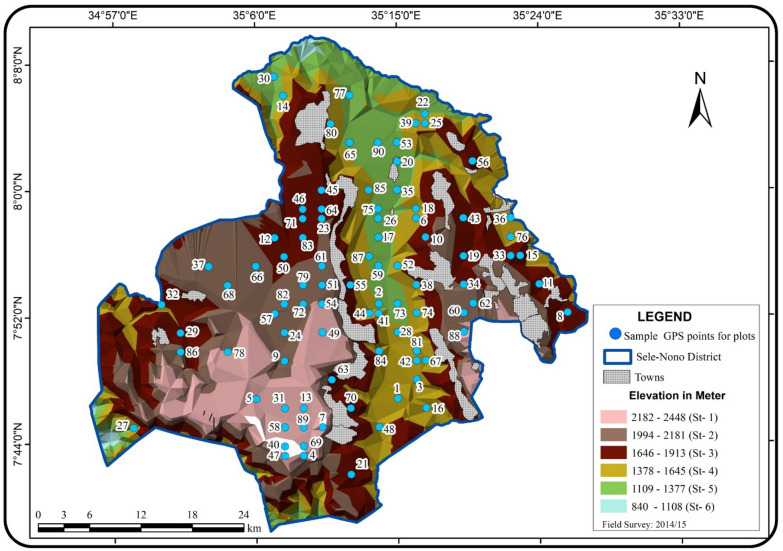
Studying the floristic diversity of a certain forest is a basic aspect of the design and management of forest vegetation; and consequently this study focused on the plant diversity and community analysis of the Sele-Nono forest. For the current study, plants were sampled from 90 plots using a stratified random sampling technique along the established strata of the study forest. In all the plots, both floristic and environmental data that were relevant to the study were collected following the state of the art. Based on the collected data, the community types, ordination, floristic diversity, and threats to the forest were analyzed using R-package and SPSS software.
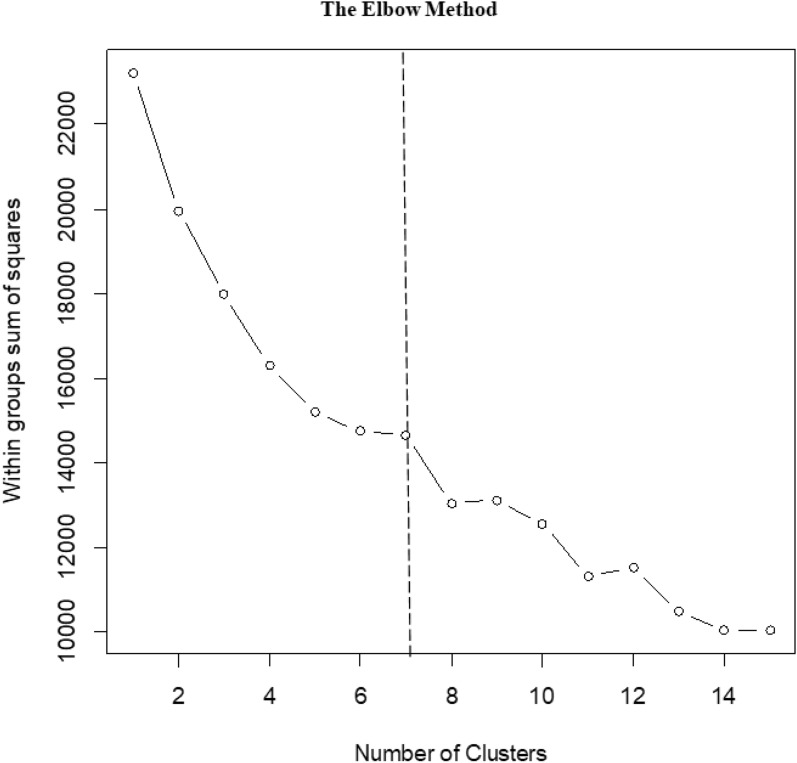
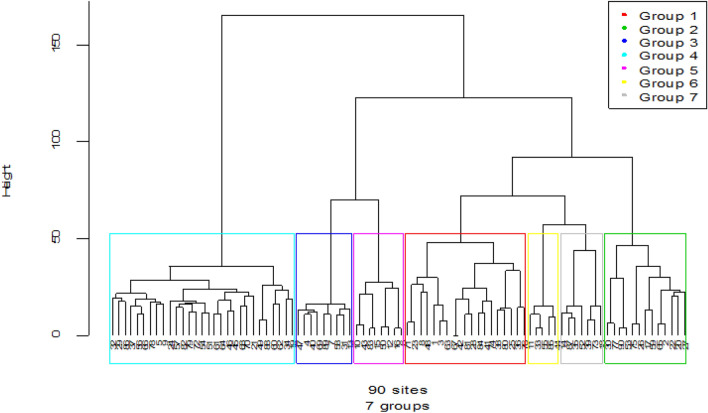
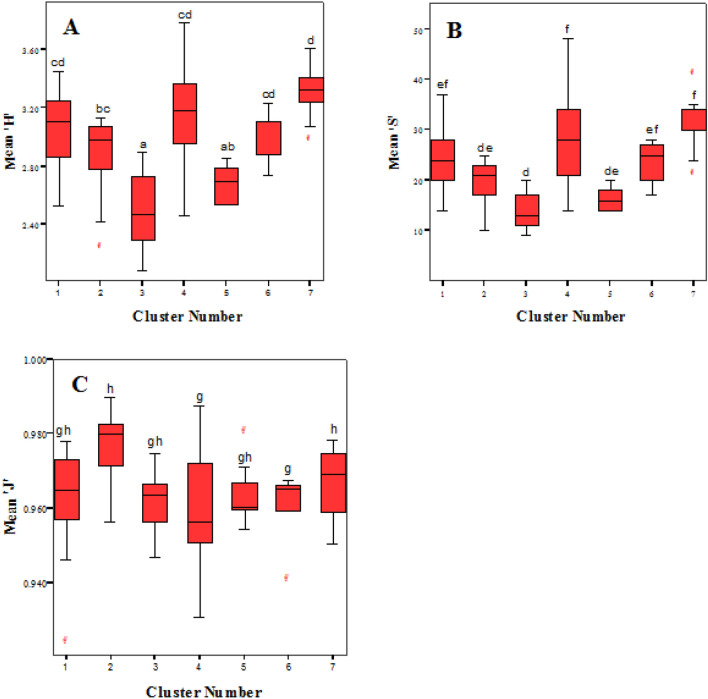
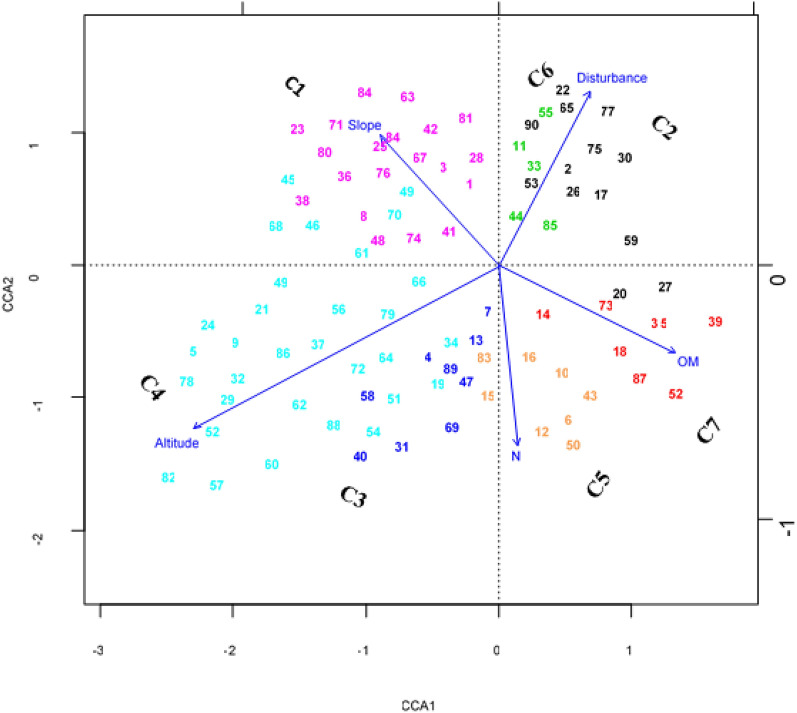
Cluster analysis produced seven distinct community types which significantly differed among themselves (Cophentic correlation coefficient = 0.785, P < 0.001) of which community types 2 and 6 were relatively poor; whereas communities 1 and 4 were rich in terms of their species richness and diversity. In addition, Canonical Correspondence Analysis (CCA) suggests that a number of environmental factors such as altitude and slope (topographic factor), OM and N (edaphic factors) and disturbance were the main drivers for the current distribution of plant species and disparity in plant community composition in Sele-Nono forest. Moreover, the study revealed high beta diversity ([Formula: see text] >12) of plant species at the landscape level (i.e., throughout the study forest). Deforestation for agricultural land expansion and degradation through selective logging are the main threats to the Sele-Nono forest.
The present study revealed that the Sele-Nono forest is a large and heterogenous forest at the landscape level (150, 325.27 ha; [Formula: see text] >12). Moreover, it is one of the richest and diverse forest ecosystems in terms of plant biodiversity, and it could qualify to be labeled as a keystone ecosystem. However, currently it is exposed to a variety of threats. We recommend the forest to be developed into a biosphere reserve. We also recommend the prioritization of areas belonging to community types 2 and 6 of the forest for any possible conservation actions so as to maximize species richness and diversity of the native plants of the area.
研究某一森林的植物区系多样性是森林植被设计与管理的一个基本方面;因此,本研究聚焦于塞莱 - 诺诺森林的植物多样性及群落分析。在本研究中,沿着研究森林已确定的层次,采用分层随机抽样技术从90个样地采集植物样本。在所有样地中,按照最新技术收集与研究相关的植物区系和环境数据。基于所收集的数据,使用R软件包和SPSS软件对群落类型、排序、植物区系多样性以及森林所面临的威胁进行分析。
聚类分析产生了7种不同的群落类型,它们之间存在显著差异(协同相关系数 = 0.785,P < 0.001),其中群落类型2和6相对较差;而群落1和4在物种丰富度和多样性方面较为丰富。此外,典范对应分析(CCA)表明,海拔和坡度等一些环境因素(地形因素)、有机质和氮(土壤因素)以及干扰是塞莱 - 诺诺森林当前植物物种分布和植物群落组成差异的主要驱动因素。此外,该研究揭示了景观水平(即整个研究森林)上植物物种的高β多样性([公式:见原文] > 12)。为扩大农业用地而进行的森林砍伐以及选择性采伐导致的退化是塞莱 - 诺诺森林面临的主要威胁。
本研究表明,塞莱 - 诺诺森林在景观水平上是一个大型且异质的森林(150,325.27公顷;[公式:见原文] > 12)。此外,就植物生物多样性而言,它是最丰富和多样的森林生态系统之一,有资格被列为关键生态系统。然而,目前它面临着各种威胁。我们建议将该森林发展成为一个生物圈保护区。我们还建议优先考虑属于该森林群落类型2和6的区域,以便采取任何可能的保护行动,从而最大限度地提高该地区本地植物的物种丰富度和多样性。