Andersson Mitchell J, Håkansson Anders
Malmö Addiction Center, Clinical Research Unit, Skåne Region, Södra Tullgatan 4, 211 40 Malmö, Sweden.
Department of Clinical Sciences Lund, Faculty of Medicine, Lund University, Sölvegatan 19 - BMC F12, 221 84 Lund, Sweden.
Heliyon. 2022 Jul 14;8(7):e09934. doi: 10.1016/j.heliyon.2022.e09934. eCollection 2022 Jul.
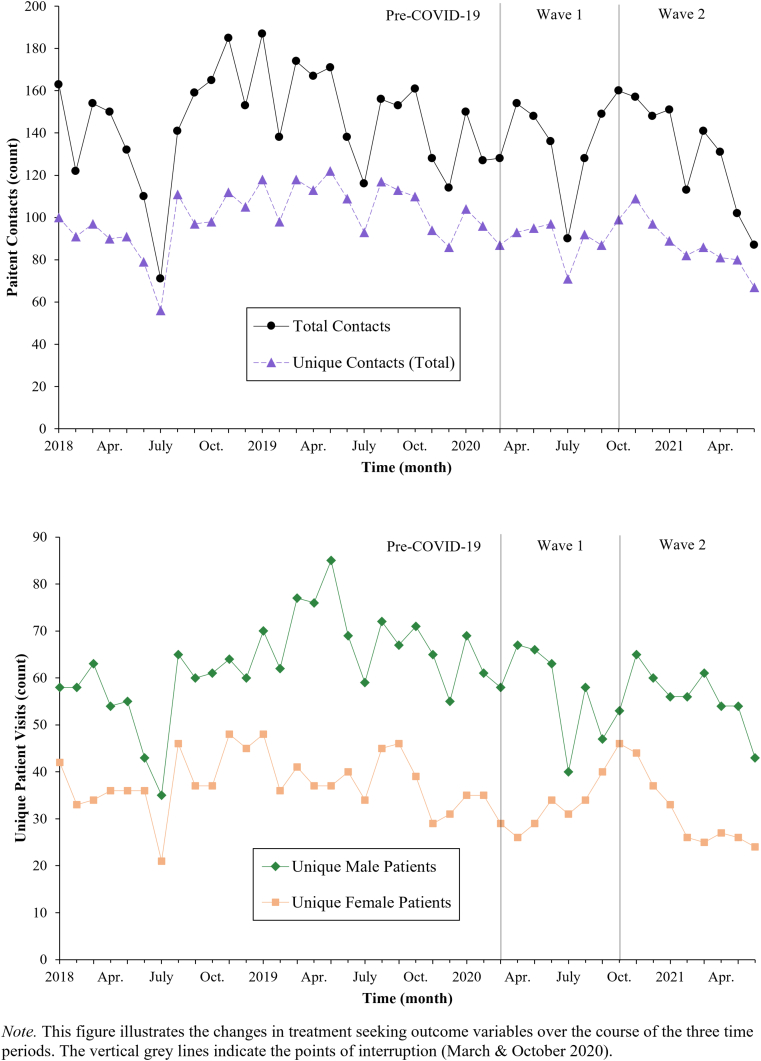
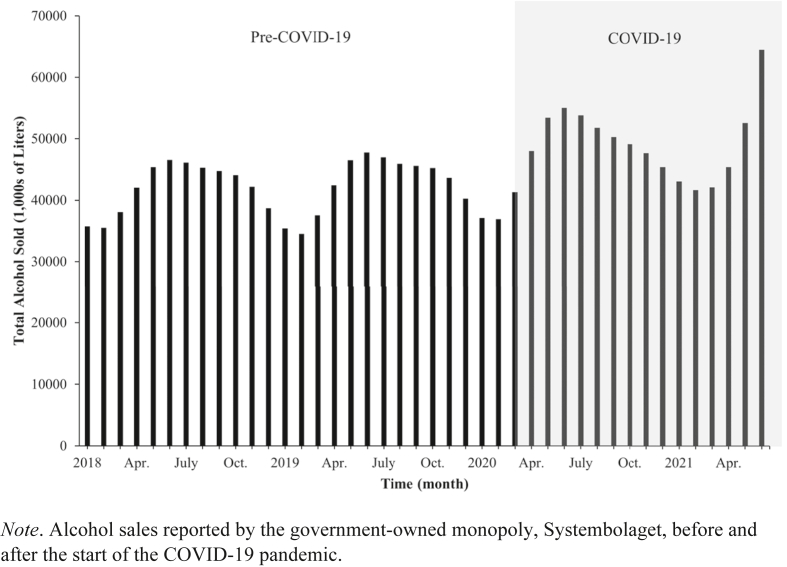
The COVID-19 pandemic and its societal impact may cause long-term behavioral changes in alcohol use due to increased psychological distress, unemployment, and time spent home. The purpose of this study was to determine whether or not the COVID-19 pandemic had a significant impact on treatment seeking for alcohol use disorders and related problems in a Swedish psychiatric treatment facility. Using an interrupted-time-series design on data derived from an addiction-specific psychiatric treatment facility located in Malmö, Sweden, we hypothesized that treatment seeking would decrease during the pandemic based on previous research identifying limited alcohol availability and affordability, as well as accessibility to treatment centers as influential factors. In addition, we assessed the predictive power of alcohol sales and number of active cases in the region using simple linear regressions. Results indicated that the pandemic had little to no effect on the number of people needing care, however a significant step change was found in treatment seeking patterns for unique female patients during the second wave (October 2020). Regression analyses indicated that alcohol sales and the number of active cases in the region did not significantly predict treatment seeking. A causal relationship between the onset of the pandemic and variation in treatment seeking for alcohol use could not be established. More research is needed to fully understand the pandemic's impact on alcohol use behavior change.
新冠疫情及其社会影响可能会因心理压力增加、失业以及居家时间增多而导致饮酒行为的长期改变。本研究的目的是确定新冠疫情是否对瑞典一家精神科治疗机构中酒精使用障碍及相关问题的治疗寻求产生了重大影响。我们对源自瑞典马尔默一家专门治疗成瘾问题的精神科治疗机构的数据采用中断时间序列设计,基于之前的研究发现酒精供应有限、可承受性以及治疗中心的可及性是影响因素,我们假设在疫情期间治疗寻求会减少。此外,我们使用简单线性回归评估了该地区酒精销售量和活跃病例数的预测能力。结果表明,疫情对需要护理的人数几乎没有影响,然而在第二波疫情期间(2020年10月),发现独特女性患者的治疗寻求模式有显著的阶跃变化。回归分析表明,该地区的酒精销售量和活跃病例数并不能显著预测治疗寻求情况。无法确定疫情爆发与酒精使用治疗寻求变化之间的因果关系。需要更多研究来全面了解疫情对饮酒行为变化的影响。