Department of Neuroscience, Perelman School of Medicine, University of Pennsylvania, Philadelphia, PA, 19104, USA.
Wharton Neuroscience Initiative, University of Pennsylvania, Philadelphia, PA, 19104, USA.
Philos Trans R Soc Lond B Biol Sci. 2022 Aug 29;377(1858):20210133. doi: 10.1098/rstb.2021.0133. Epub 2022 Jul 11.
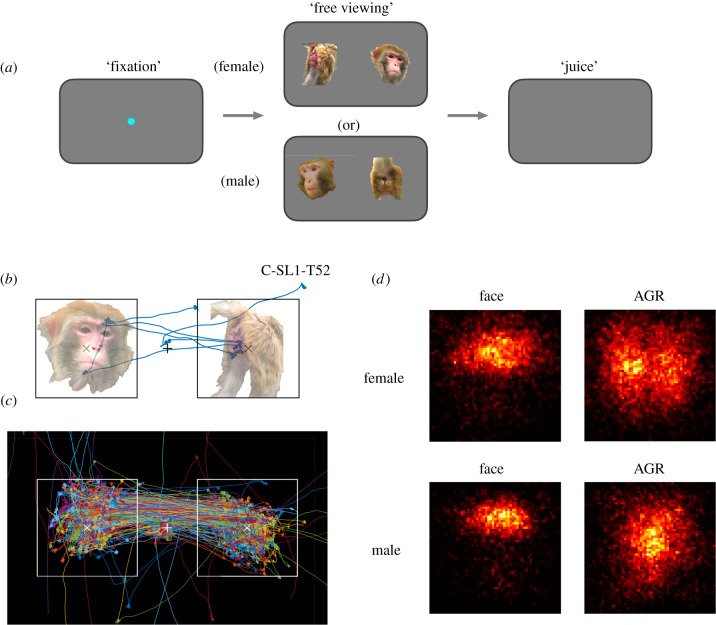
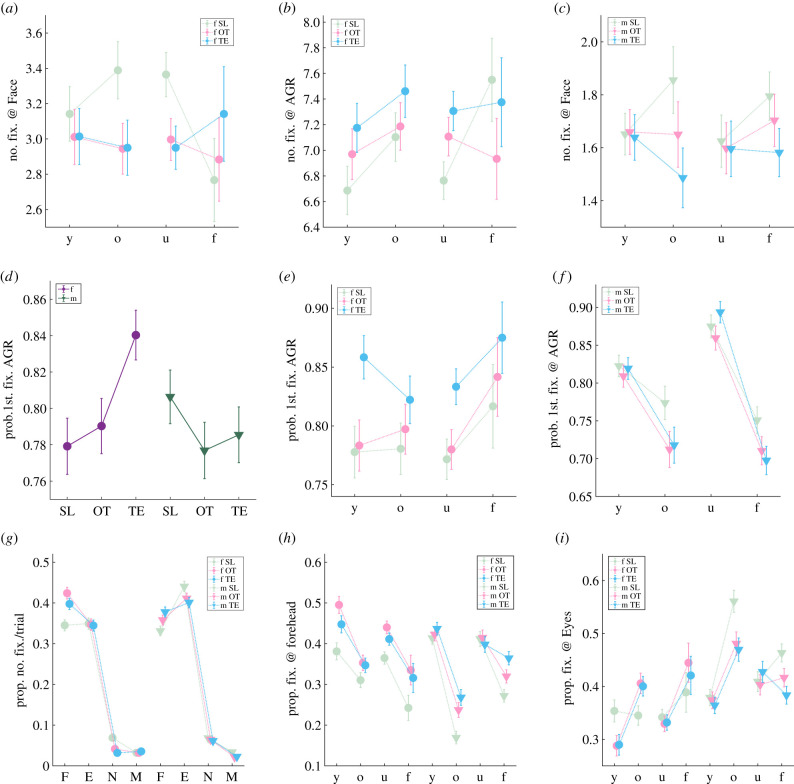
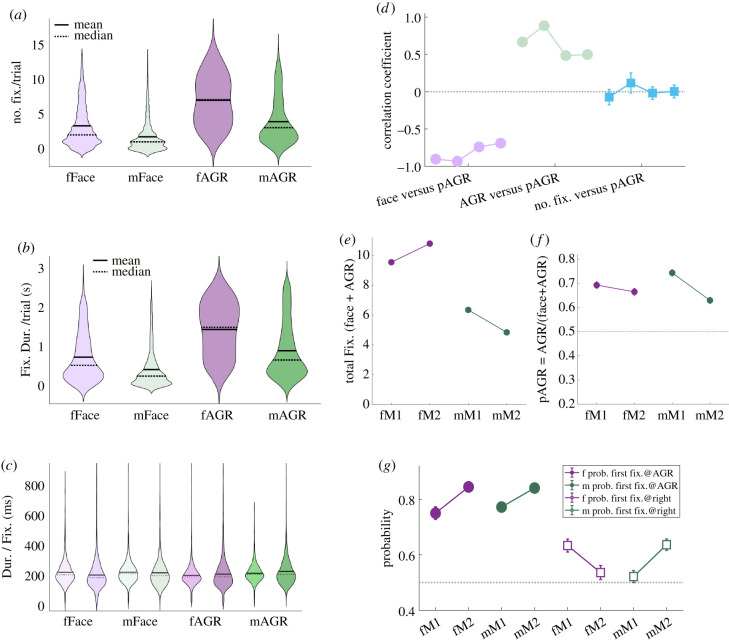
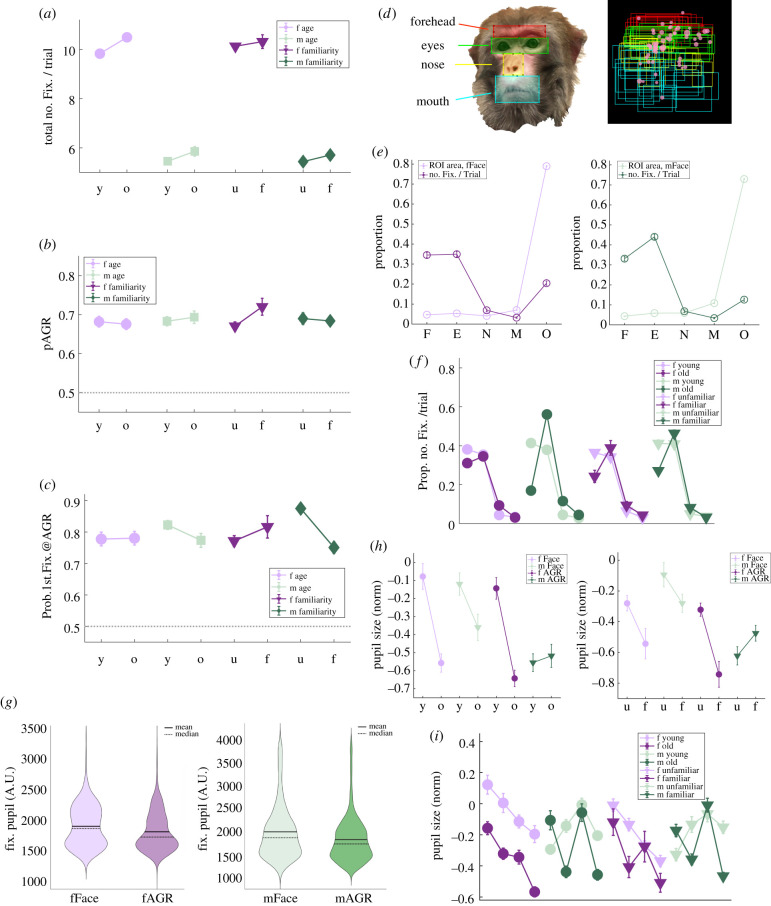
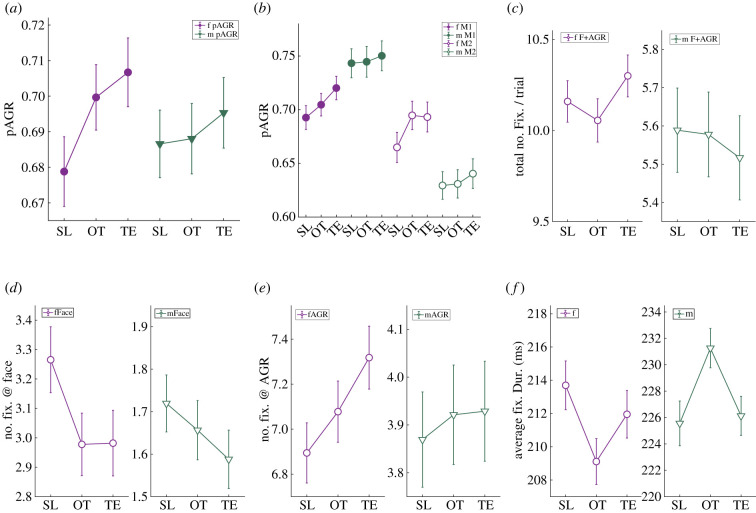
Social stimuli, like faces, and sexual stimuli, like genitalia, spontaneously attract visual attention in both human and non-human primates. Social orienting behaviour is thought to be modulated by neuropeptides as well as sex hormones. Using a free viewing task in which paired images of monkey faces and anogenital regions were presented simultaneously, we found that male rhesus macaques overwhelmingly preferred to view images of anogenital regions over faces. They were more likely to make an initial gaze shift towards, and spent more time viewing, anogenital regions compared with faces, and this preference was accompanied by relatively constricted pupils. On face images, monkeys mostly fixated on the forehead and eyes. These viewing preferences were found for images of both males and females. Both oxytocin (OT), a neuropeptide linked to social bonding and affiliation, and testosterone (TE), a sex hormone implicated in mating and aggression, amplified the pre-existing orienting bias for female genitalia over female faces; neither treatment altered the viewing preference for male anogenital regions over male faces. Testosterone but not OT increased the probability of monkeys making the first gaze shift towards female anogenital rather than face pictures, with the strongest effects on anogenital images of young and unfamiliar females. Finally, both OT and TE promoted viewing of the forehead region of both female and male faces, which display sexual skins, but decreased the relative salience of the eyes of older males. Together, these results invite the hypothesis that both OT and TE regulate reproductive behaviours by acting as a gain control on the visual orienting network to increase attention to mating-relevant signals in the environment. This article is part of the theme issue 'Interplays between oxytocin and other neuromodulators in shaping complex social behaviours'.
社会刺激物,如人脸,和性刺激物,如生殖器,会自发地吸引人类和非人类灵长类动物的视觉注意。社会定向行为被认为是由神经肽和性激素调节的。我们使用自由观看任务,同时呈现猴子脸和肛门生殖器区域的配对图像,发现雄性恒河猴压倒性地更喜欢观看肛门生殖器区域的图像而不是脸。他们更有可能首先将目光转移到肛门生殖器区域,并花更多的时间观看肛门生殖器区域,与脸相比,他们的瞳孔相对收缩。在面对图像时,猴子大多集中在前额和眼睛上。这些观看偏好既适用于雄性图像,也适用于雌性图像。神经肽催产素(OT)与社交联系和依恋有关,性激素睾丸激素(TE)与交配和攻击有关,都放大了对女性生殖器相对于女性脸部的预先存在的定向偏见;两种处理都没有改变对男性肛门生殖器相对于男性脸部的观看偏好。睾丸激素而非催产素增加了猴子首先将目光转向女性肛门生殖器而不是脸部图片的可能性,对年轻和不熟悉的女性的肛门生殖器图片的影响最强。最后,催产素和睾丸激素都促进了对显示性皮肤的女性和男性脸部的额头区域的观看,但减少了对老年雄性眼睛的相对显著性。总的来说,这些结果表明,催产素和睾丸激素通过作为视觉定向网络的增益控制来调节生殖行为,从而增加对环境中与交配相关信号的注意力。本文是主题问题“催产素与其他神经调质在塑造复杂社会行为中的相互作用”的一部分。