Brain Science Institute, Johns Hopkins University School of Medicine, Baltimore, MD 21205, USA.
Biochemistry, Cellular and Molecular Biology Program, Johns Hopkins University School of Medicine, Baltimore, MD 21205, USA.
Cell Rep. 2022 Jul 19;40(3):111106. doi: 10.1016/j.celrep.2022.111106.
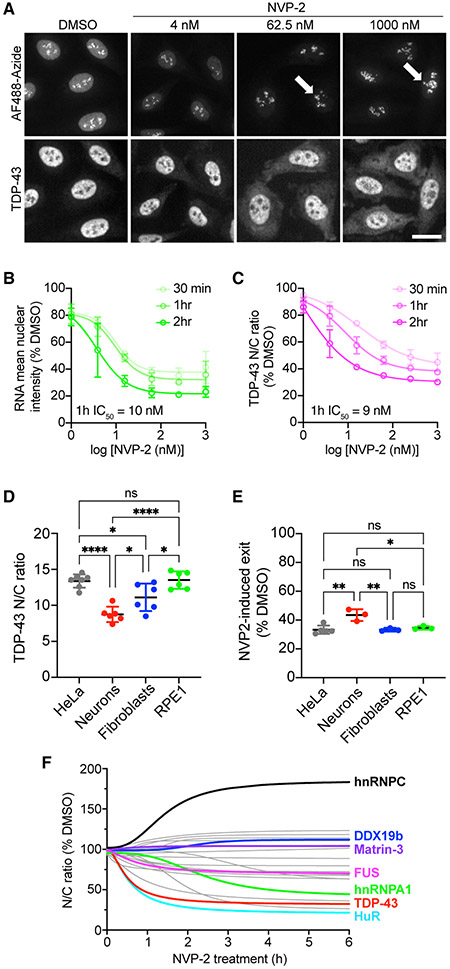
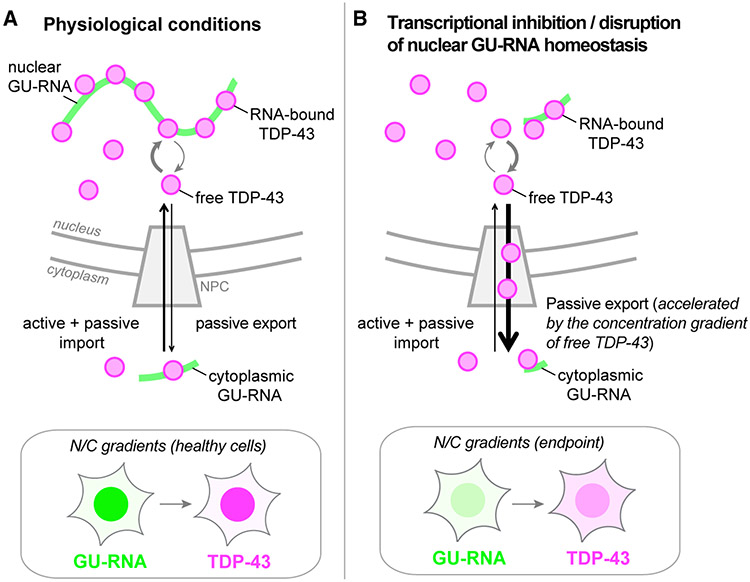
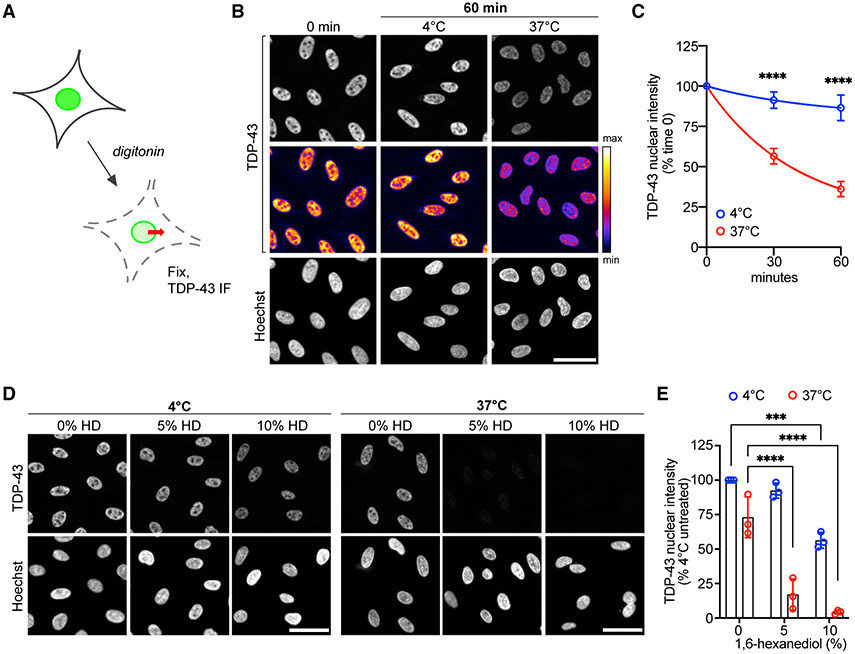
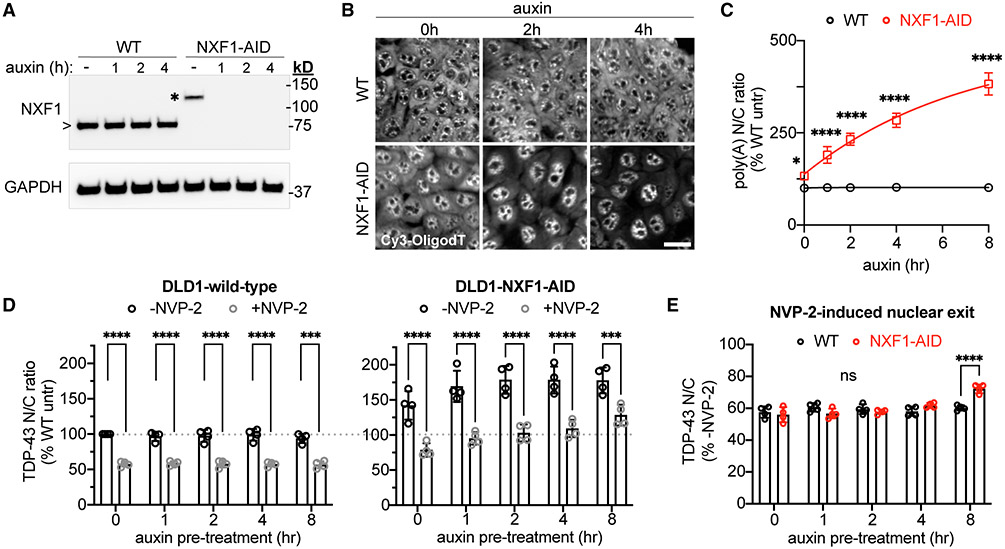
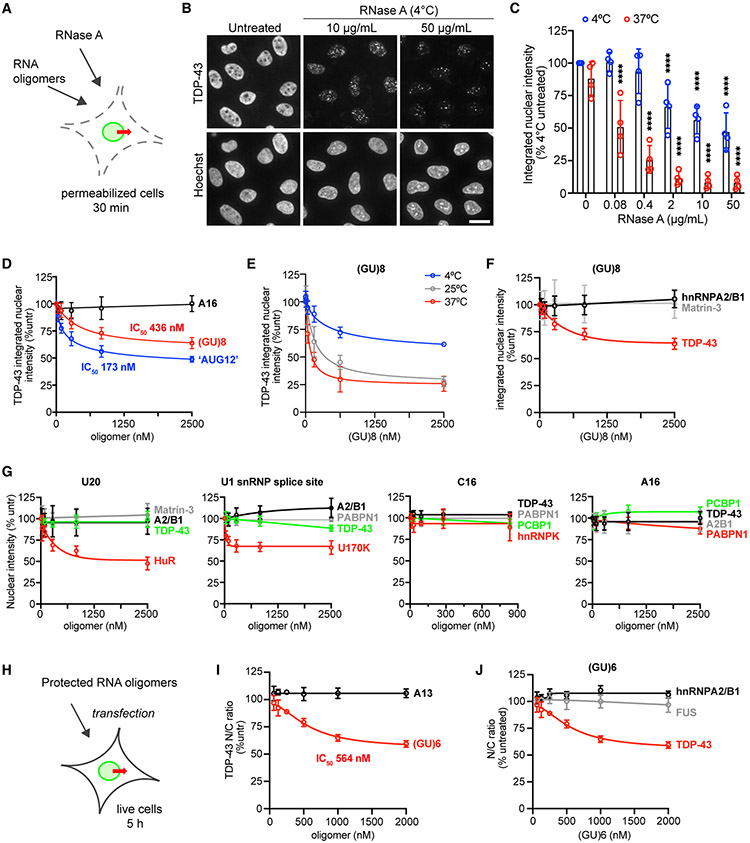
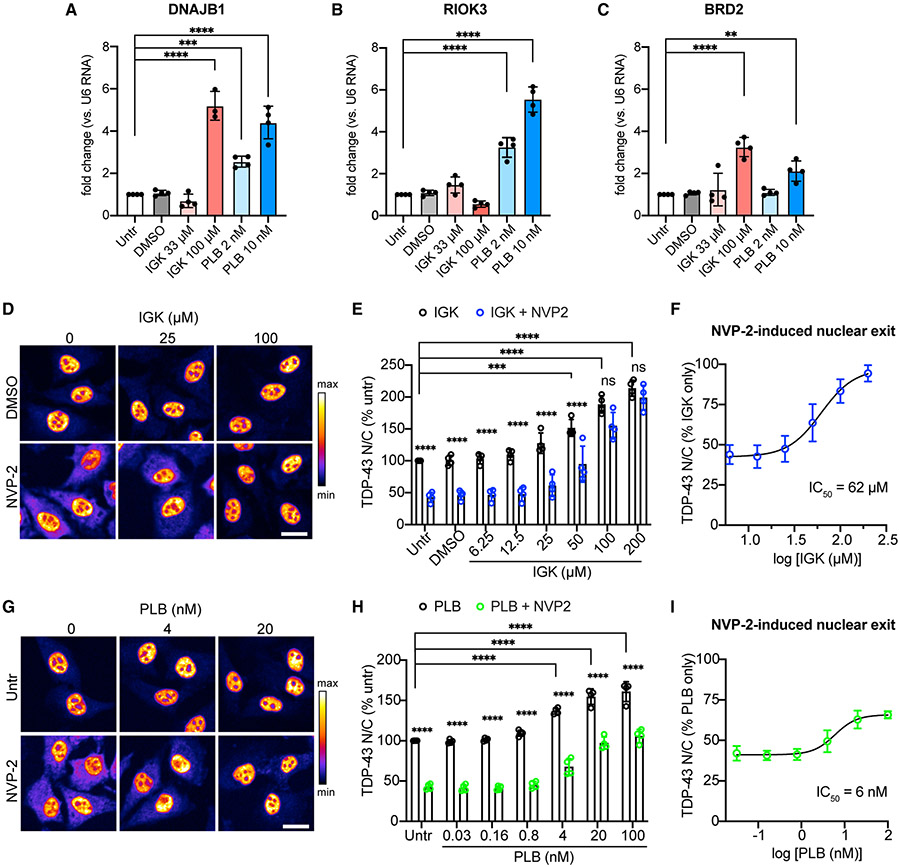
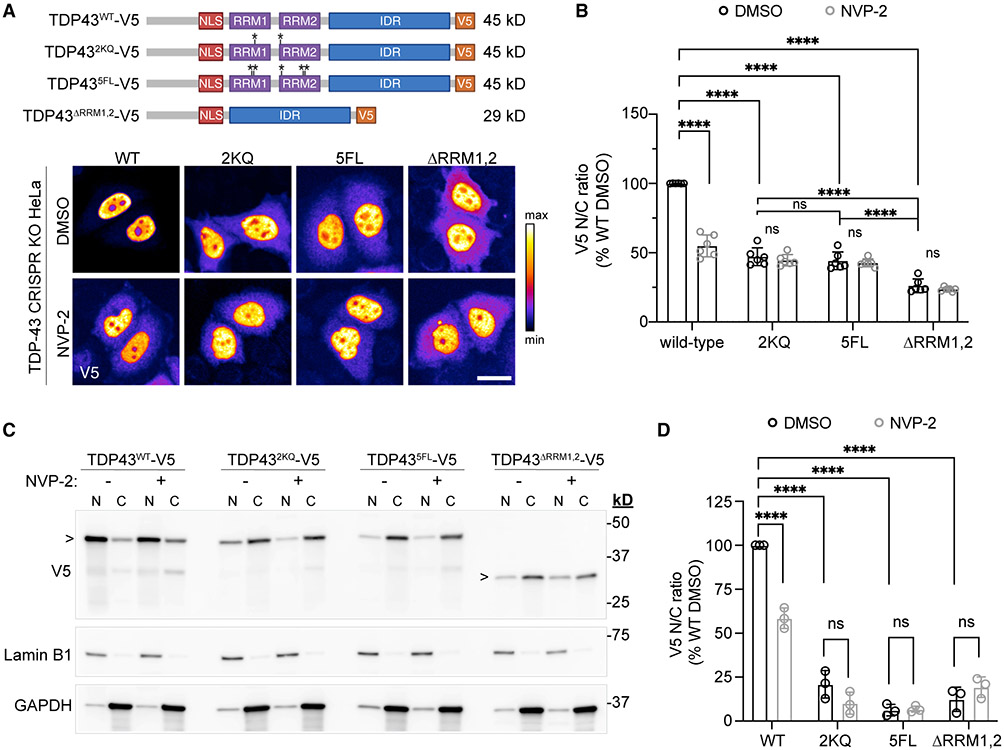
Nuclear clearance of the RNA-binding protein TDP-43 is a hallmark of neurodegeneration and an important therapeutic target. Our current understanding of TDP-43 nucleocytoplasmic transport does not fully explain its predominantly nuclear localization or mislocalization in disease. Here, we show that TDP-43 exits nuclei by passive diffusion, independent of facilitated mRNA export. RNA polymerase II blockade and RNase treatment induce TDP-43 nuclear efflux, suggesting that nuclear RNAs sequester TDP-43 in nuclei and limit its availability for passive export. Induction of TDP-43 nuclear efflux by short, GU-rich oligomers (presumably by outcompeting TDP-43 binding to endogenous nuclear RNAs), and nuclear retention conferred by splicing inhibition, demonstrate that nuclear TDP-43 localization depends on binding to GU-rich nuclear RNAs. Indeed, RNA-binding domain mutations markedly reduce TDP-43 nuclear localization and abolish transcription blockade-induced nuclear efflux. Thus, the nuclear abundance of GU-RNAs, dictated by the balance of transcription, pre-mRNA processing, and RNA export, regulates TDP-43 nuclear localization.
核清除 RNA 结合蛋白 TDP-43 是神经退行性变的一个标志,也是一个重要的治疗靶点。我们目前对 TDP-43 核质转运的理解不能完全解释其在疾病中的主要核定位或错误定位。在这里,我们表明 TDP-43 通过被动扩散从核中逸出,这与促进 mRNA 输出无关。RNA 聚合酶 II 阻断和 RNase 处理诱导 TDP-43 核流出,表明核 RNA 将 TDP-43 隔离在核内,并限制其被动输出的可用性。短的 GU 丰富寡聚体(推测通过与 TDP-43 结合内源性核 RNA 竞争)诱导 TDP-43 核流出,以及剪接抑制赋予的核保留,表明核 TDP-43 定位取决于与 GU 丰富的核 RNA 结合。事实上,RNA 结合结构域突变显著降低 TDP-43 的核定位,并消除转录阻断诱导的核流出。因此,GU-RNAs 的核丰度,由转录、前体 mRNA 加工和 RNA 输出的平衡决定,调节 TDP-43 的核定位。