Department of Biomedicine, Aarhus University, Aarhus 8000, Denmark.
Department of Biomedicine, Aarhus University, Aarhus 8000, Denmark.
Cell Rep. 2022 Jul 26;40(4):111148. doi: 10.1016/j.celrep.2022.111148. Epub 2022 Jul 14.
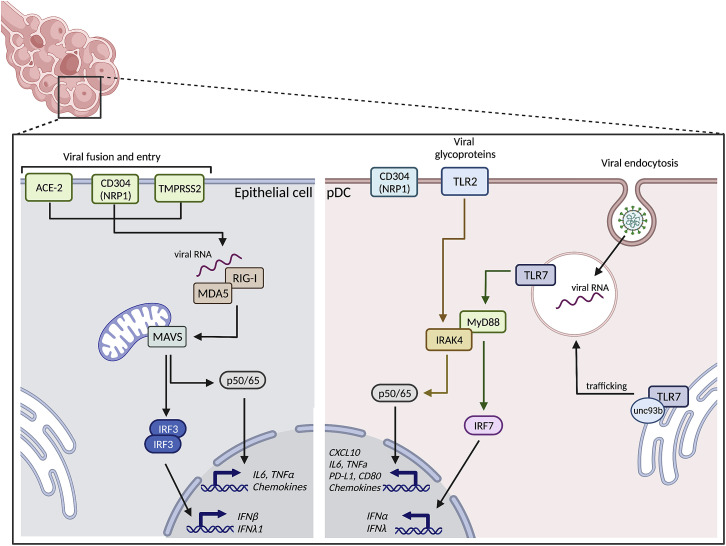
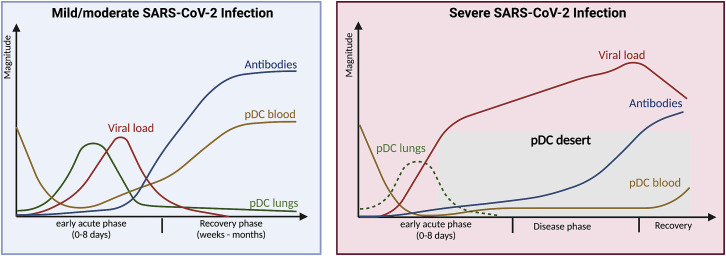
Plasmacytoid dendritic cells (pDCs) are specialized cells of the immune system that are thought to be the main cellular source of type I interferon alpha (IFNα) in response to viral infections. IFNs are powerful antivirals, whereas defects in their function or induction lead to impaired resistance to virus infections, including severe acute respiratory syndrome coronavirus 2 (SARS-CoV-2), the causative agent of COVID-19. IFN production needs to be controlled, because sustained IFN production can also have detrimental effects on disease outcome. As such, pDCs are likely important for acute antiviral protection against SARS-CoV-2 infection but could potentially also contribute to chronic IFN levels. Here, we provide a historical overview of pDC biology and summarize existing literature addressing their involvement and importance during viral infections of the airways. Furthermore, we outline recent reports focused on the potential role of pDCs during SARS-CoV-2 infection, as well as the potential for this cellular subset to impact COVID-19 disease outcome.
浆细胞样树突状细胞 (pDCs) 是免疫系统的特化细胞,被认为是对病毒感染产生 I 型干扰素α (IFNα) 的主要细胞来源。IFNs 是强大的抗病毒药物,而其功能或诱导缺陷会导致对病毒感染的抵抗力受损,包括严重急性呼吸综合征冠状病毒 2 (SARS-CoV-2),即 COVID-19 的致病因子。IFN 的产生需要受到控制,因为持续的 IFN 产生也会对疾病结果产生不利影响。因此,pDCs 可能对急性抗病毒保护 SARS-CoV-2 感染很重要,但也可能对慢性 IFN 水平有贡献。在这里,我们提供了 pDC 生物学的历史概述,并总结了现有文献,这些文献涉及它们在气道病毒感染中的参与和重要性。此外,我们还概述了最近关于 pDC 在 SARS-CoV-2 感染中的潜在作用的报告,以及该细胞亚群对 COVID-19 疾病结果的潜在影响。